

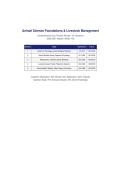
Animal Science Foundations & Livestock Management
Comprehensive Quiz Practice Review - 50 Questions
2026-2027 Aligned | ANSC 103
Section Topic Questions Focus
1 Anatomy, Physiology & Biological Systems Q1-Q10 AO1/AO2
2 Animal Nutrition & Digestive Physiology Q11-Q20 AO1/AO2
3 Reproduction, Genetics & Breeding Q21-Q30 AO2/AO3
4 Livestock & Poultry Production Systems Q31-Q40 AO2/AO3
5 Animal Health, Welfare, Ethics & Economics Q41-Q50 AO1/AO3
Cognitive Distribution: 30% Recall | 50% Application | 20% Analysis
Question Style: 75% Scenario-Based | 25% Direct Knowledge
, Section 1: Animal Anatomy, Physiology & Basic Biological Systems (Q1-Q10)
Q1: The primary difference between ruminant and monogastric digestive systems is that ruminants
possess:
A. A single-chambered stomach with rapid gastric emptying
B. A four-compartment stomach (rumen, reticulum, omasum, abomasum) enabling microbial fermentation
of cellulose [CORRECT]
C. A cecum that serves as the primary site of protein absorption
D. No gallbladder, requiring dietary fat supplementation
Correct Answer: B
Rationale: Ruminants have a four-compartment stomach: the rumen (microbial fermentation), reticulum (particle sorting),
omasum (water absorption), and abomasum (true gastric digestion). Monogastrics have a single stomach chamber.
Option A describes monogastrics. Option C overemphasizes the cecum. Option D is inaccurate regarding gallbladder
presence in ruminants.
Q2: A dairy cow is observed panting heavily during a July heat wave despite access to shade. Which
thermoregulatory mechanism is primarily responsible for heat dissipation in cattle?
A. Sweating through numerous cutaneous glands distributed across the body surface
B. Respiratory evaporative cooling (panting), as cattle have relatively few functional sweat glands and rely
on the respiratory tract for evaporative heat loss [CORRECT]
C. Vasodilation of peripheral blood vessels in the pinnae (ears) alone
D. Shivering thermogenesis to increase metabolic heat production
Correct Answer: B
Rationale: Cattle have sparse functional sweat glands compared to horses or humans, so they rely heavily on respiratory
evaporative cooling (panting) for thermoregulation. Option A overstates bovine sweating capability. Option C describes a
minor pathway. Option D describes heat production, not dissipation.
Q3: In the context of homeostatic feedback loops, the release of insulin from pancreatic beta cells in
response to elevated blood glucose is an example of:
A. Positive feedback, where insulin release amplifies the original stimulus
B. Negative feedback, where insulin lowers blood glucose toward set-point, reducing the stimulus for
further insulin release [CORRECT]
C. Feedforward regulation anticipating future glucose intake
D. Humoral regulation without any feedback mechanism
Correct Answer: B
Rationale: Insulin secretion is a classic negative feedback mechanism: elevated blood glucose triggers insulin release,
which promotes glucose uptake, lowering blood glucose and thereby reducing the stimulus. Positive feedback (A)
amplifies the stimulus. Feedforward (C) anticipates rather than responds. The system is feedback-based, not
feedback-free (D).
Q4: A livestock producer notices that growing lambs on a new pasture are developing enlarged thyroid
glands (goiter). This condition most likely indicates a deficiency of which mineral?
A. Iron
B. Iodine [CORRECT]
C. Selenium
D. Zinc
Correct Answer: B
Rationale: Iodine is essential for thyroid hormone synthesis (T3 and T4). Deficiency causes thyroid enlargement (goiter)
as the gland hypertrophies in an attempt to capture more iodine. Iron deficiency causes anemia (A). Selenium is a
cofactor for glutathione peroxidase (C). Zinc deficiency causes parakeratosis and immune dysfunction (D).
Q5: Which chamber of the ruminant stomach is responsible for water absorption and is characterized
by numerous leaf-like folds of tissue?
A. Rumen
Comprehensive Quiz Practice Review - 50 Questions
2026-2027 Aligned | ANSC 103
Section Topic Questions Focus
1 Anatomy, Physiology & Biological Systems Q1-Q10 AO1/AO2
2 Animal Nutrition & Digestive Physiology Q11-Q20 AO1/AO2
3 Reproduction, Genetics & Breeding Q21-Q30 AO2/AO3
4 Livestock & Poultry Production Systems Q31-Q40 AO2/AO3
5 Animal Health, Welfare, Ethics & Economics Q41-Q50 AO1/AO3
Cognitive Distribution: 30% Recall | 50% Application | 20% Analysis
Question Style: 75% Scenario-Based | 25% Direct Knowledge
, Section 1: Animal Anatomy, Physiology & Basic Biological Systems (Q1-Q10)
Q1: The primary difference between ruminant and monogastric digestive systems is that ruminants
possess:
A. A single-chambered stomach with rapid gastric emptying
B. A four-compartment stomach (rumen, reticulum, omasum, abomasum) enabling microbial fermentation
of cellulose [CORRECT]
C. A cecum that serves as the primary site of protein absorption
D. No gallbladder, requiring dietary fat supplementation
Correct Answer: B
Rationale: Ruminants have a four-compartment stomach: the rumen (microbial fermentation), reticulum (particle sorting),
omasum (water absorption), and abomasum (true gastric digestion). Monogastrics have a single stomach chamber.
Option A describes monogastrics. Option C overemphasizes the cecum. Option D is inaccurate regarding gallbladder
presence in ruminants.
Q2: A dairy cow is observed panting heavily during a July heat wave despite access to shade. Which
thermoregulatory mechanism is primarily responsible for heat dissipation in cattle?
A. Sweating through numerous cutaneous glands distributed across the body surface
B. Respiratory evaporative cooling (panting), as cattle have relatively few functional sweat glands and rely
on the respiratory tract for evaporative heat loss [CORRECT]
C. Vasodilation of peripheral blood vessels in the pinnae (ears) alone
D. Shivering thermogenesis to increase metabolic heat production
Correct Answer: B
Rationale: Cattle have sparse functional sweat glands compared to horses or humans, so they rely heavily on respiratory
evaporative cooling (panting) for thermoregulation. Option A overstates bovine sweating capability. Option C describes a
minor pathway. Option D describes heat production, not dissipation.
Q3: In the context of homeostatic feedback loops, the release of insulin from pancreatic beta cells in
response to elevated blood glucose is an example of:
A. Positive feedback, where insulin release amplifies the original stimulus
B. Negative feedback, where insulin lowers blood glucose toward set-point, reducing the stimulus for
further insulin release [CORRECT]
C. Feedforward regulation anticipating future glucose intake
D. Humoral regulation without any feedback mechanism
Correct Answer: B
Rationale: Insulin secretion is a classic negative feedback mechanism: elevated blood glucose triggers insulin release,
which promotes glucose uptake, lowering blood glucose and thereby reducing the stimulus. Positive feedback (A)
amplifies the stimulus. Feedforward (C) anticipates rather than responds. The system is feedback-based, not
feedback-free (D).
Q4: A livestock producer notices that growing lambs on a new pasture are developing enlarged thyroid
glands (goiter). This condition most likely indicates a deficiency of which mineral?
A. Iron
B. Iodine [CORRECT]
C. Selenium
D. Zinc
Correct Answer: B
Rationale: Iodine is essential for thyroid hormone synthesis (T3 and T4). Deficiency causes thyroid enlargement (goiter)
as the gland hypertrophies in an attempt to capture more iodine. Iron deficiency causes anemia (A). Selenium is a
cofactor for glutathione peroxidase (C). Zinc deficiency causes parakeratosis and immune dysfunction (D).
Q5: Which chamber of the ruminant stomach is responsible for water absorption and is characterized
by numerous leaf-like folds of tissue?
A. Rumen


