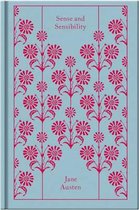
Book report 1: Jane Austen - Sense and Sensibility
a. Bente Philippens
b. GA51
c. Sense and Sensibility
d. 256 pages
e. Jane Austen
f. Penguin Popular Classics - February 1, 1811
g. Jane Austen, English writer who first gave the novel its distinctly modern character
through her treatment of ordinary people in everyday life. She published four nov-
els during her lifetime: Sense and Sensibility (1811), Pride and Prejudice (1813),
Mansfield Park (1814), and Emma (1815). In these and in Persuasion and
Northanger Abbey (published together posthumously, 1817), she vividly depicted
English middle-class life during the early 19th century. Her novels defined the era’s
novel of manners, but they also became timeless classics that remained critical
and popular successes for over two centuries after her death.
h. When Mr Dashwood dies and leaves all his money to the son of his first wife, his
second wife and her children Marianne, Elinor and Margaret are left alone and poor.
They are invited to stay with the Middletons. They do not want to leave but decide
to go anyway. They discover many new acquaintances. Marianne falls in love with
Willoughby, but he is suddenly forced to go to London on business. He leaves Mari-
anne in sorrow. When Marianne visits him later, he sends her away cruelly and de-
nies ever having had feelings for her. When Marianne suddenly falls deathly ill,
Willoughby comes to see her and asks her forgiveness. Marianne realises that she
would have been happy with Willoughby after all. Lucy eventually marries Robert
Ferrars.
i. Themes:
Love is in abundance, this is actually what the whole book is about, it is also a love
novel. Social values are reflected in the behaviour patterns of the girls and their
surroundings. There are certain rules that you have to abide by as a lady and gen-
tleman. This is reflected in Marianne's and Elinor's descriptions of the men. Certain
character traits and ways of behaving are overrated and others not at all. This dif-
fers per person, but in general it is clear that a nice and decent gentleman is most
important. The latter must have a passion for music and art, again reflecting the
romantic ideal. Class society is actually a part of social values. For the family of
the characters in the book, it is very important to find a marriage partner in the
same circles, who must be well-off and beautiful. It is especially important that the
name of the family is not lost. So marriage is very important, in the book it also
seems as if the girls' lives revolve only around finding a husband. Friendship is
also a theme that emerges, as the friendship between the three sisters is seen as
very important. The friendship is the basis to fall back on again and again.
Elinor Dashwood
Elinor is the eldest of three daughters. She is known for her sanity, her desire to
make everyone around her happy and always to do the right thing, the logical
thing, the good thing. There is much going on in her heart, but things she thinks
with her heart will never take precedence over the things she thinks in her head,
causing her to struggle with her feelings for a man she may never be able to have.
What she really thinks and feels she mostly keeps to herself, and what she does
say is only sensible. Her mother and sister Marianne are the most important to her,
and besides that, she values what other people think of her.
Marianne Dashwood
a. Bente Philippens
b. GA51
c. Sense and Sensibility
d. 256 pages
e. Jane Austen
f. Penguin Popular Classics - February 1, 1811
g. Jane Austen, English writer who first gave the novel its distinctly modern character
through her treatment of ordinary people in everyday life. She published four nov-
els during her lifetime: Sense and Sensibility (1811), Pride and Prejudice (1813),
Mansfield Park (1814), and Emma (1815). In these and in Persuasion and
Northanger Abbey (published together posthumously, 1817), she vividly depicted
English middle-class life during the early 19th century. Her novels defined the era’s
novel of manners, but they also became timeless classics that remained critical
and popular successes for over two centuries after her death.
h. When Mr Dashwood dies and leaves all his money to the son of his first wife, his
second wife and her children Marianne, Elinor and Margaret are left alone and poor.
They are invited to stay with the Middletons. They do not want to leave but decide
to go anyway. They discover many new acquaintances. Marianne falls in love with
Willoughby, but he is suddenly forced to go to London on business. He leaves Mari-
anne in sorrow. When Marianne visits him later, he sends her away cruelly and de-
nies ever having had feelings for her. When Marianne suddenly falls deathly ill,
Willoughby comes to see her and asks her forgiveness. Marianne realises that she
would have been happy with Willoughby after all. Lucy eventually marries Robert
Ferrars.
i. Themes:
Love is in abundance, this is actually what the whole book is about, it is also a love
novel. Social values are reflected in the behaviour patterns of the girls and their
surroundings. There are certain rules that you have to abide by as a lady and gen-
tleman. This is reflected in Marianne's and Elinor's descriptions of the men. Certain
character traits and ways of behaving are overrated and others not at all. This dif-
fers per person, but in general it is clear that a nice and decent gentleman is most
important. The latter must have a passion for music and art, again reflecting the
romantic ideal. Class society is actually a part of social values. For the family of
the characters in the book, it is very important to find a marriage partner in the
same circles, who must be well-off and beautiful. It is especially important that the
name of the family is not lost. So marriage is very important, in the book it also
seems as if the girls' lives revolve only around finding a husband. Friendship is
also a theme that emerges, as the friendship between the three sisters is seen as
very important. The friendship is the basis to fall back on again and again.
Elinor Dashwood
Elinor is the eldest of three daughters. She is known for her sanity, her desire to
make everyone around her happy and always to do the right thing, the logical
thing, the good thing. There is much going on in her heart, but things she thinks
with her heart will never take precedence over the things she thinks in her head,
causing her to struggle with her feelings for a man she may never be able to have.
What she really thinks and feels she mostly keeps to herself, and what she does
say is only sensible. Her mother and sister Marianne are the most important to her,
and besides that, she values what other people think of her.
Marianne Dashwood