

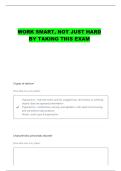
3 types of delirium
Give this one a try later!
Hypoactive : reduced motor activity, sluggishness, drowsiness or seeming
dazed; least recognized presentation
Hyperactive : restlessness, pacing, and agitation, with rapid mood swings
and sometimes hallucinations
Mixed : both hypo & hyperactive
Characteristics personality disorder
Give this one a try later!
, Lifelong
Don't think they have a problem
Inability to adapt
PD patients avoid and fear rejection.
Boundaries are blurred between self and others
Insensitive to others needs
Demanding
Fault finding
Inability to trust
lack individual accountability
Passive-aggressive
Evokes intense interpersonal conflicts
Panic anxiety
Give this one a try later!
the most extreme, with markedly disturbed behavior exhibited in the
individual
Continued assessment
Give this one a try later!
-Assessment of depression, suicide ideations, increase anxiety, history of
violence, and substance abuse is necessary
-Assess medications the patient is taking to see if the patient has been
compliant or if level are therapeutic
-Assess family dynamic
Causes of delirium
, Give this one a try later!
Medication
Dehydration
Electrolyte imbalance
Hypoglycemia
Renal impairment
Urinary retention
Fecal impaction
Hypoxia
Acute illness
Infection
Trauma
Primary Prevention
Give this one a try later!
nurses use health education to promote health and well-being by
preventing stress related issues as well as illnesses caused by stress.
Characteristics of Specific Antidepressants
Give this one a try later!
Psych book page 152
Defense mechanisms to look for in dementia patients
Give this one a try later!
Give this one a try later!
Hypoactive : reduced motor activity, sluggishness, drowsiness or seeming
dazed; least recognized presentation
Hyperactive : restlessness, pacing, and agitation, with rapid mood swings
and sometimes hallucinations
Mixed : both hypo & hyperactive
Characteristics personality disorder
Give this one a try later!
, Lifelong
Don't think they have a problem
Inability to adapt
PD patients avoid and fear rejection.
Boundaries are blurred between self and others
Insensitive to others needs
Demanding
Fault finding
Inability to trust
lack individual accountability
Passive-aggressive
Evokes intense interpersonal conflicts
Panic anxiety
Give this one a try later!
the most extreme, with markedly disturbed behavior exhibited in the
individual
Continued assessment
Give this one a try later!
-Assessment of depression, suicide ideations, increase anxiety, history of
violence, and substance abuse is necessary
-Assess medications the patient is taking to see if the patient has been
compliant or if level are therapeutic
-Assess family dynamic
Causes of delirium
, Give this one a try later!
Medication
Dehydration
Electrolyte imbalance
Hypoglycemia
Renal impairment
Urinary retention
Fecal impaction
Hypoxia
Acute illness
Infection
Trauma
Primary Prevention
Give this one a try later!
nurses use health education to promote health and well-being by
preventing stress related issues as well as illnesses caused by stress.
Characteristics of Specific Antidepressants
Give this one a try later!
Psych book page 152
Defense mechanisms to look for in dementia patients
Give this one a try later!


