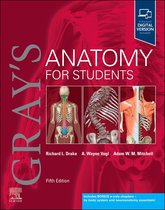
GRAY'S ANATOMY FOR
STUDENTS
5TH EDITION
• AUTHOR(S)RICHARD L. DRAKE
TEST BANK
1) Reference
Ch. 1 — The Body — What is anatomy?
Question Stem
A medical student is asked why an enlarged left atrium may
cause symptoms affecting structures in the mediastinum. The
instructor emphasizes that anatomy is not only naming
structures but also understanding how form supports function
and how neighboring structures influence disease. Which
statement best reflects this definition of anatomy in clinical
practice?
,Options
A. Anatomy is the study of diseases that alter organ function
B. Anatomy is the study of body structure and the relationships
among structures
C. Anatomy is the study of cells only at the microscopic level
D. Anatomy is the study of physiologic regulation of body
systems
Correct Answer
B. Anatomy is the study of body structure and the
relationships among structures
Rationales
Correct Answer: Anatomy focuses on body form,
organization, and how structures relate to one another. In
clinical practice, this helps explain compression, spread of
disease, and procedural risk.
A: Disease study belongs to pathology, not anatomy.
C: Microscopic structure is a branch of anatomy, but
anatomy is broader than cells only.
D: Physiologic regulation is physiology, not anatomy.
Teaching Point
Anatomy explains structure, relationships, and clinical
consequences of location.
Citation
Drake, R. L., Vogl, A. W., & Mitchell, A. W. M. (2023). Gray’s
Anatomy for Students (5th ed.). Ch. 1.
,2) Reference
Ch. 1 — The Body — What is anatomy?
Question Stem
During a thoracentesis, a clinician relies on knowledge of the
pleura, ribs, diaphragm, and intercostal neurovascular bundle to
avoid injury. This example best illustrates which core concept of
anatomy?
Options
A. Anatomy is independent of clinical practice
B. Anatomy is primarily descriptive and unrelated to procedures
C. Anatomy links structure to safe diagnosis and intervention
D. Anatomy is limited to gross dissection
Correct Answer
C. Anatomy links structure to safe diagnosis and intervention
Rationales
Correct Answer: Clinical procedures depend on structural
relationships to avoid complications and choose the correct
approach. Anatomy directly supports safe intervention.
A: Anatomy is foundational to clinical practice.
B: Descriptive anatomy alone is incomplete without
application.
D: Anatomy includes gross, microscopic, developmental,
and imaging-based study.
, Teaching Point
Procedural safety depends on precise knowledge of anatomic
relationships.
Citation
Drake, R. L., Vogl, A. W., & Mitchell, A. W. M. (2023). Gray’s
Anatomy for Students (5th ed.). Ch. 1.
3) Reference
Ch. 1 — The Body — Imaging
Question Stem
A patient with suspected kidney stones undergoes a
noncontrast CT scan because the physician wants excellent
visualization of urinary tract anatomy and calcifications. Why is
CT especially useful in this setting?
Options
A. It visualizes only superficial structures
B. It provides cross-sectional detail of internal anatomy
C. It shows only movement of structures in real time
D. It is primarily used for molecular imaging
Correct Answer
B. It provides cross-sectional detail of internal anatomy
Rationales
Correct Answer: CT produces detailed cross-sectional
images that reveal internal anatomy and dense structures such
STUDENTS
5TH EDITION
• AUTHOR(S)RICHARD L. DRAKE
TEST BANK
1) Reference
Ch. 1 — The Body — What is anatomy?
Question Stem
A medical student is asked why an enlarged left atrium may
cause symptoms affecting structures in the mediastinum. The
instructor emphasizes that anatomy is not only naming
structures but also understanding how form supports function
and how neighboring structures influence disease. Which
statement best reflects this definition of anatomy in clinical
practice?
,Options
A. Anatomy is the study of diseases that alter organ function
B. Anatomy is the study of body structure and the relationships
among structures
C. Anatomy is the study of cells only at the microscopic level
D. Anatomy is the study of physiologic regulation of body
systems
Correct Answer
B. Anatomy is the study of body structure and the
relationships among structures
Rationales
Correct Answer: Anatomy focuses on body form,
organization, and how structures relate to one another. In
clinical practice, this helps explain compression, spread of
disease, and procedural risk.
A: Disease study belongs to pathology, not anatomy.
C: Microscopic structure is a branch of anatomy, but
anatomy is broader than cells only.
D: Physiologic regulation is physiology, not anatomy.
Teaching Point
Anatomy explains structure, relationships, and clinical
consequences of location.
Citation
Drake, R. L., Vogl, A. W., & Mitchell, A. W. M. (2023). Gray’s
Anatomy for Students (5th ed.). Ch. 1.
,2) Reference
Ch. 1 — The Body — What is anatomy?
Question Stem
During a thoracentesis, a clinician relies on knowledge of the
pleura, ribs, diaphragm, and intercostal neurovascular bundle to
avoid injury. This example best illustrates which core concept of
anatomy?
Options
A. Anatomy is independent of clinical practice
B. Anatomy is primarily descriptive and unrelated to procedures
C. Anatomy links structure to safe diagnosis and intervention
D. Anatomy is limited to gross dissection
Correct Answer
C. Anatomy links structure to safe diagnosis and intervention
Rationales
Correct Answer: Clinical procedures depend on structural
relationships to avoid complications and choose the correct
approach. Anatomy directly supports safe intervention.
A: Anatomy is foundational to clinical practice.
B: Descriptive anatomy alone is incomplete without
application.
D: Anatomy includes gross, microscopic, developmental,
and imaging-based study.
, Teaching Point
Procedural safety depends on precise knowledge of anatomic
relationships.
Citation
Drake, R. L., Vogl, A. W., & Mitchell, A. W. M. (2023). Gray’s
Anatomy for Students (5th ed.). Ch. 1.
3) Reference
Ch. 1 — The Body — Imaging
Question Stem
A patient with suspected kidney stones undergoes a
noncontrast CT scan because the physician wants excellent
visualization of urinary tract anatomy and calcifications. Why is
CT especially useful in this setting?
Options
A. It visualizes only superficial structures
B. It provides cross-sectional detail of internal anatomy
C. It shows only movement of structures in real time
D. It is primarily used for molecular imaging
Correct Answer
B. It provides cross-sectional detail of internal anatomy
Rationales
Correct Answer: CT produces detailed cross-sectional
images that reveal internal anatomy and dense structures such