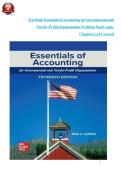
Test Bank Essentials of Accounting for Governmental and
tw tw tw tw tw tw tw
Not-for-Profit Organizations 15 edition Paul Copley
tw tw tw tw tw
Chapters 1-14 Covered
tw tw
1
,TABLE OF CONTENT
tw tw
CHAPTER 1: Introduction to accounting and financial reporting for governmental and not-for-profit organizations
tw tw tw tw tw tw tw tw tw tw tw tw tw
CHAPTER 2: Overview of financial reporting for state and local governments
tw tw tw tw tw tw tw tw tw tw tw
CHAPTER 3: Modified accrual accounting: Including the role of fund balances and budgetary authority
tw tw tw tw tw tw tw tw tw tw tw tw tw tw
CHAPTER 4: Accounting for the general and special revenue funds
tw tw tw tw tw tw tw tw tw tw
CHAPTER 5: Accounting for other governmental fund types: capital projects, debt service, and permanent
tw tw tw tw tw tw tw tw tw tw tw tw tw tw
CHAPTER 6: Proprietary Funds
tw tw tw tw
CHAPTER 7: Fiduciary Funds
tw tw tw tw
CHAPTER 8: Government-wide statements, capital assets, long-term debt
tw tw tw tw tw tw tw tw
CHAPTER 9: Advanced topics for state and local governments
tw tw tw tw tw tw tw tw tw
CHAPTER 10: Accounting for private not-for-profit organizations
tw tw tw tw tw tw tw
CHAPTER 11: College and university accounting
tw tw tw tw tw tw
CHAPTER 12: Accounting for hospitals and other health care providers
tw tw tw tw tw tw tw tw tw tw
CHAPTER 13: Auditing, tax-exempt organizations, and evaluating performance
tw tw tw tw tw tw tw twtw
CHAPTER 14: Financial reporting by the federal government
tw tw tw tw tw tw tw tw
2
,Chap 01 15e Copley
tw tw tw
Answers Included tw
1) The Governmental Accounting Standards Board sets financial reporting standards for all
tw tw tw tw tw tw tw tw tw tw tw
units of government: federal, state, and local.
tw tw tw tw tw tw
⊚ true t w
⊚ false t w
2) Fund accounting exists primarily to provide assurance that resources are used according to
tw tw tw tw tw tw tw tw tw tw tw tw tw
legal or donor restrictions.
tw tw tw
⊚ true t w
⊚ false t w
3) The Financial Accounting Standards Board sets financial reporting standards for profit-
tw tw tw tw tw tw tw tw tw tw
seeking businesses and nongovernmental, not-for-profit organizations.
tw tw tw tw tw tw
⊚ true t w
⊚ false t w
4) FASAB, GASB, and FASB standards are set forth primarily in documents called statements.
tw tw tw tw tw tw tw tw tw tw tw tw
⊚ true t w
⊚ false t w
5) FASAB, GASB, and FASB reporting standards are set forth primarily in documents called
tw tw tw tw tw tw tw tw tw tw tw tw tw
concept statements. tw
⊚ true t w
⊚ false t w
6) The FASAB was established to recommend accounting and financial reporting standards for
tw tw tw tw tw tw tw tw tw tw tw tw
the federal government.
tw tw
⊚ true t w
⊚ false t w
3
, 7) The GASB does not require supplementary information to be reported with its financial sta
tw tw tw tw tw tw tw tw tw tw tw tw tw
tements even if it is essential to establish appropriate context for the financial statements an
tw tw tw tw tw tw tw tw tw tw tw tw tw tw
d notes.
tw
⊚ true t w
⊚ false t w
8) The Financial Accounting Standards Board sets financial reporting standards for private not-
tw tw tw tw tw tw tw tw tw tw tw
for-profits and investor-owned businesses.
tw tw tw tw
⊚ true t w
⊚ false t w
9) An organization is presumed to be governmental if it has the ability to issue directly debt that
tw tw tw tw tw tw tw tw tw tw tw tw tw tw tw tw tw
is exempt from federal taxes.
tw tw tw tw
⊚ true t w
⊚ false t w
10) The Financial Accounting Standards Board and the Governmental Accounting Standards
tw tw tw tw tw tw tw tw tw tw
Board are parallel bodies under the oversight of the Financial Accounting Foundation.
tw tw tw tw tw tw tw tw tw tw tw
⊚ true t w
⊚ false t w
11) The Federal Accounting Standards Advisory Board requires less extensive reports than does
tw tw tw tw tw tw tw tw tw tw tw tw
the FASB or GASB.
tw tw tw
⊚ true t w
⊚ false t w
12) The FASAB requires more financial statements than are typically required of state and local
tw tw tw tw tw tw tw tw tw tw tw tw tw tw
governments.
⊚ true t w
⊚ false t w
4
tw tw tw tw tw tw tw
Not-for-Profit Organizations 15 edition Paul Copley
tw tw tw tw tw
Chapters 1-14 Covered
tw tw
1
,TABLE OF CONTENT
tw tw
CHAPTER 1: Introduction to accounting and financial reporting for governmental and not-for-profit organizations
tw tw tw tw tw tw tw tw tw tw tw tw tw
CHAPTER 2: Overview of financial reporting for state and local governments
tw tw tw tw tw tw tw tw tw tw tw
CHAPTER 3: Modified accrual accounting: Including the role of fund balances and budgetary authority
tw tw tw tw tw tw tw tw tw tw tw tw tw tw
CHAPTER 4: Accounting for the general and special revenue funds
tw tw tw tw tw tw tw tw tw tw
CHAPTER 5: Accounting for other governmental fund types: capital projects, debt service, and permanent
tw tw tw tw tw tw tw tw tw tw tw tw tw tw
CHAPTER 6: Proprietary Funds
tw tw tw tw
CHAPTER 7: Fiduciary Funds
tw tw tw tw
CHAPTER 8: Government-wide statements, capital assets, long-term debt
tw tw tw tw tw tw tw tw
CHAPTER 9: Advanced topics for state and local governments
tw tw tw tw tw tw tw tw tw
CHAPTER 10: Accounting for private not-for-profit organizations
tw tw tw tw tw tw tw
CHAPTER 11: College and university accounting
tw tw tw tw tw tw
CHAPTER 12: Accounting for hospitals and other health care providers
tw tw tw tw tw tw tw tw tw tw
CHAPTER 13: Auditing, tax-exempt organizations, and evaluating performance
tw tw tw tw tw tw tw twtw
CHAPTER 14: Financial reporting by the federal government
tw tw tw tw tw tw tw tw
2
,Chap 01 15e Copley
tw tw tw
Answers Included tw
1) The Governmental Accounting Standards Board sets financial reporting standards for all
tw tw tw tw tw tw tw tw tw tw tw
units of government: federal, state, and local.
tw tw tw tw tw tw
⊚ true t w
⊚ false t w
2) Fund accounting exists primarily to provide assurance that resources are used according to
tw tw tw tw tw tw tw tw tw tw tw tw tw
legal or donor restrictions.
tw tw tw
⊚ true t w
⊚ false t w
3) The Financial Accounting Standards Board sets financial reporting standards for profit-
tw tw tw tw tw tw tw tw tw tw
seeking businesses and nongovernmental, not-for-profit organizations.
tw tw tw tw tw tw
⊚ true t w
⊚ false t w
4) FASAB, GASB, and FASB standards are set forth primarily in documents called statements.
tw tw tw tw tw tw tw tw tw tw tw tw
⊚ true t w
⊚ false t w
5) FASAB, GASB, and FASB reporting standards are set forth primarily in documents called
tw tw tw tw tw tw tw tw tw tw tw tw tw
concept statements. tw
⊚ true t w
⊚ false t w
6) The FASAB was established to recommend accounting and financial reporting standards for
tw tw tw tw tw tw tw tw tw tw tw tw
the federal government.
tw tw
⊚ true t w
⊚ false t w
3
, 7) The GASB does not require supplementary information to be reported with its financial sta
tw tw tw tw tw tw tw tw tw tw tw tw tw
tements even if it is essential to establish appropriate context for the financial statements an
tw tw tw tw tw tw tw tw tw tw tw tw tw tw
d notes.
tw
⊚ true t w
⊚ false t w
8) The Financial Accounting Standards Board sets financial reporting standards for private not-
tw tw tw tw tw tw tw tw tw tw tw
for-profits and investor-owned businesses.
tw tw tw tw
⊚ true t w
⊚ false t w
9) An organization is presumed to be governmental if it has the ability to issue directly debt that
tw tw tw tw tw tw tw tw tw tw tw tw tw tw tw tw tw
is exempt from federal taxes.
tw tw tw tw
⊚ true t w
⊚ false t w
10) The Financial Accounting Standards Board and the Governmental Accounting Standards
tw tw tw tw tw tw tw tw tw tw
Board are parallel bodies under the oversight of the Financial Accounting Foundation.
tw tw tw tw tw tw tw tw tw tw tw
⊚ true t w
⊚ false t w
11) The Federal Accounting Standards Advisory Board requires less extensive reports than does
tw tw tw tw tw tw tw tw tw tw tw tw
the FASB or GASB.
tw tw tw
⊚ true t w
⊚ false t w
12) The FASAB requires more financial statements than are typically required of state and local
tw tw tw tw tw tw tw tw tw tw tw tw tw tw
governments.
⊚ true t w
⊚ false t w
4