© Warona Lekoko, 2024
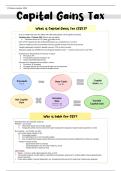
- A tax on wealth that came into effect with s26A (link between ITA & Eighth Schedule)
- Valuation date: 1 October 2001 (date it took into effect)
Disposals before the VD, gains not subject to tax
- CGT is NOT separate tax like dividends/donations tax, considered tax on income
- Taxed on wealth you have accumulated over time (growth of asset over time must be tax)
- Taxable capital gain included in taxable income in YOA in which incurred
- Assessed capital loss CANNOT be set-off against taxable income must be carried over to next YOA
- Proceeds from disposal that are revenue in nature:
Provisions: ITA
Proceeds/recoupment included in GI
Deduct expenditure/allowances
- Proceeds from disposal that are capital in nature:
Provisions: 8th Schedule
Proceeds reduced by GI amounts & base cost by deductions
Gain @ inclusion rate included to taxable income
Proceeds Capital
Base Costs
Par 35 Par 20 Gain/Loss
Inclusion
Net Capital Taxable
Rate
Gain Individuals – 40% Capital Gain
Companies – 80%
Natural persons & companies, trusts etc.
Resident – par 2(1)(a):
World-wide assets (even foreign assets)
Irrespective where income earned CGT paid resulting from disposal of assets located anywhere in world
Non-resident – par 2(1)(b), par 2(2):
only certain assets situated in SA:
Immovable property
Any right/interest to or in immovable property
Any moveable/immoveable assets effectively connected with permanent establishment of that non-resident
“interest” includes (in SA):
- Equity shares held in company
- Ownership/right to own any other entity (e.g. trust)
- Vested interest in assets of trust
ADDITIONAL:
▪ Visser – income is what capital produces (tree vs fruit)
▪ Immoveable property includes rights to varied/fixed consideration payments for working (right) mineral deposits/other
natural resources
▪ Check asset register, financial statements, etc. at beginning and year-end to determine if assets were disposed
, © Warona Lekoko, 2024
International benchmarking:
It was considered beneficial to SA to align our tax system with theirs
SA complying with international tax practices
Horizontal equity:
TP should bear similar tax burdens, regardless of the form their income is received
Exclusion of capital gains from the income tax base fundamentally undermines horizontal equity of tax system
Vertical equity:
TPs with greater ability to pay taxes should bear a greater burden of taxation
Biggest share of CGT revenues attributable wealthiest individuals
CG in taxable income promotes progressiveness to the income tax system whilst enabling government to pursue other tax policy
objectives, premised on widening tax bases and reducing standard tax rates
Shift from income to capital
When CG goes untaxed, TP are incentivised to re-characterize income as capital and shift from income bearing investments to
capital gain producing ones (result = tax base erosion & artificial resources allocation)
Economic efficiency
When CG goes untaxed, TP encouraged to invest their savings in assets that provide returns in form of capital gains, rather than
income producing assets
CGT tries to prevent this type of decision, by encouraging investment in assets benefiting the broader economy
Broaden tax base
CGT will enable the tax base to be broadened thus facilitating lower overall tax rates
(McAllister, 2020)
Capital gains and losses – par 3, 4:
Proceeds > base cost = capital gain
Proceeds < base cost = capital loss
Annual exclusion – par 5:
(1) Every natural person/ special trust is entitled to a R40 000 annual exclusion reducing net (gain) / loss per YOA
(2) For deceased estates, the exclusion is R300 000 in year of death
Annual exclusion is not applicable to companies or trusts
Utilisation of annual exclusion cannot put gain into a loss, nor loss into a gain
Any unused portion cannot be carried forward to another year
Aggregate capital gain and loss – par 6, 7:
Sum of capital gains and losses, less the annual exclusion
Capital losses are also reduced by the annual exclusion (+ R40 000)
Net capital gain or assessed capital loss – par 8, 9:
Aggregate capital gain/loss of current YOA less the assessed capital loss carried forward from previous YOA
Assessed capital loss cannot be deducted → carried forward to next YOA (irrespective if person is carrying on a trade)
Taxable capital gain – par 10:
… of the net capital gain
→ 40% for individuals
→ 80% for companies, CCs, policyholder and risk policy funds
Partnership ≠ not separate taxable entity → capital gain realised by partnership accounted proportionately for each partner
Inclusion in taxable income – s26A:
Taxable capital gain must be added to taxable income
Inclusion % Statutory % Effective 5
Individuals &
40 0 - 45 0 - 18
special trusts
Companies 80 27 21,6 (27 × 80)
Other trusts 80 45 36 (45 × 80)
- A tax on wealth that came into effect with s26A (link between ITA & Eighth Schedule)
- Valuation date: 1 October 2001 (date it took into effect)
Disposals before the VD, gains not subject to tax
- CGT is NOT separate tax like dividends/donations tax, considered tax on income
- Taxed on wealth you have accumulated over time (growth of asset over time must be tax)
- Taxable capital gain included in taxable income in YOA in which incurred
- Assessed capital loss CANNOT be set-off against taxable income must be carried over to next YOA
- Proceeds from disposal that are revenue in nature:
Provisions: ITA
Proceeds/recoupment included in GI
Deduct expenditure/allowances
- Proceeds from disposal that are capital in nature:
Provisions: 8th Schedule
Proceeds reduced by GI amounts & base cost by deductions
Gain @ inclusion rate included to taxable income
Proceeds Capital
Base Costs
Par 35 Par 20 Gain/Loss
Inclusion
Net Capital Taxable
Rate
Gain Individuals – 40% Capital Gain
Companies – 80%
Natural persons & companies, trusts etc.
Resident – par 2(1)(a):
World-wide assets (even foreign assets)
Irrespective where income earned CGT paid resulting from disposal of assets located anywhere in world
Non-resident – par 2(1)(b), par 2(2):
only certain assets situated in SA:
Immovable property
Any right/interest to or in immovable property
Any moveable/immoveable assets effectively connected with permanent establishment of that non-resident
“interest” includes (in SA):
- Equity shares held in company
- Ownership/right to own any other entity (e.g. trust)
- Vested interest in assets of trust
ADDITIONAL:
▪ Visser – income is what capital produces (tree vs fruit)
▪ Immoveable property includes rights to varied/fixed consideration payments for working (right) mineral deposits/other
natural resources
▪ Check asset register, financial statements, etc. at beginning and year-end to determine if assets were disposed
, © Warona Lekoko, 2024
International benchmarking:
It was considered beneficial to SA to align our tax system with theirs
SA complying with international tax practices
Horizontal equity:
TP should bear similar tax burdens, regardless of the form their income is received
Exclusion of capital gains from the income tax base fundamentally undermines horizontal equity of tax system
Vertical equity:
TPs with greater ability to pay taxes should bear a greater burden of taxation
Biggest share of CGT revenues attributable wealthiest individuals
CG in taxable income promotes progressiveness to the income tax system whilst enabling government to pursue other tax policy
objectives, premised on widening tax bases and reducing standard tax rates
Shift from income to capital
When CG goes untaxed, TP are incentivised to re-characterize income as capital and shift from income bearing investments to
capital gain producing ones (result = tax base erosion & artificial resources allocation)
Economic efficiency
When CG goes untaxed, TP encouraged to invest their savings in assets that provide returns in form of capital gains, rather than
income producing assets
CGT tries to prevent this type of decision, by encouraging investment in assets benefiting the broader economy
Broaden tax base
CGT will enable the tax base to be broadened thus facilitating lower overall tax rates
(McAllister, 2020)
Capital gains and losses – par 3, 4:
Proceeds > base cost = capital gain
Proceeds < base cost = capital loss
Annual exclusion – par 5:
(1) Every natural person/ special trust is entitled to a R40 000 annual exclusion reducing net (gain) / loss per YOA
(2) For deceased estates, the exclusion is R300 000 in year of death
Annual exclusion is not applicable to companies or trusts
Utilisation of annual exclusion cannot put gain into a loss, nor loss into a gain
Any unused portion cannot be carried forward to another year
Aggregate capital gain and loss – par 6, 7:
Sum of capital gains and losses, less the annual exclusion
Capital losses are also reduced by the annual exclusion (+ R40 000)
Net capital gain or assessed capital loss – par 8, 9:
Aggregate capital gain/loss of current YOA less the assessed capital loss carried forward from previous YOA
Assessed capital loss cannot be deducted → carried forward to next YOA (irrespective if person is carrying on a trade)
Taxable capital gain – par 10:
… of the net capital gain
→ 40% for individuals
→ 80% for companies, CCs, policyholder and risk policy funds
Partnership ≠ not separate taxable entity → capital gain realised by partnership accounted proportionately for each partner
Inclusion in taxable income – s26A:
Taxable capital gain must be added to taxable income
Inclusion % Statutory % Effective 5
Individuals &
40 0 - 45 0 - 18
special trusts
Companies 80 27 21,6 (27 × 80)
Other trusts 80 45 36 (45 × 80)