Written by students who passed Immediately available after payment Read online or as PDF Wrong document? Swap it for free 4.6 TrustPilot
logo-home
Exam (elaborations)

NR 566 Chamberlain Advanced Pharmacology for Care of the Family Midterm Exam 2026/2027 | Complete Q&A | Antimicrobials, Diabetes, Cardiovascular Drugs & Pregnancy Safety | Verified Answers with Detailed Rationales | Downloadable PDF

Rating
-
Sold
-
Pages
54
Grade
A
Uploaded on
26-03-2026
Written in
2025/2026

INSTANT PDF DOWNLOAD—This comprehensive study guide is specifically designed for Chamberlain University graduate nursing students (FNP) preparing for the NR 566 Advanced Pharmacology for Care of the Family Midterm Exam for the 2026/2027 academic year. Based on verified exam materials from top-selling student resources , this resource contains expertly verified practice questions and 100% correct answers with detailed rationales to help you master core advanced pharmacology concepts and achieve a top score (Grade A+). This comprehensive guide covers all major topics tested on the NR 566 Midterm Exam : Antimicrobial Agents & Resistance: High-dose amoxicillin (90 mg/kg/day divided BID) for pediatric acute otitis media to overcome resistance . Cephalosporins (2nd and 3rd generation) are known for promoting C. diff development . Penicillin cross-sensitivity occurs with cephalosporins and carbapenems . Sulfonamides require CBC monitoring; CD4 count if HIV positive . Tetracycline absorption impaired by dairy products (calcium chelation) . Vancomycin loading dose: 15-20 mg/kg (1,050-1,400 mg for 70 kg adult) . Aminoglycosides (gentamicin) require peak/trough monitoring for ototoxicity prevention . Macrolides (azithromycin) are bacteriostatic, not bactericidal; monitor for hepatotoxicity . Antifungal & Antiviral Therapy: Itraconazole potently inhibits CYP3A4, significantly increasing simvastatin levels → rhabdomyolysis risk . Itraconazole capsules require an acidic environment for dissolution (contraindicated with proton pump inhibitors in elderly) . Amphotericin B requires pre- and post-hydration with 500 mL normal saline to minimize nephrotoxicity . Voriconazole is first-line for invasive aspergillosis with excellent CNS penetration . Oseltamivir (neuraminidase inhibitor) requires initiation within 48 hours of symptom onset . Acyclovir IV is indicated for herpes simplex encephalitis; adequate hydration required to prevent crystalluria . Nirsevimab is preferred over palivizumab for RSV prophylaxis (single-dose administration) . Diabetes Management: Metformin is contraindicated in clients with eGFR 30 mL/min; hold before iodinated contrast procedures . GI upset (nausea, diarrhea) is the most common adverse effect . Metformin can cause vitamin B12 deficiency with long-term use . SGLT2 inhibitors and GLP-1 receptor agonists have demonstrated cardiovascular disease benefit independent of A1C (ADA 2020) . GLP-1 RAs are preferred to insulin when possible for patients needing greater glucose lowering . Hypoglycemia (70 mg/dL) management follows the "rule of 15": 15 g fast-acting carbohydrate, recheck in 15 minutes . Cardiovascular & Lipid Management: Statins recommended in the evening because cholesterol synthesis follows circadian rhythm (highest overnight and first thing in morning) . Digoxin has a narrow therapeutic index (0.5–2 ng/mL); monitoring serum levels prevents toxicity . Warfarin food interaction: spinach (vitamin K) reduces anticoagulant effect . ACE inhibitors and ARBs are contraindicated in pregnancy (teratogenic effects) . Pregnancy & Lactation: Methyldopa is first-line for hypertension in pregnancy due to established safety profile . Beta-lactams (amoxicillin) have Category B safety profile in pregnancy . TMP-SMX (teratogenic) and fluoroquinolones (cartilage risks) should be avoided per ACOG guidelines . RhoGAM (Rh immune globulin) administered at 28 weeks gestation and within 72 hours postpartum for Rh-negative mothers . Metronidazole for bacterial vaginosis in pregnancy: vaginal metronidazole 2% or clindamycin 1% cream preferred over oral due to systemic absorption concerns . Weight Management: Phentermine and diethylpropion are FDA-approved non-amphetamines for weight loss (CNS stimulants, Schedule IV, maximum 3 months use) . Topiramate increases satiety; administer before 4 PM to avoid insomnia . Orlistat (lipase inhibitor) acts on the GI tract, reducing fat absorption by 30%; take multivitamin 2 hours before/after for fat-soluble vitamin supplementation . GLP-1 receptor agonists (liraglutide, semaglutide) FDA-approved for weight loss; monitor for pancreatitis, gallbladder disease . Drug Interactions & Safety: CYP3A4 inhibition (itraconazole, ketoconazole, grapefruit juice) with simvastatin, lovastatin → rhabdomyolysis . Serotonergic agents (linezolid, MAOIs, SSRIs, SNRIs, tramadol) combined → serotonin syndrome risk . Disulfiram-like reactions occur with metronidazole, cefotetan, cefazolin, and alcohol → severe nausea, vomiting, flushing . Grapefruit juice inhibits CYP3A4; patients taking CYP3A4 substrates (statins, amiodarone, calcium channel blockers) should avoid grapefruit . Sample Questions Include : "A 6-year-old child is prescribed amoxicillin for acute otitis media. What is the most appropriate dosing regimen?" → 90 mg/kg/day divided into two doses (High-dose amoxicillin recommended to overcome bacterial resistance) "Which medication is contraindicated in a patient with a known sulfa allergy?" → Furosemide (Sulfonamide diuretic contraindicated due to cross-reactivity) "What is the most important monitoring parameter for a 72-year-old patient prescribed digoxin for heart failure?" → Serum digoxin levels (Narrow therapeutic index; toxicity signs: visual disturbances, bradycardia, nausea) "A pregnant patient at 28 weeks gestation has hypertension. Which antihypertensive is safest?" → Methyldopa (First-line for hypertension in pregnancy due to established safety profile) "What is the correct dose of acetaminophen for a 3-month-old infant with fever?" → 10–15 mg/kg every 4–6 hours (Standard pediatric dosing, not exceeding 75 mg/kg/day) "Which antibiotic class requires renal function monitoring due to potential nephrotoxicity?" → Gentamicin (aminoglycosides) (Peak/trough monitoring essential; creatinine monitoring required) "A patient with type 2 diabetes is prescribed metformin. What is the most common adverse effect?" → Gastrointestinal upset (Nausea and diarrhea, especially when initiated) "Why are statins recommended in the evening instead of morning?" → Cholesterol synthesis follows circadian rhythm; highest overnight and first thing in morning (Administration at night allows peak levels during high synthesis) "What is the primary concern with itraconazole and simvastatin co-administration?" → CYP3A4 inhibition → increased simvastatin levels → rhabdomyolysis risk "Which drug class is known to promote development of C. diff?" → 2nd and 3rd generation Cephalosporins (Significant risk factor for C. difficile infection) "What is the main mechanism of action for orlistat?" → Lipase inhibitor; acts on GI tract to reduce fat absorption by 30% "Which antifungal agent is first-line for invasive aspergillosis?" → Voriconazole (Excellent CNS penetration, superior activity against Aspergillus species) All questions include complete rationales based on current evidence-based practice, ADA guidelines, USPSTF recommendations, and Chamberlain University curriculum requirements . DOCUMENT ACCESS: This study guide is available as an instant digital download (PDF) immediately upon purchase. Fully text-searchable, printable, and accessible anytime through your user account. 100% satisfaction guarantee. Trusted by thousands of Chamberlain FNP students for NR 566 midterm exam preparation and mastering advanced pharmacology for family care .

Show more Read less

Content preview

1|Page


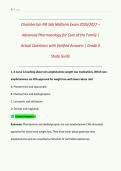
Chamberlain NR 566 Midterm Exam 2026/2027 –

Advanced Pharmacology for Care of the Family |

Actual Questions with Verified Answers | Grade A

Study Guide


1. A nurse is teaching about non-amphetamine weight loss medications. Which non-

amphetamines are FDA approved for weight loss with lower abuse risk?

A. Phentermine and topiramate

B. Phentermine and diethylpropion

C. Lorcaserin and naltrexone

D. Orlistat and liraglutide

Correct Answer: B

Rationale: Phentermine and diethylpropion are non-amphetamine CNS stimulants

approved for short-term weight loss. They have lower abuse potential than

amphetamines and are classified as Schedule IV controlled substances.

,2|Page


2. A nurse is teaching about the mechanism of action of phentermine and

diethylpropion. How do these medications promote weight loss?

A. They increase fat absorption in the GI tract

B. They are central nervous system stimulants that suppress appetite by increasing

norepinephrine availability

C. They slow gastric emptying and increase satiety

D. They inhibit lipase in the GI tract

Correct Answer: B

Rationale: Phentermine and diethylpropion are CNS stimulants that suppress appetite

by increasing the availability of norepinephrine at receptors in the brain.

3. A nurse is teaching about the maximum recommended duration of use for non-

amphetamine weight loss medications. What is the recommended duration?

A. 1 month or less

B. 3 months or less

C. 6 months or less

D. 12 months or less

Correct Answer: B

Rationale: Phentermine and diethylpropion are approved for short-term use only, with

,3|Page


a maximum recommended duration of 3 months or less due to risk of dependence and

tolerance.

4. A nurse is reviewing drug schedules. Under what drug schedule are phentermine

and diethylpropion classified?

A. Schedule II

B. Schedule III

C. Schedule IV

D. Schedule V

Correct Answer: C

Rationale: Phentermine and diethylpropion are classified as Schedule IV controlled

substances, indicating a lower abuse potential than Schedule II or III medications.

5. A nurse is preparing to prescribe phentermine or diethylpropion. Which laboratory

tests should be obtained at baseline and what condition should be screened for?

(Select all that apply.)

A. Baseline CMP (watch electrolytes and creatinine)

B. Screen for depression

C. Baseline CBC

D. Screen for anxiety

E. Baseline thyroid panel

, 4|Page


Correct Answer: A, B

Rationale: Before prescribing phentermine or diethylpropion, a baseline CMP should be

obtained to monitor electrolytes and creatinine. Patients should also be screened for

depression, as these medications can affect mood.

6. A nurse is teaching a patient about phentermine adverse effects. Which adverse

effects are associated with phentermine? (Select all that apply.)

A. Increased heart rate and blood pressure

B. Dry mouth

C. Constipation

D. Bradycardia

E. Hypotension

Correct Answer: A, B, C

Rationale: Phentermine is a CNS stimulant that can cause increased heart rate and

blood pressure, dry mouth, and constipation. Bradycardia and hypotension are not

typical adverse effects.

7. A nurse is teaching about the role of topiramate in weight loss. How does

topiramate promote weight loss?

A. Decreases appetite

B. Increases satiety

Document information

Uploaded on
March 26, 2026
Number of pages
54
Written in
2025/2026
Type
Exam (elaborations)
Contains
Questions & answers

Subjects

$12.49
Get access to the full document:

Wrong document? Swap it for free Within 14 days of purchase and before downloading, you can choose a different document. You can simply spend the amount again.
Written by students who passed
Immediately available after payment
Read online or as PDF


Also available in package deal

Thumbnail
Package deal
Chamberlain NR 566 Advanced Pharmacology for Care of the Family Midterm & Final Exams STUDY BUNDLE
-
4 2026
$ 26.47 More info

Get to know the seller

Seller avatar
Reputation scores are based on the amount of documents a seller has sold for a fee and the reviews they have received for those documents. There are three levels: Bronze, Silver and Gold. The better the reputation, the more your can rely on the quality of the sellers work.
ExamitorMagnus Massachusetts Institute Of Technology
View profile
Follow You need to be logged in order to follow users or courses
Sold
117
Member since
2 year
Number of followers
7
Documents
1756
Last sold
1 week ago
Top Score

I am a professional writer with knowledge across diverse academic fields. I provide quality work and I guarantee superb, timely and original content. I know the pain of getting a shoddy work, and I would never wish this on any client! I guarantee a topnotch paper, with a fast High-score turnaround. I provide quality work guaranteed to give you an exemplary grade. Furthermore, I am a tutor of Research paper, Dissertation, proposal, management studies, economics, educational studies, sociology and psychology, marketing, Geography, History, Management, English, Literature, Education. Medical studies, Health Care studies and Nursing, Biology, Economics among other subjects.

Read more Read less
3.5

22 reviews

5
8
4
3
3
6
2
2
1
3

Why students choose Stuvia

Created by fellow students, verified by reviews

Quality you can trust: written by students who passed their tests and reviewed by others who've used these notes.

Didn't get what you expected? Choose another document

No worries! You can instantly pick a different document that better fits what you're looking for.

Pay as you like, start learning right away

No subscription, no commitments. Pay the way you're used to via credit card and download your PDF document instantly.

Student with book image

“Bought, downloaded, and aced it. It really can be that simple.”

Alisha Student

Working on your references?

Create accurate citations in APA, MLA and Harvard with our free citation generator.

Working on your references?

Frequently asked questions