W11 Lecture 20 Market Failure
Markets and Social Efficiency
Competitive markets (in the absence of distortions) will allocate resources to achieve the Pareto optimum efficient
allocation
If external costs and benefits are present, unregulated markets will not produce the socially efficient level of output.
Market failure is the term used to cover all circumstances (distortions) in which equilibrium in free unregulated markets
will fail to achieve efficient allocation of resources.
Causes of market failure include:
Public goods
Externalities
Property rights
Public goods are:
o Non-rival
o Non-excludable
Leads to ‘free-rider’ problems.
Externality
A common characteristic at the root of practically all environmental problems is the failure of markets to reflect all the costs and
benefits (externalities) associated with the environment.
“An externality arises wherever an individuals’ (or firm) production or consumption decision has a direct impact on the
production or consumption of another individual, where that individual has not chosen to accept it”
Social cost = private costs + external costs
Social benefit = private benefit + external benefits
The agent affected can not choose the level of impact.
It does not refer to deliberate attempts of an individual to influence the welfare of another.
Externalities are examples of market failure.
Types of Externalities:
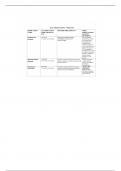
Costs / Benefits, Production / Consumption.
The Social cost of a production externality e.g. pollution
Internalising an externality
o Private markets will tend not to
account for externalities.
o Therefore, government intervention
is required if society wishes to:
reduce external costs (e.g. impose pollution taxes);
enhance external benefits. benefits (e.g. subsidies
environmental friendly programmes).
But what is the ‘Optimum’ environmental quality?
A firm’s optimal level of production
Markets and Social Efficiency
Competitive markets (in the absence of distortions) will allocate resources to achieve the Pareto optimum efficient
allocation
If external costs and benefits are present, unregulated markets will not produce the socially efficient level of output.
Market failure is the term used to cover all circumstances (distortions) in which equilibrium in free unregulated markets
will fail to achieve efficient allocation of resources.
Causes of market failure include:
Public goods
Externalities
Property rights
Public goods are:
o Non-rival
o Non-excludable
Leads to ‘free-rider’ problems.
Externality
A common characteristic at the root of practically all environmental problems is the failure of markets to reflect all the costs and
benefits (externalities) associated with the environment.
“An externality arises wherever an individuals’ (or firm) production or consumption decision has a direct impact on the
production or consumption of another individual, where that individual has not chosen to accept it”
Social cost = private costs + external costs
Social benefit = private benefit + external benefits
The agent affected can not choose the level of impact.
It does not refer to deliberate attempts of an individual to influence the welfare of another.
Externalities are examples of market failure.
Types of Externalities:
Costs / Benefits, Production / Consumption.
The Social cost of a production externality e.g. pollution
Internalising an externality
o Private markets will tend not to
account for externalities.
o Therefore, government intervention
is required if society wishes to:
reduce external costs (e.g. impose pollution taxes);
enhance external benefits. benefits (e.g. subsidies
environmental friendly programmes).
But what is the ‘Optimum’ environmental quality?
A firm’s optimal level of production