Endocrinology
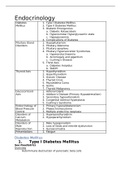
Diabetes 1. Type I Diabetes Mellitus
Mellitus 2. Type II Diabetes Mellitus
3. Diabetic Emergencies
a. Diabetic Ketoacidosis
b. Hyperosmolar Hyperglycaemic state
c. Hypoglycaemia
4. Complications of Diabetes
Pituitary Gland 1. Hypopituitarism
Disorders 2. Pituitary Adenoma
3. Pituitary apoplexy
4. Pituitary Hypersecretion Syndromes
a. Hyperprolactinaemia
b. Acromegaly and gigantism
c. Cushing’s Disease
5. Thirst Axis
a. Diabetes Insipidus
b. SIADH
Thyroid Axis 1. Hypothyroidism
2. Hyperthyroidism
3. Graves’ Disease
4. Thyroid Crisis
5. Myxoedema Coma
6. Goitre
7. Thyroid Malignancy
Glucocorticoid 1. Adrenal Gland
Axis 2. Addison’s Disease (Primary Hypoadrenalism)
3. Secondary hypoadrenalism
4. Congenital Adrenal Hyperplasia
5. Cushing’s Syndrome
Endocrinology of 1. Primary hyperaldosteronism
Blood Pressure 2. Phaeochromocytoma
Control 3. Multiple endocrine neoplasia
Disorders of 1. Hyperparathyroidism
Calcium 2. Hypoparathyroidism
Metabolism
Disorders of 1. Male hypogonadism
Male 2. Loss of libido and erectile dysfunction
Reproduction 3. Gynaecomastia
Presentations 1. Fatigue
Diabetes Mellitus
1. Type I Diabetes Mellitus
See Paediatrics
Overview
- Autoimmune destruction of pancreatic beta cells
,Associations
- Autoimmune thyroid disease
- Addison's disease
- Pernicious anaemia
- HLA-DR4
- Cystic fibrosis (CFTR channels)
- Haemochromatosis (toxic iron deposition)
- MEN / autoimmunity
Presentation
Symptoms
- Polydipsia
- Polyuria
- Lethargic
- Weight loss
- Recurrent infections
- Blurred vision
- Nausea and vomiting
Signs
- Necrobiosis lipoidica diabeticorum – shiny, painless areas of
yellow/red. Associated with telangiectasia.
Complications
- Diabetic ketoacidosis
- Macrovascular
o Ischaemic heart disease
o Cerebrovascular disease
o Peripheral vascular disease
- Microvascular
o Retinopathy
o Neuropathy e.g. glove and stocking, autonomic dysfunction,
mononeuritis multiplex
o Nephropathy (nephrotic syndrome)
Pathology
- Autoimmune condition
o Reduction in pancreatic B cells and lack of insulin synthesis
o Antiglutamic acid decarboxylase (GAD) autoantibodies
found in large amount of patients
o Some evidence it may follow an environmental trigger e.g.
virus
Investigations
GP may take urinalysis / capillary glucose
WHO guidelines:
- Fasting plasma glucose >7mM
, - Plasma glucose >11.1 mM when take 2 hours after ingesting 75g of
glucose (oral glucose tolerance test)
HbA1c
- Should be monitored every 3-6 months
- Target of 48mmol/mol or lower
Management
Conservative
- Self-monitoring of blood glucose
o 4x per day, before each meal and bed
o More frequent if: hypoglycaemic episodes, during period of
illness, surrounding sport, planning pregnancy, during
pregnancy, breastfeeding
o Targets:
5-7mmol/l on waking
4-7mmol/l before meals
Medical
- Typical Insulin Regime
o Basal/background – 1-2 injections per day/insulin pump e.g.
twice-daily detemir. Second-line: once-daily glargine
o Bolus – to cover sugar/carbohydrate in food e.g. aspart,
lispro, glulisine
- Alternative
o Twice-daily mixed insulin regime – 1-3 daily injections of short
+ intermediate acting insulins mixed.
- Consider metformin if BMI >25
2. Type II Diabetes Mellitus
Overview
- Most common cause of diabetes in the developed world
- Relative deficiency of insulin due to excess of adipose tissue
- Prediabetes
o People who haven't yet met T2DM criteria but are likely to
develop the condition over the next few years
o Require close monitoring/lifestyle interventions e.g. weight
loss
Presentation
Often picked up routinely in blood tests
Other signs:
- Polydipsia
- Polyuria
Investigations
Diagnosis
, - Symptomatic patients:
o Fasting glucose >/= 7mmol/l
o Random glucose >/= 11.1 mmol/l (or after 75g oral glucose
tolerance test)
- Asymptomatic patients - above demonstrated on two separate
occasions
- HbA1c
o >/= 48mmol/mol is diagnostic of diabetes mellitus (6.5%)
o Misleading Hb1Ac can be caused by increased red cell
turnover:
Haemoglobinopathies
Haemolytic anaemia
Untreated iron deficiency anaemia
Suspected gestational diabetes
Children
HIV
Chronic kidney disease
Medications causing hyperglycaemia
Manage
ment
Conservative
- Monitoring and treating for complications related to diabetes
- Modifying cardiovascular disease risk factors
- Dietary advice
o High fibre, low glycaemic index sources of carbohydrates
o Low-fat dairy products and oily fish
o Control intake of foods containing saturated fats
o Weight loss
Medical
- First-line is metformin
o Stop during intercurrent illness - increased risk of lactic
acidosis
o CI: CKD (stop if eGFR <30); iodine-containing contrast; alcohol
abuse
- Second-line drugs include sulfonylureas, gliptins and pioglitazone
- If oral medication is not controlling blood glucose - insulin is used
Diabetes 1. Type I Diabetes Mellitus
Mellitus 2. Type II Diabetes Mellitus
3. Diabetic Emergencies
a. Diabetic Ketoacidosis
b. Hyperosmolar Hyperglycaemic state
c. Hypoglycaemia
4. Complications of Diabetes
Pituitary Gland 1. Hypopituitarism
Disorders 2. Pituitary Adenoma
3. Pituitary apoplexy
4. Pituitary Hypersecretion Syndromes
a. Hyperprolactinaemia
b. Acromegaly and gigantism
c. Cushing’s Disease
5. Thirst Axis
a. Diabetes Insipidus
b. SIADH
Thyroid Axis 1. Hypothyroidism
2. Hyperthyroidism
3. Graves’ Disease
4. Thyroid Crisis
5. Myxoedema Coma
6. Goitre
7. Thyroid Malignancy
Glucocorticoid 1. Adrenal Gland
Axis 2. Addison’s Disease (Primary Hypoadrenalism)
3. Secondary hypoadrenalism
4. Congenital Adrenal Hyperplasia
5. Cushing’s Syndrome
Endocrinology of 1. Primary hyperaldosteronism
Blood Pressure 2. Phaeochromocytoma
Control 3. Multiple endocrine neoplasia
Disorders of 1. Hyperparathyroidism
Calcium 2. Hypoparathyroidism
Metabolism
Disorders of 1. Male hypogonadism
Male 2. Loss of libido and erectile dysfunction
Reproduction 3. Gynaecomastia
Presentations 1. Fatigue
Diabetes Mellitus
1. Type I Diabetes Mellitus
See Paediatrics
Overview
- Autoimmune destruction of pancreatic beta cells
,Associations
- Autoimmune thyroid disease
- Addison's disease
- Pernicious anaemia
- HLA-DR4
- Cystic fibrosis (CFTR channels)
- Haemochromatosis (toxic iron deposition)
- MEN / autoimmunity
Presentation
Symptoms
- Polydipsia
- Polyuria
- Lethargic
- Weight loss
- Recurrent infections
- Blurred vision
- Nausea and vomiting
Signs
- Necrobiosis lipoidica diabeticorum – shiny, painless areas of
yellow/red. Associated with telangiectasia.
Complications
- Diabetic ketoacidosis
- Macrovascular
o Ischaemic heart disease
o Cerebrovascular disease
o Peripheral vascular disease
- Microvascular
o Retinopathy
o Neuropathy e.g. glove and stocking, autonomic dysfunction,
mononeuritis multiplex
o Nephropathy (nephrotic syndrome)
Pathology
- Autoimmune condition
o Reduction in pancreatic B cells and lack of insulin synthesis
o Antiglutamic acid decarboxylase (GAD) autoantibodies
found in large amount of patients
o Some evidence it may follow an environmental trigger e.g.
virus
Investigations
GP may take urinalysis / capillary glucose
WHO guidelines:
- Fasting plasma glucose >7mM
, - Plasma glucose >11.1 mM when take 2 hours after ingesting 75g of
glucose (oral glucose tolerance test)
HbA1c
- Should be monitored every 3-6 months
- Target of 48mmol/mol or lower
Management
Conservative
- Self-monitoring of blood glucose
o 4x per day, before each meal and bed
o More frequent if: hypoglycaemic episodes, during period of
illness, surrounding sport, planning pregnancy, during
pregnancy, breastfeeding
o Targets:
5-7mmol/l on waking
4-7mmol/l before meals
Medical
- Typical Insulin Regime
o Basal/background – 1-2 injections per day/insulin pump e.g.
twice-daily detemir. Second-line: once-daily glargine
o Bolus – to cover sugar/carbohydrate in food e.g. aspart,
lispro, glulisine
- Alternative
o Twice-daily mixed insulin regime – 1-3 daily injections of short
+ intermediate acting insulins mixed.
- Consider metformin if BMI >25
2. Type II Diabetes Mellitus
Overview
- Most common cause of diabetes in the developed world
- Relative deficiency of insulin due to excess of adipose tissue
- Prediabetes
o People who haven't yet met T2DM criteria but are likely to
develop the condition over the next few years
o Require close monitoring/lifestyle interventions e.g. weight
loss
Presentation
Often picked up routinely in blood tests
Other signs:
- Polydipsia
- Polyuria
Investigations
Diagnosis
, - Symptomatic patients:
o Fasting glucose >/= 7mmol/l
o Random glucose >/= 11.1 mmol/l (or after 75g oral glucose
tolerance test)
- Asymptomatic patients - above demonstrated on two separate
occasions
- HbA1c
o >/= 48mmol/mol is diagnostic of diabetes mellitus (6.5%)
o Misleading Hb1Ac can be caused by increased red cell
turnover:
Haemoglobinopathies
Haemolytic anaemia
Untreated iron deficiency anaemia
Suspected gestational diabetes
Children
HIV
Chronic kidney disease
Medications causing hyperglycaemia
Manage
ment
Conservative
- Monitoring and treating for complications related to diabetes
- Modifying cardiovascular disease risk factors
- Dietary advice
o High fibre, low glycaemic index sources of carbohydrates
o Low-fat dairy products and oily fish
o Control intake of foods containing saturated fats
o Weight loss
Medical
- First-line is metformin
o Stop during intercurrent illness - increased risk of lactic
acidosis
o CI: CKD (stop if eGFR <30); iodine-containing contrast; alcohol
abuse
- Second-line drugs include sulfonylureas, gliptins and pioglitazone
- If oral medication is not controlling blood glucose - insulin is used