Tutorial 4
Resulting trusts
Essential reading
Virgo ch 8.2 (NB this is only one section of chapter 8)
Tinsley v Milligan [1994] 1 AC 340
Tribe v Tribe [1996] Ch 107
Patel v Mirza [2016] UKSC 42
S Green & A Bogg, Illegality After Patel v Mirza (Hart 2018), pp 235-256 (this book is
available to view online via Cardiff University’s Library Catalogue).
------------
Recommended Extended Reading
M Law & R Ong, ‘‘He who comes to Equity need not do so with clean hands?’ illegality and
resulting trusts after Patel v Mirza, what should the approach be?’ (2017) 23 (8) Trusts &
Trustees 880-901.
G Virgo, ‘Patel v Mirza: One Step Forward and Two Steps Back’ (2016) 22 (10) Trusts &
Trustees 1090-1097.
1. Vilma’s favourite pastime was baking. Inspired by TV programme The Great British Bake
Off, Vilma decided to take out loans from several creditors, which she used to set up her own
bakery in Cardiff. Vilma’s most valuable asset was Mary Berry’s diamond encrusted cake tin,
which she purchased at auction for £30,000.
Vilma was an experimental baker, and decided that her business would specialise in cheese
and pineapple cakes and salt and vinegar brownies. However, as the uneaten cakes began to
accumulate and the bakery failed to make a profit, Vilma transferred the cake tin into Ruba’s
name to hide it from creditors.
Some months later, the salt and vinegar brownies filled the shop’s bins and Vilma’s bakery
business became insolvent. When the creditors subsequently attempted to claim the £30,000
cake tin, Vilma informed them that it no longer belonged to her, and entered into a settlement
with the creditors on this basis. Now the creditors are no longer pursuing her, Vilma seeks to
recover her prized diamond encrusted cake tin from Ruba.
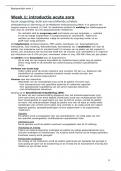
Based on this scenario, consider the following: (see handwritten notes for a – c)
Resulting trusts
Essential reading
Virgo ch 8.2 (NB this is only one section of chapter 8)
Tinsley v Milligan [1994] 1 AC 340
Tribe v Tribe [1996] Ch 107
Patel v Mirza [2016] UKSC 42
S Green & A Bogg, Illegality After Patel v Mirza (Hart 2018), pp 235-256 (this book is
available to view online via Cardiff University’s Library Catalogue).
------------
Recommended Extended Reading
M Law & R Ong, ‘‘He who comes to Equity need not do so with clean hands?’ illegality and
resulting trusts after Patel v Mirza, what should the approach be?’ (2017) 23 (8) Trusts &
Trustees 880-901.
G Virgo, ‘Patel v Mirza: One Step Forward and Two Steps Back’ (2016) 22 (10) Trusts &
Trustees 1090-1097.
1. Vilma’s favourite pastime was baking. Inspired by TV programme The Great British Bake
Off, Vilma decided to take out loans from several creditors, which she used to set up her own
bakery in Cardiff. Vilma’s most valuable asset was Mary Berry’s diamond encrusted cake tin,
which she purchased at auction for £30,000.
Vilma was an experimental baker, and decided that her business would specialise in cheese
and pineapple cakes and salt and vinegar brownies. However, as the uneaten cakes began to
accumulate and the bakery failed to make a profit, Vilma transferred the cake tin into Ruba’s
name to hide it from creditors.
Some months later, the salt and vinegar brownies filled the shop’s bins and Vilma’s bakery
business became insolvent. When the creditors subsequently attempted to claim the £30,000
cake tin, Vilma informed them that it no longer belonged to her, and entered into a settlement
with the creditors on this basis. Now the creditors are no longer pursuing her, Vilma seeks to
recover her prized diamond encrusted cake tin from Ruba.
Based on this scenario, consider the following: (see handwritten notes for a – c)