LGs test 1
Edit Save
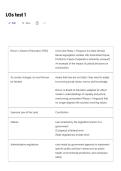
Brown v. Board of Education (1954) Overrules Plessy v. Ferguson (no stare decisis).
Racial segregation violates 14th Amendment Equal
Protection Clause ("separate is inherently unequal").
An example of the impact of judicial decisions on
social policy
As society changes, so must the law means that laws are not static—they need to adapt
be flexible to evolving social values, norms, and knowledge.
Brown vs Board of Education adapted to reflect
modern understandings of equality and justice,
overturning a precedent (Plessy v. Ferguson) that
no longer aligned with society's evolving values.
Supreme Law of the Land Constitution
Statues Laws enacted by the legislative branch of a
government
(Congress) at federal level
(State legislatures) at state level
Administrative regulations rules made by government agencies to implement
specific public policies in areas such as public
health, environmental protection, and workplace
safety
,Case Law/Common Law Judicial decisions that set precedents
When a court resolves a dispute, its ruling
becomes a reference for future similar cases.
Supremacy Clause Article VI of the Constitution, which makes the
Constitution, national laws, and treaties supreme
over state laws when the national government is
acting within its constitutional limits. Federal law is
supreme over state law; if state law conflicts with
federal law, federal law prevails.
Checks and Balances A system that allows each branch of government to
limit the powers of the other branches in order to
prevent abuse of power. Legislative makes laws.
Executive enforces laws. Judicial interprets laws.
Stare Decisis ("Let the Decision Courts follow precedents from previous cases to
Stand"): ensure consistency and predictability in the law.
• Lower courts must generally follow decisions
made by higher courts in the same jurisdiction.
Administrative Law • Rules and regulations created by government
agencies (e.g., FDA, EPA).
• Agencies enforce laws passed by legislatures.
What is law Law consists of rules that regulate
conduct of individuals, businesses,
and other organizations within society.
, maintaining the status quo some laws prevent the forceful overthrow of the
government
Maintaining the status quo = keeping things the
same. (Plessy vs Ferguson)
• Legal systems sometimes do this for stability and
predictability, but social progress often requires
challenging the status quo. (Brown vs Board of
education)
U.S. law facilitates orderly changes constitutional mechanisms, democratic
through a combination of elections, legal checks, and civic norms. These
systems
work best when all actors—government officials,
citizens,
and institutions—respect the rule of law and
democratic
principles
Constitutional mechanisms The U.S. Constitution provides the framework for
legal and governmental change.
• Examples:
• Amendments (e.g., 19th Amendment granting
women the right to vote)
• Separation of powers (legislative, executive,
judicial) ensures no branch becomes too powerful
Democratic Elections Citizens vote for representatives and leaders who
can make or change laws.
• This allows society to express evolving values
through peaceful, orderly mean
Edit Save
Brown v. Board of Education (1954) Overrules Plessy v. Ferguson (no stare decisis).
Racial segregation violates 14th Amendment Equal
Protection Clause ("separate is inherently unequal").
An example of the impact of judicial decisions on
social policy
As society changes, so must the law means that laws are not static—they need to adapt
be flexible to evolving social values, norms, and knowledge.
Brown vs Board of Education adapted to reflect
modern understandings of equality and justice,
overturning a precedent (Plessy v. Ferguson) that
no longer aligned with society's evolving values.
Supreme Law of the Land Constitution
Statues Laws enacted by the legislative branch of a
government
(Congress) at federal level
(State legislatures) at state level
Administrative regulations rules made by government agencies to implement
specific public policies in areas such as public
health, environmental protection, and workplace
safety
,Case Law/Common Law Judicial decisions that set precedents
When a court resolves a dispute, its ruling
becomes a reference for future similar cases.
Supremacy Clause Article VI of the Constitution, which makes the
Constitution, national laws, and treaties supreme
over state laws when the national government is
acting within its constitutional limits. Federal law is
supreme over state law; if state law conflicts with
federal law, federal law prevails.
Checks and Balances A system that allows each branch of government to
limit the powers of the other branches in order to
prevent abuse of power. Legislative makes laws.
Executive enforces laws. Judicial interprets laws.
Stare Decisis ("Let the Decision Courts follow precedents from previous cases to
Stand"): ensure consistency and predictability in the law.
• Lower courts must generally follow decisions
made by higher courts in the same jurisdiction.
Administrative Law • Rules and regulations created by government
agencies (e.g., FDA, EPA).
• Agencies enforce laws passed by legislatures.
What is law Law consists of rules that regulate
conduct of individuals, businesses,
and other organizations within society.
, maintaining the status quo some laws prevent the forceful overthrow of the
government
Maintaining the status quo = keeping things the
same. (Plessy vs Ferguson)
• Legal systems sometimes do this for stability and
predictability, but social progress often requires
challenging the status quo. (Brown vs Board of
education)
U.S. law facilitates orderly changes constitutional mechanisms, democratic
through a combination of elections, legal checks, and civic norms. These
systems
work best when all actors—government officials,
citizens,
and institutions—respect the rule of law and
democratic
principles
Constitutional mechanisms The U.S. Constitution provides the framework for
legal and governmental change.
• Examples:
• Amendments (e.g., 19th Amendment granting
women the right to vote)
• Separation of powers (legislative, executive,
judicial) ensures no branch becomes too powerful
Democratic Elections Citizens vote for representatives and leaders who
can make or change laws.
• This allows society to express evolving values
through peaceful, orderly mean