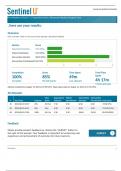
FUNDAMENTALS PROCTORED EXAM 100
CERTIFICATION ASSESSMENT 2026
COMPREHENSIVE STUDY SHEET
◉ Social interaction. Answer: Engaging patients with others to
reduce isolation.
◉ Frequent observations. Answer: Regular checks on patient
condition and behavior.
◉ Meaningful stimuli. Answer: Familiar items used to engage and
calm patients.
◉ Falls. Answer: Incidents where patients lose balance and fall.
◉ Patient inherent accidents. Answer: Accidents occurring due to
patient's own actions.
◉ Procedure-related accidents. Answer: Injuries resulting from
medical procedures.
◉ Equipment-related accidents. Answer: Injuries caused by
malfunctioning medical equipment.
,◉ Sleep disturbances. Answer: Disruptions in normal sleep patterns
affecting health.
◉ Call light. Answer: Device for patients to request assistance.
◉ Health care provider. Answer: Professional responsible for patient
medical care.
◉ Safety protocols. Answer: Guidelines established to ensure patient
safety.
◉ Procedure-related accidents. Answer: Accidents occurring during
medical procedures.
◉ Equipment-related accidents. Answer: Accidents from equipment
malfunction or misuse.
◉ Patient-controlled analgesic pump. Answer: Device allowing
patients to self-administer pain relief.
◉ Free-flow protection devices. Answer: Prevent rapid infusion of IV
fluids.
,◉ Fall precautions. Answer: Measures to prevent patient falls.
◉ Fall risk assessment. Answer: Evaluation to identify patients at
risk of falling.
◉ Surgical asepsis. Answer: Technique to maintain sterility during
invasive procedures.
◉ Medical asepsis. Answer: Technique to reduce pathogens, not
sterile.
◉ Clean asepsis. Answer: Technique involving cleanliness, not
sterility.
◉ National Patient Safety Goals. Answer: Guidelines to improve
patient safety in healthcare.
◉ Medication bar coding. Answer: Using barcodes to ensure safe
medication administration.
◉ Patient identification. Answer: Verifying patient identity before
procedures.
, ◉ Infection prevention. Answer: Measures to reduce risk of
infections.
◉ Call light accessibility. Answer: Ensuring patients can reach call
lights easily.
◉ Noisy alarms. Answer: Alarms that may distract or confuse staff.
◉ Side rails. Answer: Bed rails that may pose fall risks.
◉ High-risk fall alerts. Answer: Notifications for patients at
increased fall risk.
◉ IV catheter insertion. Answer: Procedure requiring sterile
technique to prevent infection.
◉ Hypnotic medication. Answer: Drugs that may impair patient
alertness.
◉ Orientation status. Answer: Patient's awareness of surroundings
affecting fall risk.
◉ Visitor timing. Answer: Scheduling visits to minimize patient fall
risks.
CERTIFICATION ASSESSMENT 2026
COMPREHENSIVE STUDY SHEET
◉ Social interaction. Answer: Engaging patients with others to
reduce isolation.
◉ Frequent observations. Answer: Regular checks on patient
condition and behavior.
◉ Meaningful stimuli. Answer: Familiar items used to engage and
calm patients.
◉ Falls. Answer: Incidents where patients lose balance and fall.
◉ Patient inherent accidents. Answer: Accidents occurring due to
patient's own actions.
◉ Procedure-related accidents. Answer: Injuries resulting from
medical procedures.
◉ Equipment-related accidents. Answer: Injuries caused by
malfunctioning medical equipment.
,◉ Sleep disturbances. Answer: Disruptions in normal sleep patterns
affecting health.
◉ Call light. Answer: Device for patients to request assistance.
◉ Health care provider. Answer: Professional responsible for patient
medical care.
◉ Safety protocols. Answer: Guidelines established to ensure patient
safety.
◉ Procedure-related accidents. Answer: Accidents occurring during
medical procedures.
◉ Equipment-related accidents. Answer: Accidents from equipment
malfunction or misuse.
◉ Patient-controlled analgesic pump. Answer: Device allowing
patients to self-administer pain relief.
◉ Free-flow protection devices. Answer: Prevent rapid infusion of IV
fluids.
,◉ Fall precautions. Answer: Measures to prevent patient falls.
◉ Fall risk assessment. Answer: Evaluation to identify patients at
risk of falling.
◉ Surgical asepsis. Answer: Technique to maintain sterility during
invasive procedures.
◉ Medical asepsis. Answer: Technique to reduce pathogens, not
sterile.
◉ Clean asepsis. Answer: Technique involving cleanliness, not
sterility.
◉ National Patient Safety Goals. Answer: Guidelines to improve
patient safety in healthcare.
◉ Medication bar coding. Answer: Using barcodes to ensure safe
medication administration.
◉ Patient identification. Answer: Verifying patient identity before
procedures.
, ◉ Infection prevention. Answer: Measures to reduce risk of
infections.
◉ Call light accessibility. Answer: Ensuring patients can reach call
lights easily.
◉ Noisy alarms. Answer: Alarms that may distract or confuse staff.
◉ Side rails. Answer: Bed rails that may pose fall risks.
◉ High-risk fall alerts. Answer: Notifications for patients at
increased fall risk.
◉ IV catheter insertion. Answer: Procedure requiring sterile
technique to prevent infection.
◉ Hypnotic medication. Answer: Drugs that may impair patient
alertness.
◉ Orientation status. Answer: Patient's awareness of surroundings
affecting fall risk.
◉ Visitor timing. Answer: Scheduling visits to minimize patient fall
risks.