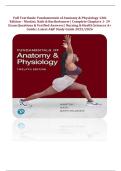
Full Test Bank: Fundamentals of Anatomy & Physiology 12th
Edition – Martini, Nath & Bartholomew | Complete Chapters 1- 29
Exam Questions & Verified Answers | Nursing & Health Sciences A+
Guide | Latest A&P Study Guide 2025/2026
,Table of Contents
Unit 1 Levels of Organization ..................................................................................................................................... 3
Chapter 1 An Introduction to Anatomy and Physiology ............................................................................... 3
Chapter 2 The Chemical Level of Organization.............................................................................................. 18
Chapter 3 The Cellular Level of Organization ................................................................................................ 46
Chapter 4 The Tissue Level of Organization .................................................................................................... 79
Unit 2: Support and Movement.............................................................................................................................. 100
Chapter 5 The Integumentary System ............................................................................................................ 100
Chapter 6 Bones and Bone Structure .............................................................................................................. 121
Chapter 7 The Axial Skeleton ............................................................................................................................ 147
Chapter 8 The Appendicular Skeleton ........................................................................................................... 175
Chapter 9 Joints.................................................................................................................................................... 201
Chapter 10 Muscle Tissue .................................................................................................................................. 224
Chapter 11 The Muscular System..................................................................................................................... 252
Unit 3: Control and Regulation .............................................................................................................................. 287
Chapter 12 Nervous Tissue .............................................................................................................................. 287
Chapter 13 The Spinal Cord, Spinal Nerves, and Spinal Reflexes ............................................................. 319
Chapter 14 The Brain and Cranial Nerves ...................................................................................................... 341
Chapter 15 Sensory Pathways and the Somatic Nervous System ................................................................. 376
Chapter 16 The Autonomic Nervous System and Higher- Order Functions............................................. 400
Chapter 17 The Special Senses .......................................................................................................................... 425
Chapter 18 The Endocrine System ................................................................................................................... 455
Unit 4: Fluids and Transport................................................................................................................................... 490
Chapter 19 Blood ................................................................................................................................................. 490
Chapter 20 The Heart ......................................................................................................................................... 518
Chapter 21 Blood Vessels and Circulation .................................................................................................... 551
Chapter 22 The Lymphoid System and Immunity ...................................................................................... 591
Unit 5: Environmental Exchange......................................................................................................................... 621
Chapter 23 The Respiratory System ............................................................................................................... 621
Chapter 24 The Digestive System.................................................................................................................... 658
Chapter 25 Metabolism, Nutrition and Energetics ..................................................................................... 698
Chapter 26 The Urinary System ....................................................................................................................... 723
Chapter 27 Fluid, Electrolyte, and Acid- Base Balance ................................................................................ 748
Unit 6: Continuity of Life ...................................................................................................................................... 759
Chapter 28 The Reproductive System ............................................................................................................ 759
Chapter 29 Development and Inheritance....................................................................................................... 793
, Unit 1 Levels of Organization
Chapter 1 An Introduction to Anatomy and Physiology
Multiple Choice Questions
1) The analysis of the internal structure of individual cells is called
A) cytology.
B) histology.
C) embryology.
D) physiology.
E) anatomy.
ANS: A
Diff: 1
Skill: Level 1 Questions: Reviewing Facts and Terms
2) The study of the general form and superficial markings of an organism is called anatomy.
A) gross
B) surface
C) systemic
D) regional
E) surgical
ANS: B
Diff: 1
Skill: Level 1 Questions: Reviewing Facts and Terms
3) The study of the superficial and internal features in a specific area of the body is called anatomy.
A) surface
B) regional
C) surgical
D) pathological
E) radiographic
ANS: B
Diff: 1
Skill: Level 1 Questions: Reviewing Facts and Terms
4) Anatomical features that change during illness are studied in anatomy.
A) gross
B) surface
C) microscopic
D) pathological
E) regional
ANS: D
Diff: 1
Skill: Level 1 Questions: Reviewing Facts and Terms
5) The study of the liver is to gross anatomy as the study of the liver cell is to
A) physiology.
B) regional anatomy.
C) cytology.
D) systemic anatomy.
E) radiographic anatomy.
ANS: C
Diff: 1
Skill: Level 1 Questions: Reviewing Facts and Terms
, 6) The study of the first two months of development is termed
A) histology.
B) embryology.
C) cytology.
D) pathology.
E) organology.
ANS: B
Diff: 1
Skill: Level 1 Questions: Reviewing Facts and Terms
7) The study of the function of specific organ systems is called
A) systemic physiology.
B) organ physiology.
C) cell physiology.
D) pathological physiology.
E) histology.
ANS: A
Diff: 1
Skill: Level 1 Questions: Reviewing Facts and Terms
8) Cardiovascular physiology is an example of
A) histophysiology.
B) organ physiology.
C) systemic physiology.
D) pathological physiology.
E) physiological
chemistry. ANS: C
Diff: 1
Skill: Level 1 Questions: Reviewing Facts and Terms
9) Which of the following is arranged in correct order from the most COMPLEX to the SIMPLEST?
A) cellular, tissue, molecular, system, organ, organism
B) molecular, cellular, tissue, organ, system, organism
C) tissue, cellular, molecular, organ, system, organism
D) organ, organism, molecular, cellular, tissue, system
E) organism, system, organ, tissue, cellular, molecular
ANS: E
Diff: 1
Skill: Level 1 Questions: Reviewing Facts and Terms
10) Which organ system provides support, protection of soft tissue, mineral storage, and blood formation?
A) integumentary
B) muscular
C) skeletal
D) nervous
E) endocrine
ANS: C
Diff: 1
Skill: Level 1 Questions: Reviewing Facts and Terms
Edition – Martini, Nath & Bartholomew | Complete Chapters 1- 29
Exam Questions & Verified Answers | Nursing & Health Sciences A+
Guide | Latest A&P Study Guide 2025/2026
,Table of Contents
Unit 1 Levels of Organization ..................................................................................................................................... 3
Chapter 1 An Introduction to Anatomy and Physiology ............................................................................... 3
Chapter 2 The Chemical Level of Organization.............................................................................................. 18
Chapter 3 The Cellular Level of Organization ................................................................................................ 46
Chapter 4 The Tissue Level of Organization .................................................................................................... 79
Unit 2: Support and Movement.............................................................................................................................. 100
Chapter 5 The Integumentary System ............................................................................................................ 100
Chapter 6 Bones and Bone Structure .............................................................................................................. 121
Chapter 7 The Axial Skeleton ............................................................................................................................ 147
Chapter 8 The Appendicular Skeleton ........................................................................................................... 175
Chapter 9 Joints.................................................................................................................................................... 201
Chapter 10 Muscle Tissue .................................................................................................................................. 224
Chapter 11 The Muscular System..................................................................................................................... 252
Unit 3: Control and Regulation .............................................................................................................................. 287
Chapter 12 Nervous Tissue .............................................................................................................................. 287
Chapter 13 The Spinal Cord, Spinal Nerves, and Spinal Reflexes ............................................................. 319
Chapter 14 The Brain and Cranial Nerves ...................................................................................................... 341
Chapter 15 Sensory Pathways and the Somatic Nervous System ................................................................. 376
Chapter 16 The Autonomic Nervous System and Higher- Order Functions............................................. 400
Chapter 17 The Special Senses .......................................................................................................................... 425
Chapter 18 The Endocrine System ................................................................................................................... 455
Unit 4: Fluids and Transport................................................................................................................................... 490
Chapter 19 Blood ................................................................................................................................................. 490
Chapter 20 The Heart ......................................................................................................................................... 518
Chapter 21 Blood Vessels and Circulation .................................................................................................... 551
Chapter 22 The Lymphoid System and Immunity ...................................................................................... 591
Unit 5: Environmental Exchange......................................................................................................................... 621
Chapter 23 The Respiratory System ............................................................................................................... 621
Chapter 24 The Digestive System.................................................................................................................... 658
Chapter 25 Metabolism, Nutrition and Energetics ..................................................................................... 698
Chapter 26 The Urinary System ....................................................................................................................... 723
Chapter 27 Fluid, Electrolyte, and Acid- Base Balance ................................................................................ 748
Unit 6: Continuity of Life ...................................................................................................................................... 759
Chapter 28 The Reproductive System ............................................................................................................ 759
Chapter 29 Development and Inheritance....................................................................................................... 793
, Unit 1 Levels of Organization
Chapter 1 An Introduction to Anatomy and Physiology
Multiple Choice Questions
1) The analysis of the internal structure of individual cells is called
A) cytology.
B) histology.
C) embryology.
D) physiology.
E) anatomy.
ANS: A
Diff: 1
Skill: Level 1 Questions: Reviewing Facts and Terms
2) The study of the general form and superficial markings of an organism is called anatomy.
A) gross
B) surface
C) systemic
D) regional
E) surgical
ANS: B
Diff: 1
Skill: Level 1 Questions: Reviewing Facts and Terms
3) The study of the superficial and internal features in a specific area of the body is called anatomy.
A) surface
B) regional
C) surgical
D) pathological
E) radiographic
ANS: B
Diff: 1
Skill: Level 1 Questions: Reviewing Facts and Terms
4) Anatomical features that change during illness are studied in anatomy.
A) gross
B) surface
C) microscopic
D) pathological
E) regional
ANS: D
Diff: 1
Skill: Level 1 Questions: Reviewing Facts and Terms
5) The study of the liver is to gross anatomy as the study of the liver cell is to
A) physiology.
B) regional anatomy.
C) cytology.
D) systemic anatomy.
E) radiographic anatomy.
ANS: C
Diff: 1
Skill: Level 1 Questions: Reviewing Facts and Terms
, 6) The study of the first two months of development is termed
A) histology.
B) embryology.
C) cytology.
D) pathology.
E) organology.
ANS: B
Diff: 1
Skill: Level 1 Questions: Reviewing Facts and Terms
7) The study of the function of specific organ systems is called
A) systemic physiology.
B) organ physiology.
C) cell physiology.
D) pathological physiology.
E) histology.
ANS: A
Diff: 1
Skill: Level 1 Questions: Reviewing Facts and Terms
8) Cardiovascular physiology is an example of
A) histophysiology.
B) organ physiology.
C) systemic physiology.
D) pathological physiology.
E) physiological
chemistry. ANS: C
Diff: 1
Skill: Level 1 Questions: Reviewing Facts and Terms
9) Which of the following is arranged in correct order from the most COMPLEX to the SIMPLEST?
A) cellular, tissue, molecular, system, organ, organism
B) molecular, cellular, tissue, organ, system, organism
C) tissue, cellular, molecular, organ, system, organism
D) organ, organism, molecular, cellular, tissue, system
E) organism, system, organ, tissue, cellular, molecular
ANS: E
Diff: 1
Skill: Level 1 Questions: Reviewing Facts and Terms
10) Which organ system provides support, protection of soft tissue, mineral storage, and blood formation?
A) integumentary
B) muscular
C) skeletal
D) nervous
E) endocrine
ANS: C
Diff: 1
Skill: Level 1 Questions: Reviewing Facts and Terms