Problem 7 2.6
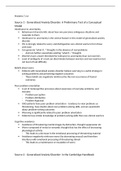
Source 1 - Generalised Anxiety Disorder: A Preliminary Test of a Conceptual
Model
Intolerance to uncertainty
Behavioural characteristic about how one perceives ambiguous situations and
responds to them
Intolerance to uncertainty is the central feature in this model of generalised anxiety
disorder
ITU is strongly related to worry and distinguishes non-clinical worriers from those
with GAD
Can generate “what if…” thoughts in the absence of real problems
- And can further exacerbate existing “what if…” thoughts
Worriers have a lower threshold for tolerance to uncertainty than non-worriers
Level of ambiguity of a task can discriminate between worriers and non-worriers but
not level of task difficulty
Beliefs about worry
Patients with Generalised anxiety disorder believe worrying is a useful strategy in
solving problems and preventing negative outcomes
- These beliefs are negatively reinforced by the non-occurrence of feared
outcomes
Poor problem orientation
A set of metacognitive processes about awareness of everyday problems, and
includes:
- Problem perception
- Problem Attribution
- Problem Appraisal
GAD patients have poor problem orientation – tendency to view problems as
threatening, have doubts about own problem-solving skills, and are pessimistic
about problem-solving outcomes
Worrying is significantly related to poor problem orientation
Patients have similar knowledge of problem-solving skills than non-clinical worriers
Cognitive avoidance
Avoidance of threatening mental images by distraction, thought suppression etc
Worry composed of verbal or semantic thought that has the effect of decreasing
physiological activity
- This leads to a decrease in the emotional processing of threatening material
Avoidance negatively reinforces worry (by decreasing arousal) and therefore
interferes with emotional processing of threatening stimuli
- This leads to a maintenance or escalation of worry
Source 2 - Generalised Anxiety Disorder: in the Cambridge Handbook
, Cognitive models of worry
Worry is a cognitive process focused on threatening future outcomes
Models explain the nature of GAD based on:
1. Influence of attentional threat bias
2. Negative interpretations of ambiguous stimuli
3. Lessened cognitive control
4. Worry’s impairment on working memory
5. Disorder-maintaining beliefs
Individuals with GAD show strong attentional threat bias
- They attend more quickly to threat cues
- They are more distracted by threatening stimuli when trying to shift attention to
non-threatening information
Attentional threat bias occurs outside of conscious awareness
In cognitive control, those with GAD showed reduced working memory capacity
when worried
- Inhibition ability and shifting attention are diminished in GAD patients
Memory of GAD patients may be compromised in later-life
Have high inaccurate estimates of probabilities of events
Show an interpretation bias – more likely to interpret ambiguous events as
threatening (negative interpretive tendency)
Positive beliefs about usefulness of worry - believe it to facilitate problem-solving
- However, they also hold negative beliefs that worry is uncontrollable and
dangerous meta worry (worrying about worrying)
Positive valence models of worry
When GAD individuals experience positive outcomes, there is a greater spike in
positive emotion due to the elevated distress level
- This has a reinforcing effect on worry
Those with GAD do not dwell on positive feelings for long to prevent sharp negative
emotional contrast in case something undesirable occurs
There is mixed evidence on whether GAD patients report fewer positive emotions to
positive stimuli than do controls
Individuals find it hard to imagine positive events happening to them
Gains and losses are experienced similarly – there is a reduced reward sensitivity
Arousal/regulatory models of worry
GAD is associated with reduced physiological activity stressors
Individuals use worry to sustain a negative emotional state and to dampen
physiological reactivity in case something undesirable occurs
It is associated with difficulties in sleep maintenance, reduced total sleep time, and
reduced deep sleep
Social processes in GAD
The disorder is associated with interpersonal dysfunction
- E.g., marital conflict/ lack of friends
Residual interpersonal problems at posttreatment predict a higher chance of relapse
at follow-up
Source 1 - Generalised Anxiety Disorder: A Preliminary Test of a Conceptual
Model
Intolerance to uncertainty
Behavioural characteristic about how one perceives ambiguous situations and
responds to them
Intolerance to uncertainty is the central feature in this model of generalised anxiety
disorder
ITU is strongly related to worry and distinguishes non-clinical worriers from those
with GAD
Can generate “what if…” thoughts in the absence of real problems
- And can further exacerbate existing “what if…” thoughts
Worriers have a lower threshold for tolerance to uncertainty than non-worriers
Level of ambiguity of a task can discriminate between worriers and non-worriers but
not level of task difficulty
Beliefs about worry
Patients with Generalised anxiety disorder believe worrying is a useful strategy in
solving problems and preventing negative outcomes
- These beliefs are negatively reinforced by the non-occurrence of feared
outcomes
Poor problem orientation
A set of metacognitive processes about awareness of everyday problems, and
includes:
- Problem perception
- Problem Attribution
- Problem Appraisal
GAD patients have poor problem orientation – tendency to view problems as
threatening, have doubts about own problem-solving skills, and are pessimistic
about problem-solving outcomes
Worrying is significantly related to poor problem orientation
Patients have similar knowledge of problem-solving skills than non-clinical worriers
Cognitive avoidance
Avoidance of threatening mental images by distraction, thought suppression etc
Worry composed of verbal or semantic thought that has the effect of decreasing
physiological activity
- This leads to a decrease in the emotional processing of threatening material
Avoidance negatively reinforces worry (by decreasing arousal) and therefore
interferes with emotional processing of threatening stimuli
- This leads to a maintenance or escalation of worry
Source 2 - Generalised Anxiety Disorder: in the Cambridge Handbook
, Cognitive models of worry
Worry is a cognitive process focused on threatening future outcomes
Models explain the nature of GAD based on:
1. Influence of attentional threat bias
2. Negative interpretations of ambiguous stimuli
3. Lessened cognitive control
4. Worry’s impairment on working memory
5. Disorder-maintaining beliefs
Individuals with GAD show strong attentional threat bias
- They attend more quickly to threat cues
- They are more distracted by threatening stimuli when trying to shift attention to
non-threatening information
Attentional threat bias occurs outside of conscious awareness
In cognitive control, those with GAD showed reduced working memory capacity
when worried
- Inhibition ability and shifting attention are diminished in GAD patients
Memory of GAD patients may be compromised in later-life
Have high inaccurate estimates of probabilities of events
Show an interpretation bias – more likely to interpret ambiguous events as
threatening (negative interpretive tendency)
Positive beliefs about usefulness of worry - believe it to facilitate problem-solving
- However, they also hold negative beliefs that worry is uncontrollable and
dangerous meta worry (worrying about worrying)
Positive valence models of worry
When GAD individuals experience positive outcomes, there is a greater spike in
positive emotion due to the elevated distress level
- This has a reinforcing effect on worry
Those with GAD do not dwell on positive feelings for long to prevent sharp negative
emotional contrast in case something undesirable occurs
There is mixed evidence on whether GAD patients report fewer positive emotions to
positive stimuli than do controls
Individuals find it hard to imagine positive events happening to them
Gains and losses are experienced similarly – there is a reduced reward sensitivity
Arousal/regulatory models of worry
GAD is associated with reduced physiological activity stressors
Individuals use worry to sustain a negative emotional state and to dampen
physiological reactivity in case something undesirable occurs
It is associated with difficulties in sleep maintenance, reduced total sleep time, and
reduced deep sleep
Social processes in GAD
The disorder is associated with interpersonal dysfunction
- E.g., marital conflict/ lack of friends
Residual interpersonal problems at posttreatment predict a higher chance of relapse
at follow-up