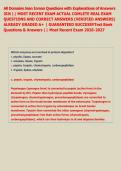
All Domains Jean Inman Questions with Explanations of Answers
2026 || MOST RECENT EXAM ACTUAL COMLETE REAL EXAM
QUESTIONS AND CORRECT ANSWERS (VERIFIED ANSWERS)
ALREADY GRADED A+ | GUARANTEED SUCCESS!!Test Bank
Questions & Answers || Most Recent Exam 2026-2027
Which enzymes are involved in protein digestion?
a. ptyalin, lipase, sucrase
b. amylase, lipase, trypsin
c. pepsin, trypsin, chymotrypsin, carboxypeptidase
d. trypsin, lipase, amylase
c. pepsin, trypsin, chymotrypsin, carboxypeptidase
Pepsinogen (zymogen form) is converted to pepsin (active form) in the
stomach by HCl. Pepsin then hydrolyzes peptide bonds. Zymogens
(trypsinogen, chymotrypsinogen, procarboxypeptidase) are converted to
active form on the brush border membrane of the enterocyte. Trypsinogen is
converted to active form trypsin by enterokinase on brush border
membrane. Tyrpsin then converted the other zymogens (chymotrypsinogen,
procarboxypeptidase) into their active forms (chymotrypsin,
carboxypeptidase), which can then hydrolyze to di and oligosaccharides.
,Protein digestion begins in the:
a. mouth
b. stomach
c. small intestine
d. ileum
b. stomach
No protein digestion in the mouth. Protein digestion begins with gastric
hormone, gastrin, releasing HCl and pepsinogen. HCl (from parietal cells)
begins protein denaturation. HCl also converts the zymogen pepsinogen to
pepsin, which hydrolyzes peptide bonds.
,Lactase is produced in the:
a. stomach
b. small intestine
c. gallbladder
d. pancreas
b. small intestine
Lactose is converted by lactase into glucose and galactose on the brush
border membrane of the small intestine, where it is absorbed into the
enterocyte.
Which enzymes are secreted by the pancreas?
a. amylase, lipase, cholesterol esterase, trypsin, chymotrypsin
b. sucrose, maltase, lactase, aminopeptidase
c. ptyalin
d. aminopeptidase, dipeptidase
a. amylase, lipase, cholesterol esterase, trypsin, chymotrypsin
When food enters the duodenum, the pancreas releases digestive enzymes
including pancreatic amylose, pancreatic lipase, cholesterol esterase, trypsin,
and chymotrypsin.
, Which conversion requires glucose-6-phosphatase?
a. glucose into liver glycogen
b. glucose into pyruvic acid
c. pyruvic acid into lactic acid
d. liver glycogen into glucose
d. Liver glycogen into glucose
Glycogen --- G6P --> glucose
*Muscles are selfish, so liver is only one that releases glycogen stores in
body. Muscles do not have G6P enzyme
It is NOT glucose into liver glycogen.
Glucose --- hexokinase (in muscles) -->
glycogen Glucose --- glucokinase (in liver) -->
glycogen
NADPH is:
a. essential in the synthesis of fatty acids
b. essential in the synthesis of glycogen
c. involved in the catabolism of protein
d. essential in transamination
a. essential in the synthesis of fatty acids
Lipogenesis requires NADPH (think NADPH, ends with PH which sounds like
"f", "f" for fat)
2026 || MOST RECENT EXAM ACTUAL COMLETE REAL EXAM
QUESTIONS AND CORRECT ANSWERS (VERIFIED ANSWERS)
ALREADY GRADED A+ | GUARANTEED SUCCESS!!Test Bank
Questions & Answers || Most Recent Exam 2026-2027
Which enzymes are involved in protein digestion?
a. ptyalin, lipase, sucrase
b. amylase, lipase, trypsin
c. pepsin, trypsin, chymotrypsin, carboxypeptidase
d. trypsin, lipase, amylase
c. pepsin, trypsin, chymotrypsin, carboxypeptidase
Pepsinogen (zymogen form) is converted to pepsin (active form) in the
stomach by HCl. Pepsin then hydrolyzes peptide bonds. Zymogens
(trypsinogen, chymotrypsinogen, procarboxypeptidase) are converted to
active form on the brush border membrane of the enterocyte. Trypsinogen is
converted to active form trypsin by enterokinase on brush border
membrane. Tyrpsin then converted the other zymogens (chymotrypsinogen,
procarboxypeptidase) into their active forms (chymotrypsin,
carboxypeptidase), which can then hydrolyze to di and oligosaccharides.
,Protein digestion begins in the:
a. mouth
b. stomach
c. small intestine
d. ileum
b. stomach
No protein digestion in the mouth. Protein digestion begins with gastric
hormone, gastrin, releasing HCl and pepsinogen. HCl (from parietal cells)
begins protein denaturation. HCl also converts the zymogen pepsinogen to
pepsin, which hydrolyzes peptide bonds.
,Lactase is produced in the:
a. stomach
b. small intestine
c. gallbladder
d. pancreas
b. small intestine
Lactose is converted by lactase into glucose and galactose on the brush
border membrane of the small intestine, where it is absorbed into the
enterocyte.
Which enzymes are secreted by the pancreas?
a. amylase, lipase, cholesterol esterase, trypsin, chymotrypsin
b. sucrose, maltase, lactase, aminopeptidase
c. ptyalin
d. aminopeptidase, dipeptidase
a. amylase, lipase, cholesterol esterase, trypsin, chymotrypsin
When food enters the duodenum, the pancreas releases digestive enzymes
including pancreatic amylose, pancreatic lipase, cholesterol esterase, trypsin,
and chymotrypsin.
, Which conversion requires glucose-6-phosphatase?
a. glucose into liver glycogen
b. glucose into pyruvic acid
c. pyruvic acid into lactic acid
d. liver glycogen into glucose
d. Liver glycogen into glucose
Glycogen --- G6P --> glucose
*Muscles are selfish, so liver is only one that releases glycogen stores in
body. Muscles do not have G6P enzyme
It is NOT glucose into liver glycogen.
Glucose --- hexokinase (in muscles) -->
glycogen Glucose --- glucokinase (in liver) -->
glycogen
NADPH is:
a. essential in the synthesis of fatty acids
b. essential in the synthesis of glycogen
c. involved in the catabolism of protein
d. essential in transamination
a. essential in the synthesis of fatty acids
Lipogenesis requires NADPH (think NADPH, ends with PH which sounds like
"f", "f" for fat)