11th October 2019
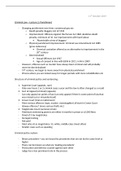
Criminal Law – Lecture 2: Punishment
- Changing punishment over time: consensual gay sex
o Death penalty: Buggery Act of 1533
o Imprisonment: Offences Against the Person Act 1861 abolishes death
penalty, minimum of 10 -ear imprisonment with hard labour
‘Abominable crime of buggary’
o Physical punishment/imprisonment: Criminal Law Amendment Act 1885
(gross indecency)
Chemical castration offered as an alternative to imprisonment in the
20th century
o Decriminalised
Sexual Offences Act 1967
Age of consent in line with E&W in 2011, in NI in 2009
- However, offences such as murder have always been criminal and will probably
never be decriminalised
- 19th century, we begin to move away from physical punishment
- Prisons where you are locked away for longer periods with more rehabilitation etc
Structure of criminal justice and sentencing:
1. Supreme Court (appeals, rare)
- Only ever hears 1 or 2 criminal cases a year and the law is often changed as a result
2. Curt of Appeal (criminal) (appeals)
- Can only appeal on points of law (can only appeal if there is some point of law that
was missed out or misunderstood)
3. Crown Court (trial on indictment)
- More serious offences (rape, murder, manslaughter) all start in Crown Court
- Idaway offences? (more serious thefts etc)
4. Magistrates Court (summary trials)
- Maximum sentencing powers are either 6 months in prison or £5,000 fines
- Panel of 3 lay magistrates
- No legal training
- Not paid
- Most who sit as magistrates: 55, white, middle-class (most often)
- Smaller cases such as speeding
Criminal justice system:
- Binary precedent = you are bound by precedents that are set by the same level or
higher
- There can be known as what are ‘leading precedents’
- Prosecution and defence counsel against each other
- Judge has a less prominent role in the process
Criminal Law – Lecture 2: Punishment
- Changing punishment over time: consensual gay sex
o Death penalty: Buggery Act of 1533
o Imprisonment: Offences Against the Person Act 1861 abolishes death
penalty, minimum of 10 -ear imprisonment with hard labour
‘Abominable crime of buggary’
o Physical punishment/imprisonment: Criminal Law Amendment Act 1885
(gross indecency)
Chemical castration offered as an alternative to imprisonment in the
20th century
o Decriminalised
Sexual Offences Act 1967
Age of consent in line with E&W in 2011, in NI in 2009
- However, offences such as murder have always been criminal and will probably
never be decriminalised
- 19th century, we begin to move away from physical punishment
- Prisons where you are locked away for longer periods with more rehabilitation etc
Structure of criminal justice and sentencing:
1. Supreme Court (appeals, rare)
- Only ever hears 1 or 2 criminal cases a year and the law is often changed as a result
2. Curt of Appeal (criminal) (appeals)
- Can only appeal on points of law (can only appeal if there is some point of law that
was missed out or misunderstood)
3. Crown Court (trial on indictment)
- More serious offences (rape, murder, manslaughter) all start in Crown Court
- Idaway offences? (more serious thefts etc)
4. Magistrates Court (summary trials)
- Maximum sentencing powers are either 6 months in prison or £5,000 fines
- Panel of 3 lay magistrates
- No legal training
- Not paid
- Most who sit as magistrates: 55, white, middle-class (most often)
- Smaller cases such as speeding
Criminal justice system:
- Binary precedent = you are bound by precedents that are set by the same level or
higher
- There can be known as what are ‘leading precedents’
- Prosecution and defence counsel against each other
- Judge has a less prominent role in the process