

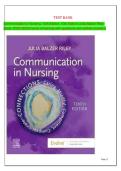
TEST BANK
Communication in Nursing, 10th Edition, 10th Edition (Julia Balzer Riley
latest, 2025//2026 Exams of Nursing with questions and verified answers.
Page | 1
, Table of Contents
Chapter 1: Responsible, Assertive, Caring Communication in Nursing
Chapter 2: The Client-Nurse Relationship: A Helping Relationship
Chapter 3: Solving Problems Together
Chapter9b4:9bUnderstanding9bEach9bOther:9bCommunication9band9bCul
ture9bChapter9b5:9bDemonstrating9bWarmth
Chapter9b6:9bShowing9bRespect9b
Chapter9b7:9bBeing9bGenuine9bC
hapter9b8:9bBeing9bEmpathetic9b
Chapter9b9:9bUsing9bSelf-
Disclosure9bChapter9b10:9bBeing9
specific9bChapter9b11:9bAsking9b
b
Questions9bChapter9b12:9bExpress
ing9bOpinions9bChapter9b13:9bUsi
ng9bHumor
Chapter9b14:9bEmbracing9bthe9bSpiritual9bJourney9bof9bHealth9bCaring,9bMeaning9bM
aking9bChapter9b15:9bRequesting9bSupport
Chapter9b16:9bOvercoming9bEvaluation9bAnxi
ety9bChapter9b17:9bWorking9bwith9bFeedb
ack9bChapter9b18:9bUsing9bRelaxation9btech
nique
Chapter9b19:9bIncorporating9bImagery9bin9bProfessional9bPractice9band9bSelf-
Care9bChapter9b209bIncorporating9bPositive9bSelf-Talk
Chapter9b21:9 b Learning9bto9bWork9bTogether9bin9bGroups
Chapter9b22:9bThe9bChanging9bWorld9bof9bElectronic9bCommunication9b
Chapter9b23:9bLearning9bConfrontation9bskills
Chapter9b24:9bRefusing9bUnreasonable9bRequests
Chapter9b25:9bCommunicating9bAssertively9band9bResponsibly9bwith9bDistressed9bClients9band9bColl
eagues9bChapter9b26:9bCommunicating9bAssertively9band9bResponsibly9bwith9bAggressive9bClients9ba
nd9bColleagues9bChapter9b27:9bCommunicating9bAssertively9band9bResponsibly9bwith9bUnpopular9b
Clients
Chapter9b29:9bCommunicating9bat9bthe9bEnd-of-
Life9bChapter9b30:9bContinuing9bthe9bCommitm
ent
Page9b|9b2
,Balzer9bRiley:9bCommunication9bin9bNursing,9b10th9bEdition
Chapter9b1:9bResponsible,9bAssertive,9bCaring9bCommunication9bin9bNursing
Test9bBank9bMulti
ple9bChoice
1. Which9 b statement9 b describes9 b the9 b affective9 b aspect9 b of9 b learning9 b e
ffective9bcommunication9bstrategies?
a. “The9bnurse9bshould9buse9bclear,9bdirect9bstatements9busing9bobjective9bwords.”
b. “The9bnurse9buses9bbody9blanguage9bthat9bis9bcongruent9bwith9bthe9bverbal9bmessage.”
c. “The9bnurse9bbelieves9bthat9bpositive9bcommunication9bstrategies9bbuild9bconfidence.”
d. “The9bnurse9bpractices9bassertive9band9bresponsible9bcommunication9bstrategies.”
ANS:C
Learning9binvolves9bthree9bdomains:9bthe9bcognitive9baspects9b(understanding9band9bmeaning
),9baffective9baspects9b(feelings,9bvalues,9band9battitudes),9band9bpsychomotor9baspects9b(physi
cal9bcapability).Learning9bbasic9bcommunication9bskills9binvolves9bthe9bcognitive9bdomain;9b
building9bconfidence9bthrough9ba9bbelief9bin9bthe9bvalue9band9bimpact9bof9bpositive9bcommuni
cation9bis9bthe9baffective9bdomain;9band9bputting9bskills9binto9baction9bis9bthe9bpsychomotor9bd
omain.DIF:9bComprehension9bREF:9bp.9b139bTOP:9bIntegrated9bProcess:9bCommunication9ba
nd9 b Documentation9bMSC:9bPsychosocial9bIntegrity
2. The9bnurse9bmanager9basks9bthe9bstaff9bnurse9bto9bwork9ban9bextra9bshift.9bWhich9bresp
onse9bby9bthe9bstaff9bnurse9bis9bassertive9band9bbased9bon9brational9bbeliefs?
a. “I9bdon’t9bwant9byou9bupset,9bso9bI9bwill9bwork9bextra.”
b. “Why9bdo9bI9balways9bhave9bto9bcover9bextra9bshifts?”
c. “I9bam9bnot9bable9bto9bwork9ban9bextra9bshift.”
d. “If9byou9bcan’t9bfind9banyone9belse,9bI9bwill9bdo9bit.”
Page9b|9b3
, ANS:C
The9bstaff9bnurse9bmay9bturn9bdown9beven9ba9breasonable9brequest;9ban9bassertive9bresponse9ba
voids9birrational9bbeliefs.9bIrrational9bbeliefs9boccur9bas9ba9bresult9bof9bbeing9banxious9babout9b
assertiveness9bor9bfocusing9bon9bpossible9bnegative9boutcomes.DIF:9bAnalysis9bREF:9bp.9b89b
TOP:9bIntegrated9bProcess:9bCommunication9band9bDocumentation9bMSC:9bSafe9band9bEffec
tive9bCare9bEnvironment:9bManagement9bof9bCare
Page9b|9b4
Communication in Nursing, 10th Edition, 10th Edition (Julia Balzer Riley
latest, 2025//2026 Exams of Nursing with questions and verified answers.
Page | 1
, Table of Contents
Chapter 1: Responsible, Assertive, Caring Communication in Nursing
Chapter 2: The Client-Nurse Relationship: A Helping Relationship
Chapter 3: Solving Problems Together
Chapter9b4:9bUnderstanding9bEach9bOther:9bCommunication9band9bCul
ture9bChapter9b5:9bDemonstrating9bWarmth
Chapter9b6:9bShowing9bRespect9b
Chapter9b7:9bBeing9bGenuine9bC
hapter9b8:9bBeing9bEmpathetic9b
Chapter9b9:9bUsing9bSelf-
Disclosure9bChapter9b10:9bBeing9
specific9bChapter9b11:9bAsking9b
b
Questions9bChapter9b12:9bExpress
ing9bOpinions9bChapter9b13:9bUsi
ng9bHumor
Chapter9b14:9bEmbracing9bthe9bSpiritual9bJourney9bof9bHealth9bCaring,9bMeaning9bM
aking9bChapter9b15:9bRequesting9bSupport
Chapter9b16:9bOvercoming9bEvaluation9bAnxi
ety9bChapter9b17:9bWorking9bwith9bFeedb
ack9bChapter9b18:9bUsing9bRelaxation9btech
nique
Chapter9b19:9bIncorporating9bImagery9bin9bProfessional9bPractice9band9bSelf-
Care9bChapter9b209bIncorporating9bPositive9bSelf-Talk
Chapter9b21:9 b Learning9bto9bWork9bTogether9bin9bGroups
Chapter9b22:9bThe9bChanging9bWorld9bof9bElectronic9bCommunication9b
Chapter9b23:9bLearning9bConfrontation9bskills
Chapter9b24:9bRefusing9bUnreasonable9bRequests
Chapter9b25:9bCommunicating9bAssertively9band9bResponsibly9bwith9bDistressed9bClients9band9bColl
eagues9bChapter9b26:9bCommunicating9bAssertively9band9bResponsibly9bwith9bAggressive9bClients9ba
nd9bColleagues9bChapter9b27:9bCommunicating9bAssertively9band9bResponsibly9bwith9bUnpopular9b
Clients
Chapter9b29:9bCommunicating9bat9bthe9bEnd-of-
Life9bChapter9b30:9bContinuing9bthe9bCommitm
ent
Page9b|9b2
,Balzer9bRiley:9bCommunication9bin9bNursing,9b10th9bEdition
Chapter9b1:9bResponsible,9bAssertive,9bCaring9bCommunication9bin9bNursing
Test9bBank9bMulti
ple9bChoice
1. Which9 b statement9 b describes9 b the9 b affective9 b aspect9 b of9 b learning9 b e
ffective9bcommunication9bstrategies?
a. “The9bnurse9bshould9buse9bclear,9bdirect9bstatements9busing9bobjective9bwords.”
b. “The9bnurse9buses9bbody9blanguage9bthat9bis9bcongruent9bwith9bthe9bverbal9bmessage.”
c. “The9bnurse9bbelieves9bthat9bpositive9bcommunication9bstrategies9bbuild9bconfidence.”
d. “The9bnurse9bpractices9bassertive9band9bresponsible9bcommunication9bstrategies.”
ANS:C
Learning9binvolves9bthree9bdomains:9bthe9bcognitive9baspects9b(understanding9band9bmeaning
),9baffective9baspects9b(feelings,9bvalues,9band9battitudes),9band9bpsychomotor9baspects9b(physi
cal9bcapability).Learning9bbasic9bcommunication9bskills9binvolves9bthe9bcognitive9bdomain;9b
building9bconfidence9bthrough9ba9bbelief9bin9bthe9bvalue9band9bimpact9bof9bpositive9bcommuni
cation9bis9bthe9baffective9bdomain;9band9bputting9bskills9binto9baction9bis9bthe9bpsychomotor9bd
omain.DIF:9bComprehension9bREF:9bp.9b139bTOP:9bIntegrated9bProcess:9bCommunication9ba
nd9 b Documentation9bMSC:9bPsychosocial9bIntegrity
2. The9bnurse9bmanager9basks9bthe9bstaff9bnurse9bto9bwork9ban9bextra9bshift.9bWhich9bresp
onse9bby9bthe9bstaff9bnurse9bis9bassertive9band9bbased9bon9brational9bbeliefs?
a. “I9bdon’t9bwant9byou9bupset,9bso9bI9bwill9bwork9bextra.”
b. “Why9bdo9bI9balways9bhave9bto9bcover9bextra9bshifts?”
c. “I9bam9bnot9bable9bto9bwork9ban9bextra9bshift.”
d. “If9byou9bcan’t9bfind9banyone9belse,9bI9bwill9bdo9bit.”
Page9b|9b3
, ANS:C
The9bstaff9bnurse9bmay9bturn9bdown9beven9ba9breasonable9brequest;9ban9bassertive9bresponse9ba
voids9birrational9bbeliefs.9bIrrational9bbeliefs9boccur9bas9ba9bresult9bof9bbeing9banxious9babout9b
assertiveness9bor9bfocusing9bon9bpossible9bnegative9boutcomes.DIF:9bAnalysis9bREF:9bp.9b89b
TOP:9bIntegrated9bProcess:9bCommunication9band9bDocumentation9bMSC:9bSafe9band9bEffec
tive9bCare9bEnvironment:9bManagement9bof9bCare
Page9b|9b4


