Cell Structure
Animal cells
Animals are made up of cells. These cells are eukaryotic. This means they have a nucleus and other
structures which are surrounded by membranes.
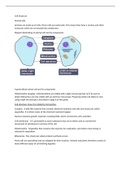
Diagram illustrating an animal cell and its components
A generalised animal cell and its components
Mitochondria (singular: mitochondrion) are visible with a light microscope but can't be seen in
detail. Ribosomes are only visible with an electron microscope. Preparing cheek cell slides to view
using a light microscope is described in page 6 of this guide.
Cell structure- How it is related to its function.
Cytoplas - A jelly-like material that contains dissolved nutrients and salts and structures called
organelles. It is where many of the chemical reactions happen.
Nucleus-Contains genetic material, including DNA, which controls the cell's activities.
Cell membrane - it is permeable to some substances but not to others and so controls the
movement of substances in and out of the cell.
Mitochondria - Organelles that contains the enzymes for respiration, and where most energy is
released in respiration.
Ribosomes- Tiny structures where protein synthesis occurs.
Most cells are specialised and are adapted for their function. Animals and plants therefore consist of
many different types of cell working together.
, Plant cells
Plants are made up of cells. These cells are eukaryotic. This means they have a nucleus and other
structures which are surrounded by membranes.
A view of cells under a light microscope and an electron microscope
A generalised plant cell and its components.
Animal and plant cells have certain structures in common: the nucleus, cell membrane, mitochondria
and ribosomes. Plant cells also have some additional structures:
Structure- How it is related to its function
Chloroplast- Organelle that contains the green pigment, chlorophyll, which absorbs light energy for
photosynthesis. Contains the enzymes needed for photosynthesis.
Cell wall- Plant and bacterial cell walls provide structure and protection. Only plant cell walls are
made from cellulose.
Permanent vacuole- Filled with cell sap to help keep the cell swollen.
Animal cells may also have vacuoles, but these are small and temporary.
Bacterial cells
Bacteria are all single-celled. The cells are all prokaryotic. This means they do not have a nucleus or
any other structures which are surrounded by membranes. Larger bacterial cells may be visible using
a light microscope, however an electron microscope would be needed to see the details of the cell
organelles.
Bacteria cell, labelling chromosomal DNA, plasmid DNA, flagellum, cell membrane and cell wall.
A generalised bacterial cell and its components
Plant and animal cells have some components in common with bacterial cells. These include the
cytoplasm and cell membrane. Bacteria have other components that are unique:
Animal cells
Animals are made up of cells. These cells are eukaryotic. This means they have a nucleus and other
structures which are surrounded by membranes.
Diagram illustrating an animal cell and its components
A generalised animal cell and its components
Mitochondria (singular: mitochondrion) are visible with a light microscope but can't be seen in
detail. Ribosomes are only visible with an electron microscope. Preparing cheek cell slides to view
using a light microscope is described in page 6 of this guide.
Cell structure- How it is related to its function.
Cytoplas - A jelly-like material that contains dissolved nutrients and salts and structures called
organelles. It is where many of the chemical reactions happen.
Nucleus-Contains genetic material, including DNA, which controls the cell's activities.
Cell membrane - it is permeable to some substances but not to others and so controls the
movement of substances in and out of the cell.
Mitochondria - Organelles that contains the enzymes for respiration, and where most energy is
released in respiration.
Ribosomes- Tiny structures where protein synthesis occurs.
Most cells are specialised and are adapted for their function. Animals and plants therefore consist of
many different types of cell working together.
, Plant cells
Plants are made up of cells. These cells are eukaryotic. This means they have a nucleus and other
structures which are surrounded by membranes.
A view of cells under a light microscope and an electron microscope
A generalised plant cell and its components.
Animal and plant cells have certain structures in common: the nucleus, cell membrane, mitochondria
and ribosomes. Plant cells also have some additional structures:
Structure- How it is related to its function
Chloroplast- Organelle that contains the green pigment, chlorophyll, which absorbs light energy for
photosynthesis. Contains the enzymes needed for photosynthesis.
Cell wall- Plant and bacterial cell walls provide structure and protection. Only plant cell walls are
made from cellulose.
Permanent vacuole- Filled with cell sap to help keep the cell swollen.
Animal cells may also have vacuoles, but these are small and temporary.
Bacterial cells
Bacteria are all single-celled. The cells are all prokaryotic. This means they do not have a nucleus or
any other structures which are surrounded by membranes. Larger bacterial cells may be visible using
a light microscope, however an electron microscope would be needed to see the details of the cell
organelles.
Bacteria cell, labelling chromosomal DNA, plasmid DNA, flagellum, cell membrane and cell wall.
A generalised bacterial cell and its components
Plant and animal cells have some components in common with bacterial cells. These include the
cytoplasm and cell membrane. Bacteria have other components that are unique: