DNA and chromosomes
For most of the time, DNA exists in the nucleus as thin strands. When the cells containing nuclei are
ready to divide, the DNA copies itself then coils and condenses to form chromosomes.
Each chromosome is made from a single molecule of DNA. Each section of this single molecule of
DNA contains a code to produce a particular protein called a gene.
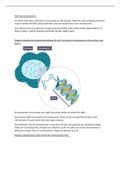
Diagram showing the relationship between the cell, its nucleus, chromosomes in the nucleus, and
genes-
Chromosomes in the nucleus are made from genes which are made from DNA
Each human body cell contains 46 chromosomes. These can be arranged into 23 pairs. Each
chromosome in a pair carries the same types of genes.
The 23rd pair is the sex chromosomes. In females, the two chromosomes are identical in shape.
These are X chromosomes. Females are referred to as XX. In males, one of the chromosomes is
different in shape. This is a Y chromosome. Males are referred to as XY.
Diagram showing how male and female chromosomes form-
, Mitosis
Cells divide when:
an organism grows
an organism becomes damaged and needs to produce new cells for repair
organisms like bacteria reproduce asexually
It is essential that any new cells produced contain genetic information that is identical to the parent
cell.
A growing and dividing cell goes through a series of stages called the cell cycle.
The first stages of the cell cycle involve cell growth, then synthesis of DNA. The single strand of DNA
that makes up each chromosome produces an exact copy of itself. After this a period of further
growth occurs and the DNA is checked for errors. Mitosis occurs after this checking has been
completed. Finally the cytoplasm of the cell separates and two cells are formed.
The first stages of the cell cycle involve cell growth, then synthesis of DNA. The single strand of DNA
that makes up each chromosome produces an exact copy of itself.
Mitosis is a part of the cell cycle
For most of the time, DNA exists in the nucleus as thin strands. When the cells containing nuclei are
ready to divide, the DNA copies itself then coils and condenses to form chromosomes.
Each chromosome is made from a single molecule of DNA. Each section of this single molecule of
DNA contains a code to produce a particular protein called a gene.
Diagram showing the relationship between the cell, its nucleus, chromosomes in the nucleus, and
genes-
Chromosomes in the nucleus are made from genes which are made from DNA
Each human body cell contains 46 chromosomes. These can be arranged into 23 pairs. Each
chromosome in a pair carries the same types of genes.
The 23rd pair is the sex chromosomes. In females, the two chromosomes are identical in shape.
These are X chromosomes. Females are referred to as XX. In males, one of the chromosomes is
different in shape. This is a Y chromosome. Males are referred to as XY.
Diagram showing how male and female chromosomes form-
, Mitosis
Cells divide when:
an organism grows
an organism becomes damaged and needs to produce new cells for repair
organisms like bacteria reproduce asexually
It is essential that any new cells produced contain genetic information that is identical to the parent
cell.
A growing and dividing cell goes through a series of stages called the cell cycle.
The first stages of the cell cycle involve cell growth, then synthesis of DNA. The single strand of DNA
that makes up each chromosome produces an exact copy of itself. After this a period of further
growth occurs and the DNA is checked for errors. Mitosis occurs after this checking has been
completed. Finally the cytoplasm of the cell separates and two cells are formed.
The first stages of the cell cycle involve cell growth, then synthesis of DNA. The single strand of DNA
that makes up each chromosome produces an exact copy of itself.
Mitosis is a part of the cell cycle