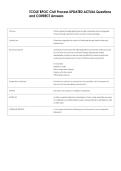
TCOLE BPOC Civil Process UPDATED ACTUAL Questions
and CORRECT Answers
Civil Law Civil law defines the legal significance of public and private acts and regulates
conduct through injunctions and the award of money damages.
Criminal Law Criminal law regulates the conduct of individuals through threats of fines and
imprisonment
General Contempt Contempt of court means the willful disobedience to the rules, orders or process
of a Court by way of an act or omission thereby affecting the orderly
administration of justice. A fine not more that 500.00 or 6 month in jail or both.
Justice and Municipal Courts- A fine of 100.00 or 3 days in jail or both
For example:
Disobey an order
Fail to comply with a request
Tamper with documents
Withholding evidence
Constructive Contempt Constructive contempt is a contempt of court committed, not in the presence of
the court, but at some distance away from it.
AFFIANT The person who swears to an affidavit or statement.
AFFIDAVIT A written or printed statement or declaration of facts, made voluntarily and sworn
to or affirmed by an affiant before a person having authority to administer an oath
or affirmation.
ALTERNATE SERVICE A court approved method of delivering a court document to an uncooperative
defendant.
, APPEAL A request or complaint to a higher court to correct an injustice or error
committed by a lower court; in justice court, the removal of the cause from justice
court to county court for the purpose of obtaining a review and new trial.
ANSWER A pleading in a civil matter in which one party (defendant) responds to the claim
of another party (plaintiff); in an answer, the defendant will deny the allegations in
the plaintiff's complaint or agree with the facts but allege new information which
should prevent the plaintiff from recovering on the facts originally presented.
ATTACHMENT The seizure of persons or property so that they will come under the custody and
control of the court; the process occurs by virtue of a writ, summons or other
judicial order.
CAPIAS (Latin) A writ similar to an arrest warrant; a judicial writ commanding a peace officer to
take a person into custody to answer specific charges
CITATION Official process by which a plaintiff gives a defendant notice of suit. The purpose
is to give the court jurisdiction over the parties, to satisfy due process
requirements, and to provide the defendant the opportunity to appear and
defend himself.
COMPLAINT An affidavit or sworn statement made before the court which charges the
commission of an offense within the jurisdiction of the court.
COURT OF RECORD A court whose proceedings are recorded by a court reporter; justice courts are
not courts of record; county and district courts are courts of record.
DEFAULT JUDGMENT A judgment entered by the court upon the failure of a party to plead or appear at
the appointed time.
EXECUTION a writ issued by a court of competent jurisdiction, commanding an officer to
collect the judgment amount and costs or to levy upon the non-exempt property
of a defendant, in satisfaction of a previous judgment rendered by the issuing
court.
DILIGENCE EFFORT Persistent activity, prudence or care; " _________ " is that which is properly
expected from a reason and prudent person under the particular circumstances.
EXEMPT PROPERTY Property specified by statute, which may not be seized or sold to satisfy an
execution or attachment.
EX PARTE PROTECTIVE ORDER An order issued by a family court (district or county court) to prohibit a defendant
from certain acts including further family violence, and requiring the defendant to
appear in court on a specified date and time. It may include an order directing a
law enforcement officer to inform a defendant to vacate a premise.
FORCIBLE ENTRY AND DETAINER (Eviction suit) Provide a summary, speedy, simple, and inexpensive remedy for
determination of who is entitled to possession of real property and/or post due
rent.
GOOD FAITH Honesty of intention; sincerity.
and CORRECT Answers
Civil Law Civil law defines the legal significance of public and private acts and regulates
conduct through injunctions and the award of money damages.
Criminal Law Criminal law regulates the conduct of individuals through threats of fines and
imprisonment
General Contempt Contempt of court means the willful disobedience to the rules, orders or process
of a Court by way of an act or omission thereby affecting the orderly
administration of justice. A fine not more that 500.00 or 6 month in jail or both.
Justice and Municipal Courts- A fine of 100.00 or 3 days in jail or both
For example:
Disobey an order
Fail to comply with a request
Tamper with documents
Withholding evidence
Constructive Contempt Constructive contempt is a contempt of court committed, not in the presence of
the court, but at some distance away from it.
AFFIANT The person who swears to an affidavit or statement.
AFFIDAVIT A written or printed statement or declaration of facts, made voluntarily and sworn
to or affirmed by an affiant before a person having authority to administer an oath
or affirmation.
ALTERNATE SERVICE A court approved method of delivering a court document to an uncooperative
defendant.
, APPEAL A request or complaint to a higher court to correct an injustice or error
committed by a lower court; in justice court, the removal of the cause from justice
court to county court for the purpose of obtaining a review and new trial.
ANSWER A pleading in a civil matter in which one party (defendant) responds to the claim
of another party (plaintiff); in an answer, the defendant will deny the allegations in
the plaintiff's complaint or agree with the facts but allege new information which
should prevent the plaintiff from recovering on the facts originally presented.
ATTACHMENT The seizure of persons or property so that they will come under the custody and
control of the court; the process occurs by virtue of a writ, summons or other
judicial order.
CAPIAS (Latin) A writ similar to an arrest warrant; a judicial writ commanding a peace officer to
take a person into custody to answer specific charges
CITATION Official process by which a plaintiff gives a defendant notice of suit. The purpose
is to give the court jurisdiction over the parties, to satisfy due process
requirements, and to provide the defendant the opportunity to appear and
defend himself.
COMPLAINT An affidavit or sworn statement made before the court which charges the
commission of an offense within the jurisdiction of the court.
COURT OF RECORD A court whose proceedings are recorded by a court reporter; justice courts are
not courts of record; county and district courts are courts of record.
DEFAULT JUDGMENT A judgment entered by the court upon the failure of a party to plead or appear at
the appointed time.
EXECUTION a writ issued by a court of competent jurisdiction, commanding an officer to
collect the judgment amount and costs or to levy upon the non-exempt property
of a defendant, in satisfaction of a previous judgment rendered by the issuing
court.
DILIGENCE EFFORT Persistent activity, prudence or care; " _________ " is that which is properly
expected from a reason and prudent person under the particular circumstances.
EXEMPT PROPERTY Property specified by statute, which may not be seized or sold to satisfy an
execution or attachment.
EX PARTE PROTECTIVE ORDER An order issued by a family court (district or county court) to prohibit a defendant
from certain acts including further family violence, and requiring the defendant to
appear in court on a specified date and time. It may include an order directing a
law enforcement officer to inform a defendant to vacate a premise.
FORCIBLE ENTRY AND DETAINER (Eviction suit) Provide a summary, speedy, simple, and inexpensive remedy for
determination of who is entitled to possession of real property and/or post due
rent.
GOOD FAITH Honesty of intention; sincerity.