Human nutrition
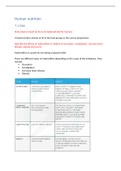
7.1 Diet
State what is meant by the term balanced diet for humans
A balanced diet consists of all of the food groups in the correct proportions.
Describe the effects of malnutrition in relation to starvation, constipation, coronary heart
disease, obesity and scurvy
Malnutrition is caused by not eating a balanced diet.
There are different types of malnutrition depending on the cause of the imbalance. They
include:
Starvation
Constipation
Coronary heart disease
Obesity
,Fibre is important for keeping the digestive tract working smoothly. Since
we do not digest it, the fibre in food passes into the intestine and absorbs water. The
undigested fibre creates "bulk" so the muscles in the intestine can push waste out of the
body. Eating enough fibre helps prevent constipation.
The alimentary canal is a muscular tube, which extends from the mouth to the anus.
List the principal sources of, and describe the dietary importance of:
Carbohydrates
Fats
Proteins
Vitamins, limited to C and D
Mineral salts, limited to calcium and iron
Fibre (roughage)
Water
Food groups
Vitamins and minerals
, Scurvy: a disease resulting from a lack of vitamin C (ascorbic acid). Early symptoms of
deficiency include weakness, feeling tired and sore arms and legs. Without treatment,
decreased red blood cells, gum disease, changes to hair, and bleeding from the skin may
occur.
Osteoporosis is a bone disease that occurs when the body loses too much bone, makes too
little bone, or both. As a result, bones become weak and may break from a fall or, in serious
cases, from sneezing or minor bumps. Osteoporosis means “porous bone.”
Explain the causes and effects of vitamin D and iron deficiencies
7.1 Diet
State what is meant by the term balanced diet for humans
A balanced diet consists of all of the food groups in the correct proportions.
Describe the effects of malnutrition in relation to starvation, constipation, coronary heart
disease, obesity and scurvy
Malnutrition is caused by not eating a balanced diet.
There are different types of malnutrition depending on the cause of the imbalance. They
include:
Starvation
Constipation
Coronary heart disease
Obesity
,Fibre is important for keeping the digestive tract working smoothly. Since
we do not digest it, the fibre in food passes into the intestine and absorbs water. The
undigested fibre creates "bulk" so the muscles in the intestine can push waste out of the
body. Eating enough fibre helps prevent constipation.
The alimentary canal is a muscular tube, which extends from the mouth to the anus.
List the principal sources of, and describe the dietary importance of:
Carbohydrates
Fats
Proteins
Vitamins, limited to C and D
Mineral salts, limited to calcium and iron
Fibre (roughage)
Water
Food groups
Vitamins and minerals
, Scurvy: a disease resulting from a lack of vitamin C (ascorbic acid). Early symptoms of
deficiency include weakness, feeling tired and sore arms and legs. Without treatment,
decreased red blood cells, gum disease, changes to hair, and bleeding from the skin may
occur.
Osteoporosis is a bone disease that occurs when the body loses too much bone, makes too
little bone, or both. As a result, bones become weak and may break from a fall or, in serious
cases, from sneezing or minor bumps. Osteoporosis means “porous bone.”
Explain the causes and effects of vitamin D and iron deficiencies