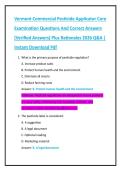
Vermont Commercial Pesticide Applicator Core
Examination Questions And Correct Answers
(Verified Answers) Plus Rationales 2026 Q&A |
Instant Download Pdf
1. What is the primary purpose of pesticide regulation?
A. Increase product sales
B. Protect human health and the environment
C. Eliminate all insects
D. Reduce farming costs
Answer: B. Protect human health and the environment
Rationale: Pesticide regulations are designed to ensure products
are used safely, minimizing risks to people, animals, and
ecosystems while maintaining effectiveness.
2. The pesticide label is considered:
A. A suggestion
B. A legal document
C. Optional reading
D. Marketing material
Answer: B. A legal document
, Rationale: Labels are legally enforceable instructions under federal
and state laws and must be followed exactly during pesticide use.
3. Which signal word indicates the highest acute toxicity?
A. Caution
B. Warning
C. Danger
D. Notice
Answer: C. Danger
Rationale: “Danger” indicates highly toxic products that may
cause severe injury or death from small exposures.
4. What does PPE stand for?
A. Pest Prevention Equipment
B. Personal Protective Equipment
C. Pesticide Processing Equipment
D. Plant Protection Element
Answer: B. Personal Protective Equipment
Rationale: PPE refers to gear such as gloves, goggles, and
respirators that protect applicators from exposure.
5. The active ingredient in a pesticide is:
A. The inert carrier
B. The substance that controls the pest
, C. The label design
D. The container
Answer: B. The substance that controls the pest
Rationale: Active ingredients are the chemical or biological
components responsible for pest control.
6. A restricted-use pesticide (RUP) may be purchased by:
A. Anyone over 18
B. Licensed applicators only
C. Any farm worker
D. Retail customers
Answer: B. Licensed applicators only
Rationale: RUPs require certification due to potential risks to
health or the environment.
7. What is pesticide drift?
A. Evaporation from soil
B. Movement away from the target site
C. Spillage during transport
D. Degradation over time
Answer: B. Movement away from the target site
Rationale: Drift occurs when pesticide particles or vapors travel to
unintended areas, potentially causing damage.
, 8. The term “residual activity” refers to:
A. Immediate toxicity
B. Length of time pesticide remains effective
C. Packaging durability
D. Storage life
Answer: B. Length of time pesticide remains effective
Rationale: Residual activity indicates how long a pesticide
continues to control pests after application.
9. Which exposure route is most common for applicators?
A. Injection
B. Dermal
C. Inhalation
D. Ingestion
Answer: B. Dermal
Rationale: Skin contact is the most frequent route because
applicators handle equipment and treated surfaces.
10. What is the purpose of a Material Safety Data Sheet (SDS)?
A. Provide pest identification
B. Describe safety and hazard information
C. Advertise products
D. Track sales
Examination Questions And Correct Answers
(Verified Answers) Plus Rationales 2026 Q&A |
Instant Download Pdf
1. What is the primary purpose of pesticide regulation?
A. Increase product sales
B. Protect human health and the environment
C. Eliminate all insects
D. Reduce farming costs
Answer: B. Protect human health and the environment
Rationale: Pesticide regulations are designed to ensure products
are used safely, minimizing risks to people, animals, and
ecosystems while maintaining effectiveness.
2. The pesticide label is considered:
A. A suggestion
B. A legal document
C. Optional reading
D. Marketing material
Answer: B. A legal document
, Rationale: Labels are legally enforceable instructions under federal
and state laws and must be followed exactly during pesticide use.
3. Which signal word indicates the highest acute toxicity?
A. Caution
B. Warning
C. Danger
D. Notice
Answer: C. Danger
Rationale: “Danger” indicates highly toxic products that may
cause severe injury or death from small exposures.
4. What does PPE stand for?
A. Pest Prevention Equipment
B. Personal Protective Equipment
C. Pesticide Processing Equipment
D. Plant Protection Element
Answer: B. Personal Protective Equipment
Rationale: PPE refers to gear such as gloves, goggles, and
respirators that protect applicators from exposure.
5. The active ingredient in a pesticide is:
A. The inert carrier
B. The substance that controls the pest
, C. The label design
D. The container
Answer: B. The substance that controls the pest
Rationale: Active ingredients are the chemical or biological
components responsible for pest control.
6. A restricted-use pesticide (RUP) may be purchased by:
A. Anyone over 18
B. Licensed applicators only
C. Any farm worker
D. Retail customers
Answer: B. Licensed applicators only
Rationale: RUPs require certification due to potential risks to
health or the environment.
7. What is pesticide drift?
A. Evaporation from soil
B. Movement away from the target site
C. Spillage during transport
D. Degradation over time
Answer: B. Movement away from the target site
Rationale: Drift occurs when pesticide particles or vapors travel to
unintended areas, potentially causing damage.
, 8. The term “residual activity” refers to:
A. Immediate toxicity
B. Length of time pesticide remains effective
C. Packaging durability
D. Storage life
Answer: B. Length of time pesticide remains effective
Rationale: Residual activity indicates how long a pesticide
continues to control pests after application.
9. Which exposure route is most common for applicators?
A. Injection
B. Dermal
C. Inhalation
D. Ingestion
Answer: B. Dermal
Rationale: Skin contact is the most frequent route because
applicators handle equipment and treated surfaces.
10. What is the purpose of a Material Safety Data Sheet (SDS)?
A. Provide pest identification
B. Describe safety and hazard information
C. Advertise products
D. Track sales