
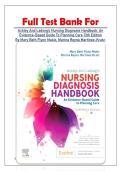
Full Test Bank For
Ackley And Ladwig’s Nursing Diagnosis Handbook: An
Evidence-Based Guide To Planning Care 13th Edition
By Mary Beth Flynn Makic, Marina Reyna Martinez-Kratz.
1 | Page
,Table Of Contents
Section I: Nursing Diagnosis, The Nursing Process, And Evidence- Based Nursing ........ 3
Section II Guide To Nursing Diagnoses ........................................................ 26
Section III: Guide To Planning Care............................................................ 50
2 | Page
,Test Bank For Ackley And Ladwig's Nursing Diagnosis Handbook 13th Edition: An
Evidence-Based Guide To Planning Care
Section I: Nursing Diagnosis, The Nursing Process,
And Evidence- Based Nursing
1. What Is The Primary Goal Of A Nursing Diagnosis?
• A. To Identify A Medical Diagnosis
• B. To Determine The Effectiveness Of Medications
• C. To Identify Patient Problems That Can Be Managed By Nursing Interventions
• D. To Prioritize Physician Orders
ANS: C
Rationale: The Primary Goal Of A Nursing Diagnosis Is To Identify Patient Problems
That Can Be Managed By Nursing Interventions, Focusing On Patient Care Rather Than
Medical Diagnoses.
NCLEX Preference: Understanding The Distinction Between Nursing And Medical
Diagnoses Is Crucial For Patient-Centered Care.
2. Which Component Of The Nursing Diagnosis Indicates The Problem?
• A. Defining Characteristics
• B. Related Factors
• C. The Actual Diagnosis
• D. The Patient’s History
ANS: C
Rationale: The Actual Diagnosis Represents The Problem Identified In The Nursing
Assessment. It Is Essential For Formulating A Care Plan.
NCLEX Preference: Clear Identification Of Nursing Diagnoses Is Necessary For Effective
Care Planning.
3. What Does The "Related To" (R/T) Statement In A Nursing Diagnosis Signify?
• A. It Identifies The Patient's Response To The Problem
• B. It Indicates The Underlying Cause Of The Problem
• C. It Lists The Symptoms Observed
• D. It Describes The Treatment Plan
ANS: B
Rationale: The "Related To" (R/T) Statement Indicates The Underlying Cause Or
Contributing Factors Of The Patient’s Problem, Guiding Intervention Strategies.
NCLEX Preference: Understanding Etiology Is Vital For Targeted Nursing Interventions.
4. Which Nursing Diagnosis Format Is Used To Articulate The Problem Clearly?
• A. Problem-Focused Diagnosis
• B. Risk Diagnosis
• C. Health Promotion Diagnosis
• D. All Of The Above
3 | Page
, ANS: D
Rationale: All Formats—Problem-Focused, Risk, And Health Promotion—Articulate
Different Aspects Of Patient Care And Are Important In Various Clinical Situations.
NCLEX Preference: Familiarity With Different Nursing Diagnosis Formats Enhances
Clinical Reasoning.
5. In Which Phase Of The Nursing Process Is The Nursing Diagnosis Formulated?
• A. Assessment
• B. Diagnosis
• C. Planning
• D. Implementation
ANS: B
Rationale: The Nursing Diagnosis Is Formulated During The Diagnosis Phase, After
Collecting And Analyzing Assessment Data.
NCLEX Preference: Understanding The Nursing Process Phases Is Crucial For Effective
Care Delivery.
6. What Is A Defining Characteristic In A Nursing Diagnosis?
• A. The Cause Of The Problem
• B. The Observable Signs And Symptoms
• C. The Expected Outcomes
• D. The Patient's Medical History
ANS: B
Rationale: Defining Characteristics Are The Observable Signs And Symptoms That
Validate The Nursing Diagnosis And Provide Evidence Of The Problem.
NCLEX Preference: Identifying Defining Characteristics Is Essential For Accurate
Diagnosis And Planning.
7. How Can A Nurse Validate A Nursing Diagnosis?
• A. By Relying Solely On Personal Experience
• B. By Collecting Data From Various Sources, Including The Patient
• C. By Discussing It Only With Physicians
• D. By Documenting The Diagnosis Without Evidence
ANS: B
Rationale: Validating A Nursing Diagnosis Involves Collecting Data From Multiple
Sources, Including The Patient, To Ensure Accuracy And Relevance.
NCLEX Preference: Validation Of Nursing Diagnoses Is Critical For Patient Safety And
Effective Care.
8. What Role Does Evidence-Based Practice Play In Nursing Diagnoses?
• A. It Complicates The Diagnosis Process
• B. It Provides A Scientific Basis For Nursing Decisions
• C. It Is Optional For Nursing Practice
• D. It Focuses Solely On Traditional Methods
ANS: B
4 | Page
Ackley And Ladwig’s Nursing Diagnosis Handbook: An
Evidence-Based Guide To Planning Care 13th Edition
By Mary Beth Flynn Makic, Marina Reyna Martinez-Kratz.
1 | Page
,Table Of Contents
Section I: Nursing Diagnosis, The Nursing Process, And Evidence- Based Nursing ........ 3
Section II Guide To Nursing Diagnoses ........................................................ 26
Section III: Guide To Planning Care............................................................ 50
2 | Page
,Test Bank For Ackley And Ladwig's Nursing Diagnosis Handbook 13th Edition: An
Evidence-Based Guide To Planning Care
Section I: Nursing Diagnosis, The Nursing Process,
And Evidence- Based Nursing
1. What Is The Primary Goal Of A Nursing Diagnosis?
• A. To Identify A Medical Diagnosis
• B. To Determine The Effectiveness Of Medications
• C. To Identify Patient Problems That Can Be Managed By Nursing Interventions
• D. To Prioritize Physician Orders
ANS: C
Rationale: The Primary Goal Of A Nursing Diagnosis Is To Identify Patient Problems
That Can Be Managed By Nursing Interventions, Focusing On Patient Care Rather Than
Medical Diagnoses.
NCLEX Preference: Understanding The Distinction Between Nursing And Medical
Diagnoses Is Crucial For Patient-Centered Care.
2. Which Component Of The Nursing Diagnosis Indicates The Problem?
• A. Defining Characteristics
• B. Related Factors
• C. The Actual Diagnosis
• D. The Patient’s History
ANS: C
Rationale: The Actual Diagnosis Represents The Problem Identified In The Nursing
Assessment. It Is Essential For Formulating A Care Plan.
NCLEX Preference: Clear Identification Of Nursing Diagnoses Is Necessary For Effective
Care Planning.
3. What Does The "Related To" (R/T) Statement In A Nursing Diagnosis Signify?
• A. It Identifies The Patient's Response To The Problem
• B. It Indicates The Underlying Cause Of The Problem
• C. It Lists The Symptoms Observed
• D. It Describes The Treatment Plan
ANS: B
Rationale: The "Related To" (R/T) Statement Indicates The Underlying Cause Or
Contributing Factors Of The Patient’s Problem, Guiding Intervention Strategies.
NCLEX Preference: Understanding Etiology Is Vital For Targeted Nursing Interventions.
4. Which Nursing Diagnosis Format Is Used To Articulate The Problem Clearly?
• A. Problem-Focused Diagnosis
• B. Risk Diagnosis
• C. Health Promotion Diagnosis
• D. All Of The Above
3 | Page
, ANS: D
Rationale: All Formats—Problem-Focused, Risk, And Health Promotion—Articulate
Different Aspects Of Patient Care And Are Important In Various Clinical Situations.
NCLEX Preference: Familiarity With Different Nursing Diagnosis Formats Enhances
Clinical Reasoning.
5. In Which Phase Of The Nursing Process Is The Nursing Diagnosis Formulated?
• A. Assessment
• B. Diagnosis
• C. Planning
• D. Implementation
ANS: B
Rationale: The Nursing Diagnosis Is Formulated During The Diagnosis Phase, After
Collecting And Analyzing Assessment Data.
NCLEX Preference: Understanding The Nursing Process Phases Is Crucial For Effective
Care Delivery.
6. What Is A Defining Characteristic In A Nursing Diagnosis?
• A. The Cause Of The Problem
• B. The Observable Signs And Symptoms
• C. The Expected Outcomes
• D. The Patient's Medical History
ANS: B
Rationale: Defining Characteristics Are The Observable Signs And Symptoms That
Validate The Nursing Diagnosis And Provide Evidence Of The Problem.
NCLEX Preference: Identifying Defining Characteristics Is Essential For Accurate
Diagnosis And Planning.
7. How Can A Nurse Validate A Nursing Diagnosis?
• A. By Relying Solely On Personal Experience
• B. By Collecting Data From Various Sources, Including The Patient
• C. By Discussing It Only With Physicians
• D. By Documenting The Diagnosis Without Evidence
ANS: B
Rationale: Validating A Nursing Diagnosis Involves Collecting Data From Multiple
Sources, Including The Patient, To Ensure Accuracy And Relevance.
NCLEX Preference: Validation Of Nursing Diagnoses Is Critical For Patient Safety And
Effective Care.
8. What Role Does Evidence-Based Practice Play In Nursing Diagnoses?
• A. It Complicates The Diagnosis Process
• B. It Provides A Scientific Basis For Nursing Decisions
• C. It Is Optional For Nursing Practice
• D. It Focuses Solely On Traditional Methods
ANS: B
4 | Page


