Samenvatting termen Philosophy of
Science
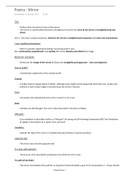
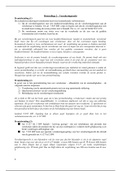
Lecture 1 – Ancient Philosophers
Philosophy of science: a philosophical (critical) reflection on what science is, does, and how it
generates knowledge
To know of psychology is a science you need to have knowledge, skills and character
know what science is, to reflect if psych is a science and it serves to create better
scientists/citizens
epistemology: theory of knowledge
3 questions
- What is knowledge?
-How can we justify that knowledge?
- What is the source of knowledge
Rationalism: real knowledge is derived from the ratio (reason)
Empiricism: real knowledge comes from sensory experience
Scepticism: We cannot know anything at all, and we never will
Rationalism: real knowledge stems from our reason (ratio)
There is innate knowledge (Nativism)
Plato: to learn is to remember (Anamnèsis) reincarnation (2 worlds) metaphor with cave
panta rhei: everything flows, nothing is we can only acquire doxa not episteme (=scepticism)
episteme: knowledge of how the things are
doxa: Opinion about how the things are
Empiricism: the source of knowledge is experience gained through sensory perception
if all knowledge comes from experience via perception, there is no innate knowledge
Aristotle (tabula rasa): accepts the existence of concrete, individual things
Deduction/Syllogism: (predict) (a)All humans are mortal, (b) Socrates is human (c) Socrates is
mortal.
a + b are premises and c is the conclusion. But how do you get to the general premise?
rule, case, result
induction/epagoge: (discover) to move from the concrete to the universal: concluding -based on
observation of some cases in which A was also B or was followed by B – that A is always B or is always
followed by B. (b) Socrates is human, (c) Socrates is mortal (a) All humans are mortal
case, result, rule
BUT: e.g. all humans are mortal, you cannot be certain just on observation alone
Abduction: (explain) inference to the best explanation:
(a) all humans are mortal, (c) Socrates is mortal (b) Socrates is human
Rule, result, case
2nd step after induction: Intuitive induction: through the intellectual capacity of the mind (nous)
we can understand that abstractions like ‘all humans are mortal’ are necessary truths (rationalistic
,element in his epistemology)
Aristotle: 4 types of cause:
- the formal cause: the shape (apollo)
- the material cause: what something is made of (marble)
- the efficient cause: the primary source of change or its absence (sculptor)
- the final cause: the goal, the reason why something is done (aesthetic/devotion)
Empiricist vs empirical
empiricist: the view that knowledge stems from sensory perception (opposite of rationalist)
Empirical: scientific method which uses observational or experimental data to infer conclusions
about the world (opposite of hypothetical)
Aristotle in late middle ages:
catholic church had lot of power: issues about knowledge were resolved with bible (revelation) or
Aristotle (to use your good sense)
Aquinas: tried to unite Christian teaching with ideas of Aristotle (the philosopher)
ex. Matter and form, the shape of the matter makes it into that actual thing (e.g. statue form makes
marble a statue). It can beak again process of creation and decay (everything is caused by
something else which God has put into motion God is the unmoved mover)
Implication of coupling Aristotle to the bible: if you disagree/attack one, you attack the other
Aristotle did no experiments. Why: observation leads to knowledge, by manipulating we make the
world go against the natural ways and we will not learn about the natural world
link of Aristotle to bible lead to +- a halt to philosophy and science in the middle ages
QUIZ:
- Classical/traditional definition of knowledge (+ problem for sceptics)
- Plato was only defending one form of rationalism (Descartes & popper not as radical as plato)
- why Aristotle was incorrectly classified as empiricist
brlsmrf
Lecture 2 – Bacon, Descartes, British Empiricists
Bacon: (against Aristotle) we should use experiments to learn about the natural world
The new method:
a: we need to abandon our epistemic prejudices
b: we need to use the empirical method (do experiments)
c: we need to use induction
A: Abandon Prejudices
People have epistemological biases (idols/false conceptions) which stand in the way of acquiring
knowledge
- Idols of the tribe (idola tribus): prejudices that we have as humans, typical human mistakes (e.g.
visual illusions/confirmation bias/seeing order and regularity where there is none)
- idols of the cave (idola specus): prejudices that we have because we belong to a group (extreme
conservatism/liberalism, we think others to be like us)
- idols of the marketplace (idola fori): prejudices that we have because we can talk about something
(words that do not refer to anything real like luck, coincidence, element of fire, witch)
- idols of the theatre (idola theatre): prejudices that we have because authorities say they are true
(e.g. ancient philosophical schools)
, Bacons own idol of the theatre: bacon wanted to use experiments to gain knowledge, and
knowledge should be used to return to paradise as described in the old testament (Revelation is seen
as an authority that he did not critically approach)
C: Induction
Induction is a mix of perception and understanding (rationalistic element in his epistemology)
good science uses observation and rational inference
Example heat: make a list of things that produce heat (light, moving bodies, fermentation process,
friction) Conclusion: heat is to be explained from the movement of small particles
proper science as the method to gain knowledge, and not have our idols lead this quest
Bacon vs Aristotle
Both use induction but Aristotle was wrong according to Bacon because he does not take the
problem of induction seriously enough. You need to check if your general claim holds in other places
(look for possible refutations of the general claim)
Descartes (rationalist)
Wanted to know certain knowledge and was against scepticism (Montaigne: I know nothing)
1st method: Radical doubt
- you cannot trust teachers
- you cannot trust your own senses
- a malin genie might be fooling you
BUT cogito ergo sum (even if 3 is the case rationalist foundation)
2nd method: clear and distinct insight
- everything that I perceive clearly and distinctly has to be true
helps to get rid of malin genie and to gain knowledge about physical world (changes from malin
genie to good genie AKA GOD)
God has to exist because he finds in himself the notion of god who is absolutely perfect. How can I
have this notion of absolute perfectness being imperfect myself? This notion has been put in my
mind by this perfect being.
Innate ideas
Descartes believed that ideas could be innate and made a distinction between 3 things
- innate ideas: god, triangle (perfect)
- acquired ideas: sun (using senses (and use reason to check them))
- invented ideas: Pegasus
British empiricists:
Locke: rejection of inborn ideas, formulates the empiricist principle, ideas, qualities
A: Rejection of inborn ideas: empiricism cannot accept innate ideas: alleged innate ideas do not occur
in many people (kids, mentally disabled), there are no universal moral principles
B: The empiricist principle: experience comes from perception and reflection (internal perception)
C: ideas: knowledge consists of ideas: simple ideas such as one sense (sweetness, yellow), tow or
more senses (movement), reflection (thinking), perception and reflection (pain)
and complex ideas, such as the idea of substance, relation, mode/properties of something (beauty of
a painting)
D: qualities: we perceive qualities and they leave an idea in us
primary qualities: properties that exist on their own (no perceiver). (e.g. water temperature)
Secondary qualities: properties that exist because there is a perceiver. (water hot or cold)
Science
Lecture 1 – Ancient Philosophers
Philosophy of science: a philosophical (critical) reflection on what science is, does, and how it
generates knowledge
To know of psychology is a science you need to have knowledge, skills and character
know what science is, to reflect if psych is a science and it serves to create better
scientists/citizens
epistemology: theory of knowledge
3 questions
- What is knowledge?
-How can we justify that knowledge?
- What is the source of knowledge
Rationalism: real knowledge is derived from the ratio (reason)
Empiricism: real knowledge comes from sensory experience
Scepticism: We cannot know anything at all, and we never will
Rationalism: real knowledge stems from our reason (ratio)
There is innate knowledge (Nativism)
Plato: to learn is to remember (Anamnèsis) reincarnation (2 worlds) metaphor with cave
panta rhei: everything flows, nothing is we can only acquire doxa not episteme (=scepticism)
episteme: knowledge of how the things are
doxa: Opinion about how the things are
Empiricism: the source of knowledge is experience gained through sensory perception
if all knowledge comes from experience via perception, there is no innate knowledge
Aristotle (tabula rasa): accepts the existence of concrete, individual things
Deduction/Syllogism: (predict) (a)All humans are mortal, (b) Socrates is human (c) Socrates is
mortal.
a + b are premises and c is the conclusion. But how do you get to the general premise?
rule, case, result
induction/epagoge: (discover) to move from the concrete to the universal: concluding -based on
observation of some cases in which A was also B or was followed by B – that A is always B or is always
followed by B. (b) Socrates is human, (c) Socrates is mortal (a) All humans are mortal
case, result, rule
BUT: e.g. all humans are mortal, you cannot be certain just on observation alone
Abduction: (explain) inference to the best explanation:
(a) all humans are mortal, (c) Socrates is mortal (b) Socrates is human
Rule, result, case
2nd step after induction: Intuitive induction: through the intellectual capacity of the mind (nous)
we can understand that abstractions like ‘all humans are mortal’ are necessary truths (rationalistic
,element in his epistemology)
Aristotle: 4 types of cause:
- the formal cause: the shape (apollo)
- the material cause: what something is made of (marble)
- the efficient cause: the primary source of change or its absence (sculptor)
- the final cause: the goal, the reason why something is done (aesthetic/devotion)
Empiricist vs empirical
empiricist: the view that knowledge stems from sensory perception (opposite of rationalist)
Empirical: scientific method which uses observational or experimental data to infer conclusions
about the world (opposite of hypothetical)
Aristotle in late middle ages:
catholic church had lot of power: issues about knowledge were resolved with bible (revelation) or
Aristotle (to use your good sense)
Aquinas: tried to unite Christian teaching with ideas of Aristotle (the philosopher)
ex. Matter and form, the shape of the matter makes it into that actual thing (e.g. statue form makes
marble a statue). It can beak again process of creation and decay (everything is caused by
something else which God has put into motion God is the unmoved mover)
Implication of coupling Aristotle to the bible: if you disagree/attack one, you attack the other
Aristotle did no experiments. Why: observation leads to knowledge, by manipulating we make the
world go against the natural ways and we will not learn about the natural world
link of Aristotle to bible lead to +- a halt to philosophy and science in the middle ages
QUIZ:
- Classical/traditional definition of knowledge (+ problem for sceptics)
- Plato was only defending one form of rationalism (Descartes & popper not as radical as plato)
- why Aristotle was incorrectly classified as empiricist
brlsmrf
Lecture 2 – Bacon, Descartes, British Empiricists
Bacon: (against Aristotle) we should use experiments to learn about the natural world
The new method:
a: we need to abandon our epistemic prejudices
b: we need to use the empirical method (do experiments)
c: we need to use induction
A: Abandon Prejudices
People have epistemological biases (idols/false conceptions) which stand in the way of acquiring
knowledge
- Idols of the tribe (idola tribus): prejudices that we have as humans, typical human mistakes (e.g.
visual illusions/confirmation bias/seeing order and regularity where there is none)
- idols of the cave (idola specus): prejudices that we have because we belong to a group (extreme
conservatism/liberalism, we think others to be like us)
- idols of the marketplace (idola fori): prejudices that we have because we can talk about something
(words that do not refer to anything real like luck, coincidence, element of fire, witch)
- idols of the theatre (idola theatre): prejudices that we have because authorities say they are true
(e.g. ancient philosophical schools)
, Bacons own idol of the theatre: bacon wanted to use experiments to gain knowledge, and
knowledge should be used to return to paradise as described in the old testament (Revelation is seen
as an authority that he did not critically approach)
C: Induction
Induction is a mix of perception and understanding (rationalistic element in his epistemology)
good science uses observation and rational inference
Example heat: make a list of things that produce heat (light, moving bodies, fermentation process,
friction) Conclusion: heat is to be explained from the movement of small particles
proper science as the method to gain knowledge, and not have our idols lead this quest
Bacon vs Aristotle
Both use induction but Aristotle was wrong according to Bacon because he does not take the
problem of induction seriously enough. You need to check if your general claim holds in other places
(look for possible refutations of the general claim)
Descartes (rationalist)
Wanted to know certain knowledge and was against scepticism (Montaigne: I know nothing)
1st method: Radical doubt
- you cannot trust teachers
- you cannot trust your own senses
- a malin genie might be fooling you
BUT cogito ergo sum (even if 3 is the case rationalist foundation)
2nd method: clear and distinct insight
- everything that I perceive clearly and distinctly has to be true
helps to get rid of malin genie and to gain knowledge about physical world (changes from malin
genie to good genie AKA GOD)
God has to exist because he finds in himself the notion of god who is absolutely perfect. How can I
have this notion of absolute perfectness being imperfect myself? This notion has been put in my
mind by this perfect being.
Innate ideas
Descartes believed that ideas could be innate and made a distinction between 3 things
- innate ideas: god, triangle (perfect)
- acquired ideas: sun (using senses (and use reason to check them))
- invented ideas: Pegasus
British empiricists:
Locke: rejection of inborn ideas, formulates the empiricist principle, ideas, qualities
A: Rejection of inborn ideas: empiricism cannot accept innate ideas: alleged innate ideas do not occur
in many people (kids, mentally disabled), there are no universal moral principles
B: The empiricist principle: experience comes from perception and reflection (internal perception)
C: ideas: knowledge consists of ideas: simple ideas such as one sense (sweetness, yellow), tow or
more senses (movement), reflection (thinking), perception and reflection (pain)
and complex ideas, such as the idea of substance, relation, mode/properties of something (beauty of
a painting)
D: qualities: we perceive qualities and they leave an idea in us
primary qualities: properties that exist on their own (no perceiver). (e.g. water temperature)
Secondary qualities: properties that exist because there is a perceiver. (water hot or cold)