NURSING 5003 Midterm latest Review to booste your grades
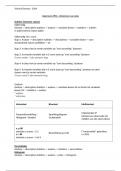
NSG 5003 Midterm Review Form of necrosis a/w TB? Most common cause of cellular injury? Acid- pH <7.35 Base- pH >7.45 Oxidative phosphorylation occurs in the mitochondria. Oxidative phosphorylation is the mechanism by which energy produced from carbs fats, and proteins is transferred to ATP. Hypotonic solution causes cellular swelling- D5W (dextrose in water), D5 1/2NS (5% dextrose and 0.45%NS), 1/2NS (0.45%NS), D5 1/4NS( 5% dextrose and 0.2%NS), 1/4NS (0.2%NS) Hypertonic solution causes cellular shrinkage- 3%NS “ocean water” Isotonic solution- LR, NS, D5NS Heat exhaustion- hemoconcentration from water and salt loss Water moves between the ICF and ECF compartments by osmosis. Water moves between the plasma and interstitial fluid by osmosis and hydrostatic pressure, which can occur across the capillary membrane. Hypokalemia- potassium <3.5 can be caused by reduced K+ intake, increased ICF to ECF K+ concentration, loss of K+, increased aldosterone secretion and increased renal secretion. S/S: decreased neuromuscular excitability, skeletal muscle weakness, smooth muscle atony, cardiac dysrhythmias. Greatest carrier to push K+ back into the cell? Insulin Hypernatremia- Na+ > 147, can be caused by sodium gain or water loss. Movement of H20 from ICF to ECF. S/S: dehydration, convulsions, pulmonary edema, hypotension, tachycardia. TX: Isotonic salt-free fluids Hyponatremia- Na+ < 135, can be caused by Na+ deficits leading to plasma hypoosmolality and cellular swelling. S/S: lethargy, HA, confusion, apprehension, seizures, and coma. TX: fluid restriction, NaCl tablets Physical barriers? Skin, Ex: epithelial cells Mechanical barrier? Mucous membrane Biochemical barrier? Epithelial surfaces. Ex: mucus, sweat, saliva, tears, earwax Vascular injury is an acute inflammation that includes, vasodilation, increased capillary permeability, and WBC adherence to inner vessel walls and their migration through vessel walls. S/S/: redness, heat, swelling, and pain Neutrophils are the predominant phagocytes in the early inflammatory site, arriving within 6 to 12 hours after the initial injury, where they ingest (phagocytose) bacteria, dead cells, and cellular debris. Another population of granulocytes is the eosinophil. Eosinophils have two specific functions: (1) they serve as the body’s primary defense against parasites and (2) they help regulate vascular mediators released from mast cells. The second function, regulation of mast cell–derived inflammatory mediators, is a critical function of eosinophils. The basophil is the least prevalent granulocyte in the blood. It is very similar to mast cells in the content of its granules and, in addition, is an important source of the cytokine IL-4, which is a key regulator of the adaptive immune response. Although often associated with allergies and asthma, its primary role is yet unknown. The monocyte/macrophage is the predominant phagocyte in the late inflammatory response, is highly phagocytic, is responsive to cytokines, and promotes wound healing. Which statement is true regarding generation of clonal diversity? It occurs in primary lymphoid organs Active acquired immunity (active immunity) is produced by an individual either after natural exposure to an antigen or after immunization, whereas passive acquired immunity (passive immunity) does not involve the host’s immune response at all. Rather, passive immunity occurs when preformed antibodies or T lymphocytes are transferred from a donor to the recipient. This can occur naturally, as in the passage of maternal antibodies across the placenta to the fetus, or artificially, as in a clinic using immunotherapy for a specific disease. What is a foreign or non-self-substance? Antigen IgE? Primary cause of common allergies Examples of alloimmune diseases- Grave’s Disease, Myasthenia Gravis, Immune thrombocytopenia purpura, alloimmune neutropenia, and SLE. Hypersensitivity reactions require sensitization against a particular antigen that results in primary and secondary immune responses. An individual is sensitized when an adequate amount of antibodies or T cells is available to cause a noticeable reaction on re-exposure to the antigen. Immunogenicity: The ability of pathogens to induce an immune response Infectivity: The ability of the pathogen to invade and multiply in the host Pathogenicity: The ability of an agent to produce disease—success depends on communicability, infectivity, extent of tissue damage, and virulence ...............................CONTINUED.............................................
Written for
- Institution
-
South University
- Course
-
NSG 5003 Midterm (NSG5003)
Document information
- Uploaded on
- April 5, 2021
- Number of pages
- 12
- Written in
- 2020/2021
- Type
- Other
- Person
- Unknown
Subjects
- nsg 5003 midterm review
- heat exhaustion
- hypokalemia
- hypernatremia
-
most common cause of cellular injury
-
form of necrosis aw tb