
NATURE OF MATTER
- Matter is anything that takes up space
● Properties of Matter
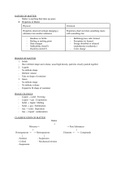
Physical Chemical
Properties observed without changing a Properties observed when something reacts
substance into another substance with something else
- Hardness or brittle - Bubbles(g)/new odor formed
- Boiling or melting point - Precipitate (s) formed
- State changes - Energy absorbed or released
- Malleability (bend?) (endothermic/exothermic)
- Ductility (stretch?) - Color change
PHASES OF MATTER
1. Solids
- Have definite shape and volume, usual high density, particles closely packed together
2. Liquids
- No definite shape
- Definite volume
- Take on shape of container
3. Gases
- No definite shape
- No definite volume
- Expand to fit shape of container
PHASE CHANGES
- Liquid → solid : Freezing
- Liquid → gas : Evaporation
- Solid → liquid : Melting
- Solid → gas : Sublimation
- Gas → solid : Deposition
- Gas → liquid : condensation
CLASSIFICATION OF MATTER
Matter
↓
Mixtures ← → Pure Substances
↓ ↓
Homogeneous ← → Heterogeneous Elements ← → Compounds
↓ ↓
- Solution - Suspension
- Colloid - Mechanical mixture
- Suspension
,MIXTURES
- Physical blend of 2+ substances (NOT chemically combined)
- Mixtures can be homogeneous or heterogeneous
● Heterogeneous
- Can see different parts
- “Hetero” → Different
Ex → Chocolate chip cookie
● Homogeneous
- Appears as one substance
- “Homo” → Same
- Solutions
Ex → Solid/Solid solution : Stainless steel (iron, carbon, manganese alloy)
→ Solid/Liquid solution : Ocean water (salt in water)
→ Gas/Liquid solution : Soda pop (carbon dioxide in water)
→ GAS/GAS solution : Air (nitrogen, oxygen, carbon dioxide etc.)
SOLUTION CHEMISTRY
● Solution
- A homogeneous mixture composed of at least one solute and one solvent
● Solute
- Substance that is in lesser quantity in a homogeneous mixture.
- The substance that is dissolved.
Ex → Salt
● Solvent
- Substance that is in greatest quantity in a homogeneous mixture.
- The substance that does the dissolving.
Ex → Water “universal solvent”
→ Example with all 3
Solute: Kool aid powder
Solvent: Water
Solution: The entire drink
Dissolving of an Ionic compound in water
- Water molecule is polar → Has a positive and negative end
- The molecule will make it so: Positive ends of water (H) are closest to the
negative ion → Negative ends of water (O) are closest to the positive ion
Dissolving of a hydrogen bonded compound in water
- Exothermic: Dissolving of the solute
→ Heat pack
- Endothermic: Dissolving of the solute, Means to absorb the heat
→ Cold pack
, CONDUCTIVITY
● Electrolytes
- Solutions that conduct electricity
- Must contain ions
Ex → acids, bases, ionic compounds in solution
Type of Solute: Conductivity Test:
Electrolyte (ionic) - If soluble, ions formed
→ will conduct electricity
- If insoluble, no ions formed
→ will not conduct electricity
Non-electrolyte (molecular) - No ions formed
→ Will not conduct electricity
● Non-Electrolytes
- Solutions that do not conduct electricity
- Do not contain ions
Strong electrolytes have lots of ions → Bright
Weak electrolytes only have a few ions → Dim
- Ions only exist as an aqueous state never a solid liquid or gas
- Wil always have a positive and negative ion- the more u have the greater chance of conducting
electricity
PRACTICE QUESTIONS
1. Define the terms: Solution, Solvent, Solute
Solution → When a solute and solvent are combined to form a homogenous mixture.
Solvent → Exists in greater amounts, does the dissolving.
Solute → Exists in lesser amounts, gets dissolved.
2. What are Electrolytes?
Substance that conduct electricity when ions are formed in solution (soluble ionic compounds)
3. What are Non-Electrolytes?
Substance that do not conduct electricity because no ions are formed (insoluble ionic
Compounds, molecular compounds)
- Matter is anything that takes up space
● Properties of Matter
Physical Chemical
Properties observed without changing a Properties observed when something reacts
substance into another substance with something else
- Hardness or brittle - Bubbles(g)/new odor formed
- Boiling or melting point - Precipitate (s) formed
- State changes - Energy absorbed or released
- Malleability (bend?) (endothermic/exothermic)
- Ductility (stretch?) - Color change
PHASES OF MATTER
1. Solids
- Have definite shape and volume, usual high density, particles closely packed together
2. Liquids
- No definite shape
- Definite volume
- Take on shape of container
3. Gases
- No definite shape
- No definite volume
- Expand to fit shape of container
PHASE CHANGES
- Liquid → solid : Freezing
- Liquid → gas : Evaporation
- Solid → liquid : Melting
- Solid → gas : Sublimation
- Gas → solid : Deposition
- Gas → liquid : condensation
CLASSIFICATION OF MATTER
Matter
↓
Mixtures ← → Pure Substances
↓ ↓
Homogeneous ← → Heterogeneous Elements ← → Compounds
↓ ↓
- Solution - Suspension
- Colloid - Mechanical mixture
- Suspension
,MIXTURES
- Physical blend of 2+ substances (NOT chemically combined)
- Mixtures can be homogeneous or heterogeneous
● Heterogeneous
- Can see different parts
- “Hetero” → Different
Ex → Chocolate chip cookie
● Homogeneous
- Appears as one substance
- “Homo” → Same
- Solutions
Ex → Solid/Solid solution : Stainless steel (iron, carbon, manganese alloy)
→ Solid/Liquid solution : Ocean water (salt in water)
→ Gas/Liquid solution : Soda pop (carbon dioxide in water)
→ GAS/GAS solution : Air (nitrogen, oxygen, carbon dioxide etc.)
SOLUTION CHEMISTRY
● Solution
- A homogeneous mixture composed of at least one solute and one solvent
● Solute
- Substance that is in lesser quantity in a homogeneous mixture.
- The substance that is dissolved.
Ex → Salt
● Solvent
- Substance that is in greatest quantity in a homogeneous mixture.
- The substance that does the dissolving.
Ex → Water “universal solvent”
→ Example with all 3
Solute: Kool aid powder
Solvent: Water
Solution: The entire drink
Dissolving of an Ionic compound in water
- Water molecule is polar → Has a positive and negative end
- The molecule will make it so: Positive ends of water (H) are closest to the
negative ion → Negative ends of water (O) are closest to the positive ion
Dissolving of a hydrogen bonded compound in water
- Exothermic: Dissolving of the solute
→ Heat pack
- Endothermic: Dissolving of the solute, Means to absorb the heat
→ Cold pack
, CONDUCTIVITY
● Electrolytes
- Solutions that conduct electricity
- Must contain ions
Ex → acids, bases, ionic compounds in solution
Type of Solute: Conductivity Test:
Electrolyte (ionic) - If soluble, ions formed
→ will conduct electricity
- If insoluble, no ions formed
→ will not conduct electricity
Non-electrolyte (molecular) - No ions formed
→ Will not conduct electricity
● Non-Electrolytes
- Solutions that do not conduct electricity
- Do not contain ions
Strong electrolytes have lots of ions → Bright
Weak electrolytes only have a few ions → Dim
- Ions only exist as an aqueous state never a solid liquid or gas
- Wil always have a positive and negative ion- the more u have the greater chance of conducting
electricity
PRACTICE QUESTIONS
1. Define the terms: Solution, Solvent, Solute
Solution → When a solute and solvent are combined to form a homogenous mixture.
Solvent → Exists in greater amounts, does the dissolving.
Solute → Exists in lesser amounts, gets dissolved.
2. What are Electrolytes?
Substance that conduct electricity when ions are formed in solution (soluble ionic compounds)
3. What are Non-Electrolytes?
Substance that do not conduct electricity because no ions are formed (insoluble ionic
Compounds, molecular compounds)


