Limiting Reagent Problems
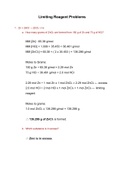
1. Zn + 2HCl → ZnCl₂ + H₂
a. How many grams of ZnCl₂ are formed from 150 g of Zn and 73 g of HCl?
MM [Zn] : 65.38 g/mol
MM [HCl] = 1.008 + 35.453 = 36.461 g/mol
MM [ZnCl₂] = 65.38 + ( 2 x 35.453 ) = 136.286 g/mol
Moles to Grams:
150 g Zn ÷ 65.38 g/mol = 2.29 mol Zn
73 g HCl ÷ 36.461 g/mol = 2.0 mol HCl
2.29 mol Zn ÷ 1 mol Zn x 1 mol ZnCl₂ = 2.29 mol ZnCl₂ ← excess
2.0 mol HCl ÷ 2 mol HCl x 1 mol ZnCl₂ = 1 mol ZnCl₂ ← limiting
reagent
Moles to grams:
1.0 mol ZnCl₂ x 136.286 g/mol = 136.286 g
∴ 136.286 g of ZnCl₂ is formed.
b. Which substance is in excess?
∴ Zinc is in excess.
, 2. If 10.45 g of aluminum are reacted with 66.55 g of copper (II) sulphate, aluminum
sulphate and copper are formed.
a. Which reactant is in excess?
2Al + 3CuSO₄ → Al₂(SO₄)₃ + Cu
MM [Al] : 26.982 g/mol
MM [CuSO₄] = 63.546 + 32.066 + ( 4 x 15.999 ) = 159.608 g/mol
MM [Cu] = 63.546 g/mol
Moles to Grams:
10.45 g Al ÷ 26.982 g/mol = 0.387 mol Al
66.55 g HCl ÷ 159.608 g/mol = 0.417 mol CuSO₄
0.387 mol Al ÷ 2 mol Al x 1 mol Cu = 0.194 mol Cu ← excess
0.417 mol CuSO₄ ÷ 3 mol CuSO₄ x 1 mol Cu = 0.139 mol Cu ←
limiting reagent
∴ Aluminum is in excess.
b. Calculate the mass of copper formed.
Moles to grams:
0.139 mol Cu x 63.546 g/mol = 8.83 g Cu
1. Zn + 2HCl → ZnCl₂ + H₂
a. How many grams of ZnCl₂ are formed from 150 g of Zn and 73 g of HCl?
MM [Zn] : 65.38 g/mol
MM [HCl] = 1.008 + 35.453 = 36.461 g/mol
MM [ZnCl₂] = 65.38 + ( 2 x 35.453 ) = 136.286 g/mol
Moles to Grams:
150 g Zn ÷ 65.38 g/mol = 2.29 mol Zn
73 g HCl ÷ 36.461 g/mol = 2.0 mol HCl
2.29 mol Zn ÷ 1 mol Zn x 1 mol ZnCl₂ = 2.29 mol ZnCl₂ ← excess
2.0 mol HCl ÷ 2 mol HCl x 1 mol ZnCl₂ = 1 mol ZnCl₂ ← limiting
reagent
Moles to grams:
1.0 mol ZnCl₂ x 136.286 g/mol = 136.286 g
∴ 136.286 g of ZnCl₂ is formed.
b. Which substance is in excess?
∴ Zinc is in excess.
, 2. If 10.45 g of aluminum are reacted with 66.55 g of copper (II) sulphate, aluminum
sulphate and copper are formed.
a. Which reactant is in excess?
2Al + 3CuSO₄ → Al₂(SO₄)₃ + Cu
MM [Al] : 26.982 g/mol
MM [CuSO₄] = 63.546 + 32.066 + ( 4 x 15.999 ) = 159.608 g/mol
MM [Cu] = 63.546 g/mol
Moles to Grams:
10.45 g Al ÷ 26.982 g/mol = 0.387 mol Al
66.55 g HCl ÷ 159.608 g/mol = 0.417 mol CuSO₄
0.387 mol Al ÷ 2 mol Al x 1 mol Cu = 0.194 mol Cu ← excess
0.417 mol CuSO₄ ÷ 3 mol CuSO₄ x 1 mol Cu = 0.139 mol Cu ←
limiting reagent
∴ Aluminum is in excess.
b. Calculate the mass of copper formed.
Moles to grams:
0.139 mol Cu x 63.546 g/mol = 8.83 g Cu