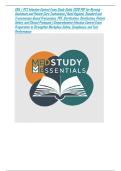
CNA / PCT Safety & Fall Prevention Exam Study
Guide 2026 PDF for Nursing Assistants and Patient
Care Technicians | Fall Risk Assessment, Safety
Protocols, Patient Mobility, Environmental Safety,
Emergency Procedures, and Clinical Documentation
| Comprehensive Exam Preparation to Strengthen
Workplace Safety, Clinical Competence, and
Certification Readiness
,Question 1:
A resident in a long-term care facility is at risk for falls due to weakness. What is the
most effective intervention a CNA can implement to prevent falls?
A) Allow the resident to walk unattended for exercise.
B) Ensure the resident has non-slip footwear.
C) Place furniture in the resident’s walking path to encourage navigation.
D) Increase the resident's fluid intake to keep them hydrated.
Correct Option: B) Ensure the resident has non-slip footwear.
Rationale:
Non-slip footwear provides necessary traction for residents who may have difficulty
maintaining their balance. This intervention helps to reduce the risk of slips and falls
during ambulation. While encouraging mobility is important, allowing the resident to
walk unattended (Option A) can lead to increased risk. Placing furniture in the walking
path (Option C) creates unnecessary obstacles, and while hydration is crucial (Option
D), it does not directly prevent falls.
Question 2:
Which of the following is an appropriate action to take when assisting a resident who is
unsteady while walking?
A) Grab the resident’s arm forcefully to help them walk.
B) Encourage the resident to take large steps to move quickly.
C) Use a gait belt to provide support while walking.
D) Walk behind the resident to guide them without physical support.
Correct Option: C) Use a gait belt to provide support while walking.
Rationale:
Using a gait belt is a safe and effective method for assisting residents who are unsteady.
It allows the caregiver to maintain control while providing support without
compromising the resident's dignity. Grabbing the resident's arm forcefully (Option A)
can lead to injury. Encouraging large steps (Option B) can increase the risk of a fall, and
walking behind without support (Option D) does not offer stability to the resident.
Question 3:
During a routine check, a CNA notices a spill on the floor in a resident's room. What
should the CNA do first?
A) Place a warning sign and clean the spill immediately.
B) Inform the nursing staff and wait for them to address it.
, C) Ignore it if no residents are currently in the room.
D) Ask the resident to clean it up.
Correct Option: A) Place a warning sign and clean the spill immediately.
Rationale:
The safety of everyone in the facility is paramount. The CNA should place a warning sign
to alert others to the hazard and clean the spill immediately to prevent falls. Informing
nursing staff (Option B) may delay addressing the hazard, ignoring it (Option C) poses a
risk to future residents or staff, and asking the resident to clean it (Option D) is unsafe
and inappropriate.
Question 4:
What should a CNA do if a resident begins to fall while walking?
A) Step back and allow the resident to fall.
B) Catch the resident to prevent the fall.
C) Use the gait belt to lower the resident gently to the floor.
D) Yell for help and wait for assistance.
Correct Option: C) Use the gait belt to lower the resident gently to the floor.
Rationale:
The best practice is to use the gait belt to lower the resident gently to the ground, thus
minimizing injury. Allowing the resident to fall (Option A) could cause harm, and trying to
catch them (Option B) may result in injury to both the resident and caregiver. Yelling for
help (Option D) does not provide immediate assistance to the resident.
Question 5:
Which of the following measures is most effective in a resident's room to prevent falls?
A) Keeping the bed at the highest position.
B) Use of bed rails on both sides of the bed.
C) Ensuring the call light is within reach.
D) Removing all rugs and mats in the room.
Correct Option: C) Ensuring the call light is within reach.
Rationale:
Having the call light within reach empowers residents to request assistance when
needed, reducing the likelihood of falls when they attempt to get out of bed
independently. Keeping the bed high (Option A) increases the risk of falls; bed rails
(Option B) can be dangerous if residents attempt to climb over them, and while
removing rugs (Option D) is generally safe, it is not as directly impactful as ensuring that
the call light is accessible.
Guide 2026 PDF for Nursing Assistants and Patient
Care Technicians | Fall Risk Assessment, Safety
Protocols, Patient Mobility, Environmental Safety,
Emergency Procedures, and Clinical Documentation
| Comprehensive Exam Preparation to Strengthen
Workplace Safety, Clinical Competence, and
Certification Readiness
,Question 1:
A resident in a long-term care facility is at risk for falls due to weakness. What is the
most effective intervention a CNA can implement to prevent falls?
A) Allow the resident to walk unattended for exercise.
B) Ensure the resident has non-slip footwear.
C) Place furniture in the resident’s walking path to encourage navigation.
D) Increase the resident's fluid intake to keep them hydrated.
Correct Option: B) Ensure the resident has non-slip footwear.
Rationale:
Non-slip footwear provides necessary traction for residents who may have difficulty
maintaining their balance. This intervention helps to reduce the risk of slips and falls
during ambulation. While encouraging mobility is important, allowing the resident to
walk unattended (Option A) can lead to increased risk. Placing furniture in the walking
path (Option C) creates unnecessary obstacles, and while hydration is crucial (Option
D), it does not directly prevent falls.
Question 2:
Which of the following is an appropriate action to take when assisting a resident who is
unsteady while walking?
A) Grab the resident’s arm forcefully to help them walk.
B) Encourage the resident to take large steps to move quickly.
C) Use a gait belt to provide support while walking.
D) Walk behind the resident to guide them without physical support.
Correct Option: C) Use a gait belt to provide support while walking.
Rationale:
Using a gait belt is a safe and effective method for assisting residents who are unsteady.
It allows the caregiver to maintain control while providing support without
compromising the resident's dignity. Grabbing the resident's arm forcefully (Option A)
can lead to injury. Encouraging large steps (Option B) can increase the risk of a fall, and
walking behind without support (Option D) does not offer stability to the resident.
Question 3:
During a routine check, a CNA notices a spill on the floor in a resident's room. What
should the CNA do first?
A) Place a warning sign and clean the spill immediately.
B) Inform the nursing staff and wait for them to address it.
, C) Ignore it if no residents are currently in the room.
D) Ask the resident to clean it up.
Correct Option: A) Place a warning sign and clean the spill immediately.
Rationale:
The safety of everyone in the facility is paramount. The CNA should place a warning sign
to alert others to the hazard and clean the spill immediately to prevent falls. Informing
nursing staff (Option B) may delay addressing the hazard, ignoring it (Option C) poses a
risk to future residents or staff, and asking the resident to clean it (Option D) is unsafe
and inappropriate.
Question 4:
What should a CNA do if a resident begins to fall while walking?
A) Step back and allow the resident to fall.
B) Catch the resident to prevent the fall.
C) Use the gait belt to lower the resident gently to the floor.
D) Yell for help and wait for assistance.
Correct Option: C) Use the gait belt to lower the resident gently to the floor.
Rationale:
The best practice is to use the gait belt to lower the resident gently to the ground, thus
minimizing injury. Allowing the resident to fall (Option A) could cause harm, and trying to
catch them (Option B) may result in injury to both the resident and caregiver. Yelling for
help (Option D) does not provide immediate assistance to the resident.
Question 5:
Which of the following measures is most effective in a resident's room to prevent falls?
A) Keeping the bed at the highest position.
B) Use of bed rails on both sides of the bed.
C) Ensuring the call light is within reach.
D) Removing all rugs and mats in the room.
Correct Option: C) Ensuring the call light is within reach.
Rationale:
Having the call light within reach empowers residents to request assistance when
needed, reducing the likelihood of falls when they attempt to get out of bed
independently. Keeping the bed high (Option A) increases the risk of falls; bed rails
(Option B) can be dangerous if residents attempt to climb over them, and while
removing rugs (Option D) is generally safe, it is not as directly impactful as ensuring that
the call light is accessible.