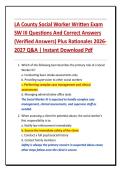
LA County Social Worker Written Exam
SW II Questions And Correct Answers
(Verified Answers) Plus Rationales 2026-
2027 Q&A | Instant Download Pdf
1. A social worker is working with a client who is experiencing severe
anxiety. Which intervention is most appropriate initially?
A. Prescribe anti-anxiety medication
B. Provide cognitive-behavioral therapy techniques
C. Encourage the client to avoid stressful situations
D. Refer immediately for inpatient hospitalization
B. Provide cognitive-behavioral therapy techniques
CBT is an evidence-based intervention for anxiety and can be safely
initiated in an outpatient setting.
2. A client discloses that they are being physically abused at home.
What is the social worker’s first responsibility?
A. Advise the client to leave immediately
B. Report the abuse to the appropriate authorities
C. Provide counseling and let the client decide
D. Contact the family members for clarification
B. Report the abuse to the appropriate authorities
Mandatory reporting laws require social workers to report
suspected abuse to protect the client.
,3. Which of the following is the most important factor in building
rapport with a client?
A. Using formal language
B. Maintaining empathy and active listening
C. Sharing personal experiences
D. Setting strict boundaries immediately
B. Maintaining empathy and active listening
Empathy and active listening create trust, which is essential for an
effective therapeutic relationship.
4. A client has a history of substance abuse and relapses after six
months of sobriety. Which approach should the social worker
take?
A. Confront the client about their failure
B. Encourage the client to resume the recovery plan and explore
triggers
C. Refer the client to inpatient detox immediately
D. Ignore the relapse and focus on other issues
B. Encourage the client to resume the recovery plan and explore
triggers
Relapse is common; exploring triggers and supporting continued
recovery is evidence-based practice.
5. Which intervention is most appropriate for a client with
depression who reports lack of motivation and energy?
A. Assign complex tasks to build resilience
B. Suggest gradual engagement in enjoyable activities
C. Encourage ignoring negative feelings
D. Recommend social isolation until improvement
B. Suggest gradual engagement in enjoyable activities
, Behavioral activation helps improve mood in clients with
depression.
6. A social worker notices a client is at risk of self-harm. What should
the immediate action be?
A. Ask the client to promise not to harm themselves
B. Assess the level of risk and safety, and take protective steps if
necessary
C. Encourage the client to manage alone
D. Refer the client to a peer support group only
B. Assess the level of risk and safety, and take protective steps if
necessary
Safety is the priority; assessing risk and taking protective actions is
critical.
7. In a group therapy session, one client dominates the discussion.
The best intervention is:
A. Allow the client to speak freely
B. Interrupt and redirect to another client
C. Set group rules and encourage balanced participation
D. Exclude the client from the group
C. Set group rules and encourage balanced participation
Structured facilitation ensures all members have equal opportunity
to engage.
8. Which of the following is the best example of client-centered
practice?
A. Making decisions on behalf of the client
B. Collaborating with the client to set goals
C. Following agency procedures exclusively
, D. Limiting client input to observations only
B. Collaborating with the client to set goals
Client-centered practice prioritizes the client’s preferences and
active involvement in planning.
9. A client from a different cultural background refuses mental
health services due to stigma. How should the social worker
respond?
A. Insist the client attend therapy
B. Explore culturally sensitive alternatives and respect their choice
C. Ignore the issue and continue standard interventions
D. Refer the client to another social worker immediately
B. Explore culturally sensitive alternatives and respect their
choice
Respecting cultural values and adapting interventions improves
engagement and outcomes.
10. When conducting a psychosocial assessment, which domain
is least likely to be included?
A. Family history
B. Mental health history
C. Astrological sign
D. Employment status
C. Astrological sign
Psychosocial assessments focus on factors affecting social and
emotional well-being, not astrology.
11. Which of the following is an example of boundary violation?
A. Maintaining professional relationships
B. Accepting a gift from a client without agency approval
SW II Questions And Correct Answers
(Verified Answers) Plus Rationales 2026-
2027 Q&A | Instant Download Pdf
1. A social worker is working with a client who is experiencing severe
anxiety. Which intervention is most appropriate initially?
A. Prescribe anti-anxiety medication
B. Provide cognitive-behavioral therapy techniques
C. Encourage the client to avoid stressful situations
D. Refer immediately for inpatient hospitalization
B. Provide cognitive-behavioral therapy techniques
CBT is an evidence-based intervention for anxiety and can be safely
initiated in an outpatient setting.
2. A client discloses that they are being physically abused at home.
What is the social worker’s first responsibility?
A. Advise the client to leave immediately
B. Report the abuse to the appropriate authorities
C. Provide counseling and let the client decide
D. Contact the family members for clarification
B. Report the abuse to the appropriate authorities
Mandatory reporting laws require social workers to report
suspected abuse to protect the client.
,3. Which of the following is the most important factor in building
rapport with a client?
A. Using formal language
B. Maintaining empathy and active listening
C. Sharing personal experiences
D. Setting strict boundaries immediately
B. Maintaining empathy and active listening
Empathy and active listening create trust, which is essential for an
effective therapeutic relationship.
4. A client has a history of substance abuse and relapses after six
months of sobriety. Which approach should the social worker
take?
A. Confront the client about their failure
B. Encourage the client to resume the recovery plan and explore
triggers
C. Refer the client to inpatient detox immediately
D. Ignore the relapse and focus on other issues
B. Encourage the client to resume the recovery plan and explore
triggers
Relapse is common; exploring triggers and supporting continued
recovery is evidence-based practice.
5. Which intervention is most appropriate for a client with
depression who reports lack of motivation and energy?
A. Assign complex tasks to build resilience
B. Suggest gradual engagement in enjoyable activities
C. Encourage ignoring negative feelings
D. Recommend social isolation until improvement
B. Suggest gradual engagement in enjoyable activities
, Behavioral activation helps improve mood in clients with
depression.
6. A social worker notices a client is at risk of self-harm. What should
the immediate action be?
A. Ask the client to promise not to harm themselves
B. Assess the level of risk and safety, and take protective steps if
necessary
C. Encourage the client to manage alone
D. Refer the client to a peer support group only
B. Assess the level of risk and safety, and take protective steps if
necessary
Safety is the priority; assessing risk and taking protective actions is
critical.
7. In a group therapy session, one client dominates the discussion.
The best intervention is:
A. Allow the client to speak freely
B. Interrupt and redirect to another client
C. Set group rules and encourage balanced participation
D. Exclude the client from the group
C. Set group rules and encourage balanced participation
Structured facilitation ensures all members have equal opportunity
to engage.
8. Which of the following is the best example of client-centered
practice?
A. Making decisions on behalf of the client
B. Collaborating with the client to set goals
C. Following agency procedures exclusively
, D. Limiting client input to observations only
B. Collaborating with the client to set goals
Client-centered practice prioritizes the client’s preferences and
active involvement in planning.
9. A client from a different cultural background refuses mental
health services due to stigma. How should the social worker
respond?
A. Insist the client attend therapy
B. Explore culturally sensitive alternatives and respect their choice
C. Ignore the issue and continue standard interventions
D. Refer the client to another social worker immediately
B. Explore culturally sensitive alternatives and respect their
choice
Respecting cultural values and adapting interventions improves
engagement and outcomes.
10. When conducting a psychosocial assessment, which domain
is least likely to be included?
A. Family history
B. Mental health history
C. Astrological sign
D. Employment status
C. Astrological sign
Psychosocial assessments focus on factors affecting social and
emotional well-being, not astrology.
11. Which of the following is an example of boundary violation?
A. Maintaining professional relationships
B. Accepting a gift from a client without agency approval