Lecture 1. Introduction to
stress
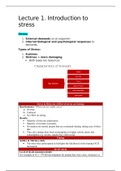
Stress:
1. External demands on an organism
2. Internal biological and psychological responses to
demands.
Types of Stress:
1. Eustress
2. Distress > more damaging
Both types tax resources
Stress & Behavior (Effect of stress on Eating)
Questionnaire “When you are under stress”:
a) Overeat
b) Undereat
c) No effect on eating
Results:
Majority of men are undereaters
Majority of woman overeaters
Overeaters are mostly people that are restrained-dieting, taking care of their
diet
They also change their food consumption to higher calorie (more fat)
consumption e.g. sweets, snacks they often avoid
Timing
Soldier & Marines study
The more they participated in firefights the likelihood of developing OCD
increasred
Involvement
Level of involvement/proximity
For example in 9/11 > PTSD development for people that were close, witnesses or
, lost possessions or employement
stress
Stress:
1. External demands on an organism
2. Internal biological and psychological responses to
demands.
Types of Stress:
1. Eustress
2. Distress > more damaging
Both types tax resources
Stress & Behavior (Effect of stress on Eating)
Questionnaire “When you are under stress”:
a) Overeat
b) Undereat
c) No effect on eating
Results:
Majority of men are undereaters
Majority of woman overeaters
Overeaters are mostly people that are restrained-dieting, taking care of their
diet
They also change their food consumption to higher calorie (more fat)
consumption e.g. sweets, snacks they often avoid
Timing
Soldier & Marines study
The more they participated in firefights the likelihood of developing OCD
increasred
Involvement
Level of involvement/proximity
For example in 9/11 > PTSD development for people that were close, witnesses or
, lost possessions or employement