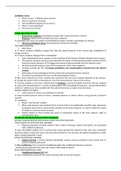
PROBLEM 1. STRESS 1
A) Your body under stress
What is stress and how can we measure it?
Definition of stress, Stressors, Strain, Transactions
Measuring stress (physiological arousal, life events, SRRS, Daily Hassles)
Draw a schematic diagram of the stress reaction in your body including the
autonomic nervous system (ANS) and the HPA axis. Then discuss the various
parts and the effects and function of both systems.
Stress & Health (Pinel)
Alarm reaction
What is the general adaptation syndrome?
GAS
Allostatic load
Factors of physiological arousal
B) Good or Bad?
Draw a diagram in which you set off the amount of stress against the degree to
which this is good/bad for an individual in a challenging situation. Please explain!
Good stress/Bad stress (Sarafino)
How does coping with stress work?
Cognitive Appraisals
How does the acute stress reaction help us to get back on track?
Effects of cortisol
C) Startle Responses and Anxiety
What is the startle response and how is it used to investigate fear?
Startle response, potentiated startle response, fear learning (mice
experiment)- (Hamm, Gazzaniga)
What are the underlying brain circuits of the fear-potentiated startle?
Low road & High road and their function
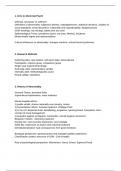
, PROBLEM 1. STRESS 2
Physical: direct material or bodily challenge
Components Psychological: how individuals perceive circumstances in their lives
1. Stress as stimulus: e.g. demanding job.
Stressors: physically or psychologically challenging events or
circumstances
2. Stress as response: peoples’ reaction to stress e.g. stress = tension
Strain: physiological and psychological response to a stressor
Approaches 3. Stress as a process: includes stressors, strains and relationship bt person-
environment
Transactions: continuous interactions and adjustments where person
and environment affect and are affected from each other.
Person = active agent that influences stressors’ impact through
behavioral, cognitive and emotional strategies.
Stress: Circumstance in which transactions lead a person to perceive a
Definition of stress discrepancy between the physical or psychological demands of a situation
and the resources of his/her biological, psychological or social system.
Resources: biological, psychological, social resources. They are limited and the strain has an
impact on all three of them
Demands: the amount of resources a stressor appears to require e.g. Vicky keeping her
weight down in order to keep her bf, demands great will power.
Discrepancy: poor fit, mismatch between demands and resources. Higher demands but also
low demands & underutilized resources can lead to discrepancy
Transactions: assess demands resources and discrepancies (these assessments = cognitive
appraisal)
Demands, resources or discrepancies can be real or just believed to exist.
Stress results from inaccurate perceptions of discrepancies between demands and
resources > on the eye of the beholder
Chapter 3. Stress, meaning, impact & sources.
(Sarafino)
Cognitive appraisal Mental process by which people assess
A) Your body under stress
What is stress and how can we measure it?
Definition of stress, Stressors, Strain, Transactions
Measuring stress (physiological arousal, life events, SRRS, Daily Hassles)
Draw a schematic diagram of the stress reaction in your body including the
autonomic nervous system (ANS) and the HPA axis. Then discuss the various
parts and the effects and function of both systems.
Stress & Health (Pinel)
Alarm reaction
What is the general adaptation syndrome?
GAS
Allostatic load
Factors of physiological arousal
B) Good or Bad?
Draw a diagram in which you set off the amount of stress against the degree to
which this is good/bad for an individual in a challenging situation. Please explain!
Good stress/Bad stress (Sarafino)
How does coping with stress work?
Cognitive Appraisals
How does the acute stress reaction help us to get back on track?
Effects of cortisol
C) Startle Responses and Anxiety
What is the startle response and how is it used to investigate fear?
Startle response, potentiated startle response, fear learning (mice
experiment)- (Hamm, Gazzaniga)
What are the underlying brain circuits of the fear-potentiated startle?
Low road & High road and their function
, PROBLEM 1. STRESS 2
Physical: direct material or bodily challenge
Components Psychological: how individuals perceive circumstances in their lives
1. Stress as stimulus: e.g. demanding job.
Stressors: physically or psychologically challenging events or
circumstances
2. Stress as response: peoples’ reaction to stress e.g. stress = tension
Strain: physiological and psychological response to a stressor
Approaches 3. Stress as a process: includes stressors, strains and relationship bt person-
environment
Transactions: continuous interactions and adjustments where person
and environment affect and are affected from each other.
Person = active agent that influences stressors’ impact through
behavioral, cognitive and emotional strategies.
Stress: Circumstance in which transactions lead a person to perceive a
Definition of stress discrepancy between the physical or psychological demands of a situation
and the resources of his/her biological, psychological or social system.
Resources: biological, psychological, social resources. They are limited and the strain has an
impact on all three of them
Demands: the amount of resources a stressor appears to require e.g. Vicky keeping her
weight down in order to keep her bf, demands great will power.
Discrepancy: poor fit, mismatch between demands and resources. Higher demands but also
low demands & underutilized resources can lead to discrepancy
Transactions: assess demands resources and discrepancies (these assessments = cognitive
appraisal)
Demands, resources or discrepancies can be real or just believed to exist.
Stress results from inaccurate perceptions of discrepancies between demands and
resources > on the eye of the beholder
Chapter 3. Stress, meaning, impact & sources.
(Sarafino)
Cognitive appraisal Mental process by which people assess