PROBLEM 3. POST-TRAUMATIC STRESS DISORDER 1
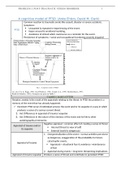
A cognitive model of PTSD (Anke Ehlers, David M. Clark)
Common reaction to traumatic events like assault, disaster or severe accidents.
Symptoms:
Unwanted & repeated re-experiencing of the event,
PTSD
Hyper-arousal & emotional numbing,
Avoidance of stimuli which could serve as a reminder for the event.
Persistence of symptoms > social and occupational functioning severely impaired
Cognitive model of PTSD
Paradox: anxiety is the result of the appraisals relating to the threat. In PTSD the problem is a
memory of the event that has already happened.
Persistent PTSD occurs if individuals process the event and/or its sequelae in a way in which
produces a sense of a serious current threat.
1. Ind. Differences in appraisal of trauma/ sequelae
2. Ind. Differences in the nature of the memory of the event and its link to other
autobiographical memories
Negative appraisal > common effect of creating a sense of threat
Appraisal of trauma and/or
Internal (threat to view of self)
its sequelae
External (world is dangerous)
1. Overgeneralization of the event > normal activities perceived
as dangerous, exaggeration of the probability for future
catastrophic events.
Appraisal of trauma
Appraisals > situational fear & avoidance >maintenance
of fear
2. Appraisal during events > long-term threatening implications
Appraisal of trauma sequelae Produce a sense of threat and contribute to persistent PTSD:
, PROBLEM 3. POST-TRAUMATIC STRESS DISORDER 2
Interpretation of initial PTSD symptoms e.g. flashback
irritability, mood swings
o Interpret them as permanent change and not as a
part of the recovery
o Maintain PTSD-producing neg. emotions
o Individuals engage in dysfunctional coping strategies
> end up enhancing the symptoms
Interpretation of people’s reactions
o People’s avoiding to talk about the event in order for
the person not to feel pressure > interpreted as them
not caring
o Some ppl do not care and if the individual consider
their views important > interpret their behavior as
the event was their fault
Appraisal of the consequences of trauma in other domains
Danger appraisals – fear
Appraisals of others violating personal rules- unfairness
Appraisals of responsibility- guilt
Emotional responses
Appraisals for violation of standards- shame
Appraisals for perceived loss- sadness (depression)
Loss may occur > anxiety
Intentional recall is poor, involuntary triggered intrusive
memories “here and now” of the event are more frequent.
Re-experiencing consists of sensory impressions (all
modalities but mostly visual)
Sensory impressions give the feeling of present
occurrence of the event and lack awareness of
Memory of trauma
remembering
(cupboard, jigsaw puzzle)
Original emotions are re-experienced even if the
individual acquired new info that contradicted the
original or if she/he knows that these impressions did
not turn out to be true
Affect without recollection
Triggered by stimuli temporally assoc. w/ the event
The trauma memory is poorly elaborated and inadequately
Poor integrated into its context in time, place subsequent and
elaboration/incorporation previous info & other AB memories.
into Ab memory Poor intentional recall and easy triggering by physically
similar cues
S-S/ S-R associations These associations are very strong and triggering of the events
A cognitive model of PTSD (Anke Ehlers, David M. Clark)
Common reaction to traumatic events like assault, disaster or severe accidents.
Symptoms:
Unwanted & repeated re-experiencing of the event,
PTSD
Hyper-arousal & emotional numbing,
Avoidance of stimuli which could serve as a reminder for the event.
Persistence of symptoms > social and occupational functioning severely impaired
Cognitive model of PTSD
Paradox: anxiety is the result of the appraisals relating to the threat. In PTSD the problem is a
memory of the event that has already happened.
Persistent PTSD occurs if individuals process the event and/or its sequelae in a way in which
produces a sense of a serious current threat.
1. Ind. Differences in appraisal of trauma/ sequelae
2. Ind. Differences in the nature of the memory of the event and its link to other
autobiographical memories
Negative appraisal > common effect of creating a sense of threat
Appraisal of trauma and/or
Internal (threat to view of self)
its sequelae
External (world is dangerous)
1. Overgeneralization of the event > normal activities perceived
as dangerous, exaggeration of the probability for future
catastrophic events.
Appraisal of trauma
Appraisals > situational fear & avoidance >maintenance
of fear
2. Appraisal during events > long-term threatening implications
Appraisal of trauma sequelae Produce a sense of threat and contribute to persistent PTSD:
, PROBLEM 3. POST-TRAUMATIC STRESS DISORDER 2
Interpretation of initial PTSD symptoms e.g. flashback
irritability, mood swings
o Interpret them as permanent change and not as a
part of the recovery
o Maintain PTSD-producing neg. emotions
o Individuals engage in dysfunctional coping strategies
> end up enhancing the symptoms
Interpretation of people’s reactions
o People’s avoiding to talk about the event in order for
the person not to feel pressure > interpreted as them
not caring
o Some ppl do not care and if the individual consider
their views important > interpret their behavior as
the event was their fault
Appraisal of the consequences of trauma in other domains
Danger appraisals – fear
Appraisals of others violating personal rules- unfairness
Appraisals of responsibility- guilt
Emotional responses
Appraisals for violation of standards- shame
Appraisals for perceived loss- sadness (depression)
Loss may occur > anxiety
Intentional recall is poor, involuntary triggered intrusive
memories “here and now” of the event are more frequent.
Re-experiencing consists of sensory impressions (all
modalities but mostly visual)
Sensory impressions give the feeling of present
occurrence of the event and lack awareness of
Memory of trauma
remembering
(cupboard, jigsaw puzzle)
Original emotions are re-experienced even if the
individual acquired new info that contradicted the
original or if she/he knows that these impressions did
not turn out to be true
Affect without recollection
Triggered by stimuli temporally assoc. w/ the event
The trauma memory is poorly elaborated and inadequately
Poor integrated into its context in time, place subsequent and
elaboration/incorporation previous info & other AB memories.
into Ab memory Poor intentional recall and easy triggering by physically
similar cues
S-S/ S-R associations These associations are very strong and triggering of the events