ENGLISH PAPER 2
LITERATURE OTHELLO
,Othello by WILLIAM Shakespeare
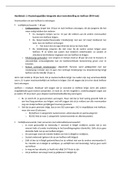
Plot Stage Detailed Explanation in Paragraphs
Exposition – the The play begins in Venice, a cosmopolitan city during a time of conflict between the Venetian and Ottoman empires. Here, we
beginning are introduced to the central characters: Othello, a successful Moorish general, and Desdemona, a noblewoman who has
secretly eloped with him. Iago, Othello's ensign, is established as the villain because he is angry about being passed over for a
promotion to lieutenant in favor of Michael Cassio. Iago uses his "two-faced" nature to pretend to be a loyal friend while
secretly plotting revenge. The initial situation involves Iago and Roderigo waking up Desdemona’s father, Brabantio, to tell
him about the marriage using racist and animal imagery to provoke his anger.
Rising Action – the The action moves from Venice to Cyprus after a storm destroys the Turkish fleet, shifting the focus from military war to
build-up personal drama. During this build-up, Iago begins to "weave a web of deceit," starting by getting Cassio drunk and goading him
into a fight, which causes Othello to strip Cassio of his rank. Iago then encourages Cassio to ask Desdemona for help to regain
his job, which Iago uses to "plant the seeds of suspicion" in Othello’s mind. The tension increases significantly when
Desdemona accidentally drops her handkerchief, which Iago steals and plants in Cassio’s room as false "ocular proof" of
an affair. Othello’s jealousy grows until he is "perplexed in the extreme" and begins to lose his sanity.
Conflict – the main The central struggle is a person vs. person conflict where Iago's "dishonorable cleverness" destroys Othello's "free and open
problem nature". It is also a person vs. self struggle, as Othello battles his own internal jealousy, which Iago calls the "green-eyed
monster". Othello’s insecurity about being an outsider and a Moor in Venetian society makes him feel he is not good enough
for Desdemona, creating a conflict with his own racial identity. Iago exploits Othello’s "fatal flaw"—his readiness to trust
appearances—to make him believe his wife has betrayed his honor. Ultimately, the problem is Othello's inability to distinguish
between the "facade" Iago creates and the reality of Desdemona's innocence.
Climax – the The climax is the most intense and horrifying moment of the play: the murder of Desdemona. Othello enters her
turning point bedchamber, using the light of a candle as a metaphor for her life that he is about to "snuff out". Despite Desdemona's
terrified pleas of innocence and her request for just a few more minutes to live, Othello remains "implacable" because he is
consumed by the monster of jealousy. He smothers her with a pillow in their wedding bed. This is the ultimate turning point
because it is an irreversible act of violence that finishes Othello's transformation from a noble hero into a "beast".
Falling Action – Following the murder, the truth begins to surface when Emilia, Iago's wife, enters the room and hears Desdemona’s final cries.
things calm down Emilia realizes her husband is the "eternal villain" behind the plot and bravely exposes Iago's duplicity to Othello and the
Venetian officials. She explains that she was the one who found the handkerchief and gave it to Iago, proving that Othello was
manipulated. In a desperate attempt to hide his crimes, Iago stabs and kills Emilia before trying to flee. Letters found on the
body of Roderigo, whom Iago also killed, reveal the full extent of the "resourceful villain's" schemes.
Resolution The story concludes with Othello’s realization that he has thrown away a "pearl" richer than all his tribe. He delivers a final
(Denouement) – speech asking to be remembered as one who "loved not wisely but too well". He then commits suicide by stabbing
the ending himself, choosing to die beside Desdemona as a final act of service to the state. Iago is arrested and Cassio is appointed to
govern Cyprus and carry out Iago's execution. The play ends with a restoration of a stable hierarchy, although it is a "sad"
conclusion where the villain's destruction is complete and the tragic hero is dead.
1
@smartstudypro-stuvia
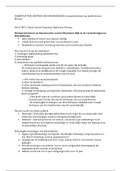
, Quote Technique Used Explanation
1. “I am not what I am.” – Twisting of words The quote "I am not what I am" is a famous, complex declaration spoken by Iago inI
Iago (Inversion); False Look am not what I am"** is a famous, complex declaration spoken by Iago in Act 1, Scene
(Duplicity). 1, and it immediately establishes his identity as the play's resourceful, deceitful villain.
In the scene, Iago is assuring Roderigo that although he outwardly "pretends to
serve Othello," he in reality "hates Othello" and is only acting in his own self-
interest. The quote is an explicit admission of Iago's "duplicitous nature," meaning
his two-faced character, and signifies that his outward behavior does not reflect his
inner feelings. Furthermore, Shakespeare uses this statement as a biblical reference;
it is an inversion or twisting of the line "I am that I am" from the Book of Exodus,
where God reveals his true, honest face to the Israelites. By subverting this honest
portrayal, Iago aligns himself with the devil or Satan, who uses "dark forces of Hell to
ruin good people". The line proves the depth of Iago's dishonesty, suggesting that his
duplicity is so extreme that he may not even possess a stable personality beneath his
"strategic manipulation of others". This quote is the foundational key to the play's
theme of Appearance vs. Reality, which Othello, due to his "free and open
nature," fails to grasp, making him vulnerable to Iago's schemes.
2. “An old black ram is Racist language Iago shouts this crude insult at Brabantio. It uses vulgar Animal words to describe
tupping your white ewe.” – (Prejudice); Animal Othello and Desdemona having sex. This is explicit Racial prejudice, painting Othello
Iago words (Imagery). as a beast. Iago uses this to outrage Brabantio and challenge his honor. The quote “An
old black ram is tupping your white ewe” is spoken by Iago in Act 1, Scene 1, to
Brabantio, Desdemona's father, and it serves as a vicious example of racial prejudice
and shocking animal imagery used to incite anger and outrage. Iago uses this crude,
sexually suggestive language to inform Brabantio that his daughter, Desdemona, has
eloped with Othello, the Moor. The phrase is a powerful metaphor that reduces Othello
and Desdemona’s relationship to a bestial act: Othello is called an "old black ram,"
while Desdemona is referred to as a "white ewe". By describing Othello as a "black
ram," Iago utilizes beast imagery to define Othello as an animalistic, sexual predator,
which plays into the racial prejudice common at the time and against Othello's dark
skin. Meanwhile, Desdemona is defined by her contrasting light skin and innocence as
a "white ewe," yet her status as an animal also indicates that the men in the play do
not regard her as an equal human being. Iago uses this shocking language specifically
to appeal to Brabantio's sense of "paternalism and racial prejudice," ensuring that
Brabantio visualizes the two having sex and thus feeling his honor is ruined. This quote
is crucial as it immediately establishes the motif of racial prejudice and the use of
animal imagery as a "virus" that spreads throughout the play.
3. “O, beware, my lord, of Hidden warning Iago gives Othello this warning, but he is secretly plotting to cause the jealousy. Irony
jealousy! / It is the green- (Irony); Comparison is key here. Jealousy is compared to a "monster" that destroys the person who feels it.
2
@smartstudypro-stuvia
LITERATURE OTHELLO
,Othello by WILLIAM Shakespeare
Plot Stage Detailed Explanation in Paragraphs
Exposition – the The play begins in Venice, a cosmopolitan city during a time of conflict between the Venetian and Ottoman empires. Here, we
beginning are introduced to the central characters: Othello, a successful Moorish general, and Desdemona, a noblewoman who has
secretly eloped with him. Iago, Othello's ensign, is established as the villain because he is angry about being passed over for a
promotion to lieutenant in favor of Michael Cassio. Iago uses his "two-faced" nature to pretend to be a loyal friend while
secretly plotting revenge. The initial situation involves Iago and Roderigo waking up Desdemona’s father, Brabantio, to tell
him about the marriage using racist and animal imagery to provoke his anger.
Rising Action – the The action moves from Venice to Cyprus after a storm destroys the Turkish fleet, shifting the focus from military war to
build-up personal drama. During this build-up, Iago begins to "weave a web of deceit," starting by getting Cassio drunk and goading him
into a fight, which causes Othello to strip Cassio of his rank. Iago then encourages Cassio to ask Desdemona for help to regain
his job, which Iago uses to "plant the seeds of suspicion" in Othello’s mind. The tension increases significantly when
Desdemona accidentally drops her handkerchief, which Iago steals and plants in Cassio’s room as false "ocular proof" of
an affair. Othello’s jealousy grows until he is "perplexed in the extreme" and begins to lose his sanity.
Conflict – the main The central struggle is a person vs. person conflict where Iago's "dishonorable cleverness" destroys Othello's "free and open
problem nature". It is also a person vs. self struggle, as Othello battles his own internal jealousy, which Iago calls the "green-eyed
monster". Othello’s insecurity about being an outsider and a Moor in Venetian society makes him feel he is not good enough
for Desdemona, creating a conflict with his own racial identity. Iago exploits Othello’s "fatal flaw"—his readiness to trust
appearances—to make him believe his wife has betrayed his honor. Ultimately, the problem is Othello's inability to distinguish
between the "facade" Iago creates and the reality of Desdemona's innocence.
Climax – the The climax is the most intense and horrifying moment of the play: the murder of Desdemona. Othello enters her
turning point bedchamber, using the light of a candle as a metaphor for her life that he is about to "snuff out". Despite Desdemona's
terrified pleas of innocence and her request for just a few more minutes to live, Othello remains "implacable" because he is
consumed by the monster of jealousy. He smothers her with a pillow in their wedding bed. This is the ultimate turning point
because it is an irreversible act of violence that finishes Othello's transformation from a noble hero into a "beast".
Falling Action – Following the murder, the truth begins to surface when Emilia, Iago's wife, enters the room and hears Desdemona’s final cries.
things calm down Emilia realizes her husband is the "eternal villain" behind the plot and bravely exposes Iago's duplicity to Othello and the
Venetian officials. She explains that she was the one who found the handkerchief and gave it to Iago, proving that Othello was
manipulated. In a desperate attempt to hide his crimes, Iago stabs and kills Emilia before trying to flee. Letters found on the
body of Roderigo, whom Iago also killed, reveal the full extent of the "resourceful villain's" schemes.
Resolution The story concludes with Othello’s realization that he has thrown away a "pearl" richer than all his tribe. He delivers a final
(Denouement) – speech asking to be remembered as one who "loved not wisely but too well". He then commits suicide by stabbing
the ending himself, choosing to die beside Desdemona as a final act of service to the state. Iago is arrested and Cassio is appointed to
govern Cyprus and carry out Iago's execution. The play ends with a restoration of a stable hierarchy, although it is a "sad"
conclusion where the villain's destruction is complete and the tragic hero is dead.
1
@smartstudypro-stuvia
, Quote Technique Used Explanation
1. “I am not what I am.” – Twisting of words The quote "I am not what I am" is a famous, complex declaration spoken by Iago inI
Iago (Inversion); False Look am not what I am"** is a famous, complex declaration spoken by Iago in Act 1, Scene
(Duplicity). 1, and it immediately establishes his identity as the play's resourceful, deceitful villain.
In the scene, Iago is assuring Roderigo that although he outwardly "pretends to
serve Othello," he in reality "hates Othello" and is only acting in his own self-
interest. The quote is an explicit admission of Iago's "duplicitous nature," meaning
his two-faced character, and signifies that his outward behavior does not reflect his
inner feelings. Furthermore, Shakespeare uses this statement as a biblical reference;
it is an inversion or twisting of the line "I am that I am" from the Book of Exodus,
where God reveals his true, honest face to the Israelites. By subverting this honest
portrayal, Iago aligns himself with the devil or Satan, who uses "dark forces of Hell to
ruin good people". The line proves the depth of Iago's dishonesty, suggesting that his
duplicity is so extreme that he may not even possess a stable personality beneath his
"strategic manipulation of others". This quote is the foundational key to the play's
theme of Appearance vs. Reality, which Othello, due to his "free and open
nature," fails to grasp, making him vulnerable to Iago's schemes.
2. “An old black ram is Racist language Iago shouts this crude insult at Brabantio. It uses vulgar Animal words to describe
tupping your white ewe.” – (Prejudice); Animal Othello and Desdemona having sex. This is explicit Racial prejudice, painting Othello
Iago words (Imagery). as a beast. Iago uses this to outrage Brabantio and challenge his honor. The quote “An
old black ram is tupping your white ewe” is spoken by Iago in Act 1, Scene 1, to
Brabantio, Desdemona's father, and it serves as a vicious example of racial prejudice
and shocking animal imagery used to incite anger and outrage. Iago uses this crude,
sexually suggestive language to inform Brabantio that his daughter, Desdemona, has
eloped with Othello, the Moor. The phrase is a powerful metaphor that reduces Othello
and Desdemona’s relationship to a bestial act: Othello is called an "old black ram,"
while Desdemona is referred to as a "white ewe". By describing Othello as a "black
ram," Iago utilizes beast imagery to define Othello as an animalistic, sexual predator,
which plays into the racial prejudice common at the time and against Othello's dark
skin. Meanwhile, Desdemona is defined by her contrasting light skin and innocence as
a "white ewe," yet her status as an animal also indicates that the men in the play do
not regard her as an equal human being. Iago uses this shocking language specifically
to appeal to Brabantio's sense of "paternalism and racial prejudice," ensuring that
Brabantio visualizes the two having sex and thus feeling his honor is ruined. This quote
is crucial as it immediately establishes the motif of racial prejudice and the use of
animal imagery as a "virus" that spreads throughout the play.
3. “O, beware, my lord, of Hidden warning Iago gives Othello this warning, but he is secretly plotting to cause the jealousy. Irony
jealousy! / It is the green- (Irony); Comparison is key here. Jealousy is compared to a "monster" that destroys the person who feels it.
2
@smartstudypro-stuvia