NURSING EXAM PREPARATION BUNDLE
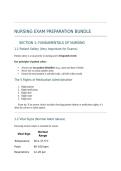
🧠 SECTION 1: FUNDAMENTALS OF NURSING
1.1 Patient Safety (Very Important for Exams)
Patient safety is a top priority in nursing and is frequently tested.
Key principles of patient safety:
Always use two patient identifiers (e.g., name and date of birth)
Never rely on room number alone
Ensure the environment is safe (bed rails, call bell within reach)
The 5 Rights of Medication Administration
1. Right patient
2. Right medication
3. Right dose
4. Right route
5. Right time
📌 Exam tip: If an answer choice includes checking patient identity or medication rights, it’s
often the correct or safest option.
1.2 Vital Signs (Normal Adult Values)
Knowing normal values is essential for exams.
Normal
Vital Sign
Range
Temperature 36.5–37.5°C
Pulse 60–100 bpm
Respirations 12–20 per
, Normal
Vital Sign
Range
minute
<120/80
Blood Pressure
mmHg
Oxygen
95–100%
Saturation
⚠️Exam reminder: Abnormal vital signs usually require assessment first, not immediate
medication unless stated.
1.3 Nursing Process (ADPIE)
The nursing process guides safe patient care and exam questions.
1. Assessment – collect data
2. Diagnosis – identify patient problems
3. Planning – set goals
4. Implementation – perform interventions
5. Evaluation – review outcomes
📝 Golden exam rule: Always assess before you intervene, unless the patient is in immediate
danger.
💊 SECTION 2: PHARMACOLOGY BASICS
Pharmacology questions often focus on safety, side effects, and nursing responsibilities.
2.1 General Medication Administration Rules
Check for allergies before administering medication
Read medication labels three times
Double-check high-alert medications
Document medication after administration, not before
🚫 Never administer a medication you are unsure about.
🧠 SECTION 1: FUNDAMENTALS OF NURSING
1.1 Patient Safety (Very Important for Exams)
Patient safety is a top priority in nursing and is frequently tested.
Key principles of patient safety:
Always use two patient identifiers (e.g., name and date of birth)
Never rely on room number alone
Ensure the environment is safe (bed rails, call bell within reach)
The 5 Rights of Medication Administration
1. Right patient
2. Right medication
3. Right dose
4. Right route
5. Right time
📌 Exam tip: If an answer choice includes checking patient identity or medication rights, it’s
often the correct or safest option.
1.2 Vital Signs (Normal Adult Values)
Knowing normal values is essential for exams.
Normal
Vital Sign
Range
Temperature 36.5–37.5°C
Pulse 60–100 bpm
Respirations 12–20 per
, Normal
Vital Sign
Range
minute
<120/80
Blood Pressure
mmHg
Oxygen
95–100%
Saturation
⚠️Exam reminder: Abnormal vital signs usually require assessment first, not immediate
medication unless stated.
1.3 Nursing Process (ADPIE)
The nursing process guides safe patient care and exam questions.
1. Assessment – collect data
2. Diagnosis – identify patient problems
3. Planning – set goals
4. Implementation – perform interventions
5. Evaluation – review outcomes
📝 Golden exam rule: Always assess before you intervene, unless the patient is in immediate
danger.
💊 SECTION 2: PHARMACOLOGY BASICS
Pharmacology questions often focus on safety, side effects, and nursing responsibilities.
2.1 General Medication Administration Rules
Check for allergies before administering medication
Read medication labels three times
Double-check high-alert medications
Document medication after administration, not before
🚫 Never administer a medication you are unsure about.