MIS
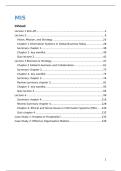
Inhoud
Lecture 1 Kick-off.........................................................................................2
Lecture 2.....................................................................................................6
Vision, Mission, and Strategy.................................................................25
Chapter 1 Information Systems in Global Business Today......................28
Summary chapter 1................................................................................38
Chapter 1- key wordlist..........................................................................40
Quiz lecture 2.........................................................................................42
Lecture 3 Business & Strategy...................................................................47
Chapter 2 Global E-business and Collaboration.....................................61
Summary Chapter 2...............................................................................73
Chapter 2- key wordlist..........................................................................75
Summary chapter 3................................................................................76
Review summary chapter 3....................................................................91
Chapter 3- key wordlist..........................................................................93
Quiz lecture 3.........................................................................................95
Lecture 4...................................................................................................99
Summary chapter 4..............................................................................116
Review Summary chapter 4.................................................................128
Chapter 4: Ethical and Social Issues in Information Systems (MIS)......130
Quiz chapter 4......................................................................................132
Case Study 1: Hospital or Hospitality?.....................................................135
Case Study 2: Effective Organisation Matters.........................................140
1
,Lecture 1 Kick-off
MIS is the study of management, organisations and technology, and
the relationships among them. MIS professionals help firms realize
maximum benefits from investment in personnel, equipment, and
business processes. MIS is a people-oriented field with an emphasis on
service through technology.
Primary Business Activities of a Hotel:
A hotel operates by providing accommodation, food and beverage
services, leisure and wellness experiences, and other related services to
guests. The key business activities typically include:
1. Accommodation Services: Providing rooms for guests with various
amenities.
2. Food and Beverage: Managing restaurants, bars, room service,
and catering for events.
3. Leisure and Wellness: Offering services such as spas, gyms,
pools, and recreational activities.
4. Events and Conferences: Hosting meetings, conferences, and
private events.
5. Guest Services: Ensuring a seamless guest experience through
concierge, room service, and other support.
6. Housekeeping: Maintaining cleanliness and the comfort of rooms
and public spaces.
7. Sales and Marketing: Promoting the hotel, managing online
bookings, and working with travel agencies.
8. Human Resources: Recruitment, training, and management of
employees.
Organization of a Hotel:
A hotel is typically structured into functional areas or departments
based on its core activities. Some of the common functional areas include:
1. Front Office:
o Reception, reservations, guest check-in/check-out, concierge.
2. Housekeeping:
o Room cleaning, maintenance, and public area upkeep.
2
, 3. Food and Beverage (F&B):
o Restaurants, bars, catering, banquets, and room service.
4. Sales and Marketing:
o Promoting the hotel, managing advertising, social media,
partnerships, and special promotions.
5. Finance and Accounting:
o Budgeting, accounting, payroll, and financial analysis.
6. Human Resources (HR):
o Recruitment, employee welfare, training, and performance
management.
7. Maintenance and Engineering:
o Ensuring the upkeep of the building and facilities.
8. IT and Technology:
o Managing systems, online bookings, guest Wi-Fi, and other
technological solutions.
9. Security:
o Ensuring the safety and security of guests and staff.
Business Processes:
Hotel business processes are designed to ensure smooth day-to-day
operations and provide excellent guest experiences. These include:
1. Guest Booking Process: From reservations to check-in/check-out,
both in-person and online.
2. Service Delivery Process: How services such as cleaning, dining,
and concierge are offered.
3. Maintenance Process: Regular checks and repairs of facilities and
equipment.
4. Revenue Management Process: Pricing strategies and occupancy
management to maximize profits.
5. Customer Feedback and Quality Assurance Process: Collecting
and acting on guest feedback to improve services.
Stakeholders in a Hotel:
3
, 1. Guests: The primary source of revenue; their satisfaction drives
hotel success.
2. Employees: The hotel staff working across different departments.
3. Investors/Owners: Individuals or companies funding the hotel’s
operations.
4. Suppliers: Providing goods and services such as food, beverages,
linens, and cleaning supplies.
5. Local Community: Beneficiaries of employment and business
opportunities created by the hotel.
6. Regulatory Bodies: Government agencies regulating the industry
(taxes, safety standards, etc.).
7. Travel Agents: Booking channels that help the hotel reach more
guests.
8. Shareholders: If the hotel is part of a chain, shareholders who have
invested in the parent company.
Management Decisions and Processes:
Management decisions in a hotel are generally made by the hotel
management team, including the general manager and departmental
heads. The processes for making decisions typically involve:
1. Strategic Decision-Making: Long-term goals, growth plans, brand
positioning, and major investments.
2. Operational Decision-Making: Day-to-day issues such as staffing,
guest complaints, and event planning.
3. Tactical Decision-Making: Short-term decisions regarding pricing,
promotions, and seasonal strategies.
4. Data-Driven Decisions: Using financial, guest feedback, and
operational data to inform decisions, including occupancy rates and
profitability.
Management decisions are often based on reports, guest feedback,
and analysis of operational metrics (e.g., average daily rate (ADR),
revenue per available room (RevPAR), guest satisfaction scores).
Determining the Hotel Brand:
1. Investor's Perspective:
4
Inhoud
Lecture 1 Kick-off.........................................................................................2
Lecture 2.....................................................................................................6
Vision, Mission, and Strategy.................................................................25
Chapter 1 Information Systems in Global Business Today......................28
Summary chapter 1................................................................................38
Chapter 1- key wordlist..........................................................................40
Quiz lecture 2.........................................................................................42
Lecture 3 Business & Strategy...................................................................47
Chapter 2 Global E-business and Collaboration.....................................61
Summary Chapter 2...............................................................................73
Chapter 2- key wordlist..........................................................................75
Summary chapter 3................................................................................76
Review summary chapter 3....................................................................91
Chapter 3- key wordlist..........................................................................93
Quiz lecture 3.........................................................................................95
Lecture 4...................................................................................................99
Summary chapter 4..............................................................................116
Review Summary chapter 4.................................................................128
Chapter 4: Ethical and Social Issues in Information Systems (MIS)......130
Quiz chapter 4......................................................................................132
Case Study 1: Hospital or Hospitality?.....................................................135
Case Study 2: Effective Organisation Matters.........................................140
1
,Lecture 1 Kick-off
MIS is the study of management, organisations and technology, and
the relationships among them. MIS professionals help firms realize
maximum benefits from investment in personnel, equipment, and
business processes. MIS is a people-oriented field with an emphasis on
service through technology.
Primary Business Activities of a Hotel:
A hotel operates by providing accommodation, food and beverage
services, leisure and wellness experiences, and other related services to
guests. The key business activities typically include:
1. Accommodation Services: Providing rooms for guests with various
amenities.
2. Food and Beverage: Managing restaurants, bars, room service,
and catering for events.
3. Leisure and Wellness: Offering services such as spas, gyms,
pools, and recreational activities.
4. Events and Conferences: Hosting meetings, conferences, and
private events.
5. Guest Services: Ensuring a seamless guest experience through
concierge, room service, and other support.
6. Housekeeping: Maintaining cleanliness and the comfort of rooms
and public spaces.
7. Sales and Marketing: Promoting the hotel, managing online
bookings, and working with travel agencies.
8. Human Resources: Recruitment, training, and management of
employees.
Organization of a Hotel:
A hotel is typically structured into functional areas or departments
based on its core activities. Some of the common functional areas include:
1. Front Office:
o Reception, reservations, guest check-in/check-out, concierge.
2. Housekeeping:
o Room cleaning, maintenance, and public area upkeep.
2
, 3. Food and Beverage (F&B):
o Restaurants, bars, catering, banquets, and room service.
4. Sales and Marketing:
o Promoting the hotel, managing advertising, social media,
partnerships, and special promotions.
5. Finance and Accounting:
o Budgeting, accounting, payroll, and financial analysis.
6. Human Resources (HR):
o Recruitment, employee welfare, training, and performance
management.
7. Maintenance and Engineering:
o Ensuring the upkeep of the building and facilities.
8. IT and Technology:
o Managing systems, online bookings, guest Wi-Fi, and other
technological solutions.
9. Security:
o Ensuring the safety and security of guests and staff.
Business Processes:
Hotel business processes are designed to ensure smooth day-to-day
operations and provide excellent guest experiences. These include:
1. Guest Booking Process: From reservations to check-in/check-out,
both in-person and online.
2. Service Delivery Process: How services such as cleaning, dining,
and concierge are offered.
3. Maintenance Process: Regular checks and repairs of facilities and
equipment.
4. Revenue Management Process: Pricing strategies and occupancy
management to maximize profits.
5. Customer Feedback and Quality Assurance Process: Collecting
and acting on guest feedback to improve services.
Stakeholders in a Hotel:
3
, 1. Guests: The primary source of revenue; their satisfaction drives
hotel success.
2. Employees: The hotel staff working across different departments.
3. Investors/Owners: Individuals or companies funding the hotel’s
operations.
4. Suppliers: Providing goods and services such as food, beverages,
linens, and cleaning supplies.
5. Local Community: Beneficiaries of employment and business
opportunities created by the hotel.
6. Regulatory Bodies: Government agencies regulating the industry
(taxes, safety standards, etc.).
7. Travel Agents: Booking channels that help the hotel reach more
guests.
8. Shareholders: If the hotel is part of a chain, shareholders who have
invested in the parent company.
Management Decisions and Processes:
Management decisions in a hotel are generally made by the hotel
management team, including the general manager and departmental
heads. The processes for making decisions typically involve:
1. Strategic Decision-Making: Long-term goals, growth plans, brand
positioning, and major investments.
2. Operational Decision-Making: Day-to-day issues such as staffing,
guest complaints, and event planning.
3. Tactical Decision-Making: Short-term decisions regarding pricing,
promotions, and seasonal strategies.
4. Data-Driven Decisions: Using financial, guest feedback, and
operational data to inform decisions, including occupancy rates and
profitability.
Management decisions are often based on reports, guest feedback,
and analysis of operational metrics (e.g., average daily rate (ADR),
revenue per available room (RevPAR), guest satisfaction scores).
Determining the Hotel Brand:
1. Investor's Perspective:
4