ATOMIC STRUCTURE AND THE PERIODIC TABLE
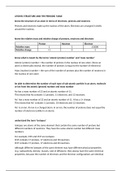
know the structure of an atom in terms of electrons, protons and neutrons
Protons and neutrons make up the nucleus of the atom. Electrons are arranged in shells
around the nucleus.
know the relative mass and relative charge of protons, neutrons and electrons
Proton Neutron Electron
Relative mass 1 1 1/2000
Relative charge +1 0 -1
know what is meant by the terms ‘atomic (proton) number’ and ‘mass number’
Atomic (proton) number = the number of protons in the nucleus of one atom. (Since an
atom is electrically neutral, the number of protons is equal to the number of electrons)
Mass (nucleon) number = the sum of the number of protons plus the number of neutrons in
the nucleus of one atom
be able to determine the number of each type of sub-atomic particle in an atom, molecule
or ion from the atomic (proton) number and mass number
Na has a mass number of 23 and an atomic number of 11.
This means that Na contains 11 protons, 11 electrons, and 12 neutrons.
Na+ has a mass number of 23 and an atomic number of 11. It has a 1+ charge.
This means that Na+ contains 11 protons, 10 electrons and 12 neutrons.
Na+ is an ion. An ion is a charged atom. In an ion, the number of protons does not equal the
number of electrons (unlike in an atom).
understand the term ‘isotopes’
Isotopes are atoms of the same element that contain the same number of protons but
different numbers of neutrons. They have the same atomic number but different mass
numbers.
For example, Cl35 and Cl37 are isotopes.
Cl35 contains 17 protons, 17 electrons and 18 neutrons.
Cl37 contains 17 protons, 17 electrons and 20 neutrons.
Although different isotopes of the same element may have different physical properties
(e.g. radioactivity, density, masses, rate of diffusion), they always have the same chemical
properties, because the number of electrons and the electron configurations are identical.
, be able to define the terms ‘relative isotopic mass’ and ‘relative atomic mass’, based on
the 12C scale
Relative isotopic mass = the mass of one atom of a specific isotope, relative to 1/12 the
mass of one atom of C12.
The relative isotopic mass is always a whole number. This is because it is the mass of one
atom (as opposed to the average mass of multiple atoms). For example, the relative isotopic
mass of Cl can be 35 or 37.
Relative atomic mass (Ar) = the weighted average mass of one atom of an element, relative
to 1/12 the mass of one atom of C12.
The relative atomic mass can be either a whole number or a decimal. This is because it is the
average mass of multiple atoms. For example, the A r of Cl is 35.5.
understand the terms ‘relative molecular mass’ and ‘relative formula mass’, including
calculating these values from relative atomic masses
The relative molecular mass (Mr) of an element or compound is the sum of the relative
atomic masses of all the atoms in its molecular formula.
The relative formula mass (Mr) of a compound is the sum of the relative atomic masses of all
the atoms in its formula.
They use the same symbol but are used in different situations. The relative molecular mass
must be used for elements and SIMPLE covalent molecules. The relative formula mass must
be used for compounds with a GIANT structure.
be able to analyse and interpret data from mass spectrometry to calculate relative atomic
mass from relative abundance of isotopes and vice versa
Mass spectrometers are used to find the relative atomic mass of an element. A sample is
injected into the mass spectrometer and is vaporised – this breaks the covalent bonds in the
molecules and turns them into atoms.
The vapour is bombarded with high-energy electrons that are emitted from an electron gun.
The electrons collide with atoms of the sample. This is called ionisation. Electrons are
removed (knocked off) from the atoms in the sample, forming positive ions.
The positive ions are accelerated by a (negatively charged) electric field.
A vacuum pump ensures that no air molecules are present in the mass spectrometer, so
that they won’t obstruct the paths of the ions. Air molecules otherwise might collide with
and alter the paths of the positive ions, leading to fewer ions being detected. You may also
otherwise get rogue peaks due to the molecular ions (e.g. O2).
The positive ions are deflected by a magnetic field. The amount by which they are deflected
depends on the mass of the ion (m) and the charge (z) of the ion. Ions with a larger m/z ratio
are deflected less than ions with a small m/z ratio.
The positive ions are detected. The number of ions passing through the machine at each
know the structure of an atom in terms of electrons, protons and neutrons
Protons and neutrons make up the nucleus of the atom. Electrons are arranged in shells
around the nucleus.
know the relative mass and relative charge of protons, neutrons and electrons
Proton Neutron Electron
Relative mass 1 1 1/2000
Relative charge +1 0 -1
know what is meant by the terms ‘atomic (proton) number’ and ‘mass number’
Atomic (proton) number = the number of protons in the nucleus of one atom. (Since an
atom is electrically neutral, the number of protons is equal to the number of electrons)
Mass (nucleon) number = the sum of the number of protons plus the number of neutrons in
the nucleus of one atom
be able to determine the number of each type of sub-atomic particle in an atom, molecule
or ion from the atomic (proton) number and mass number
Na has a mass number of 23 and an atomic number of 11.
This means that Na contains 11 protons, 11 electrons, and 12 neutrons.
Na+ has a mass number of 23 and an atomic number of 11. It has a 1+ charge.
This means that Na+ contains 11 protons, 10 electrons and 12 neutrons.
Na+ is an ion. An ion is a charged atom. In an ion, the number of protons does not equal the
number of electrons (unlike in an atom).
understand the term ‘isotopes’
Isotopes are atoms of the same element that contain the same number of protons but
different numbers of neutrons. They have the same atomic number but different mass
numbers.
For example, Cl35 and Cl37 are isotopes.
Cl35 contains 17 protons, 17 electrons and 18 neutrons.
Cl37 contains 17 protons, 17 electrons and 20 neutrons.
Although different isotopes of the same element may have different physical properties
(e.g. radioactivity, density, masses, rate of diffusion), they always have the same chemical
properties, because the number of electrons and the electron configurations are identical.
, be able to define the terms ‘relative isotopic mass’ and ‘relative atomic mass’, based on
the 12C scale
Relative isotopic mass = the mass of one atom of a specific isotope, relative to 1/12 the
mass of one atom of C12.
The relative isotopic mass is always a whole number. This is because it is the mass of one
atom (as opposed to the average mass of multiple atoms). For example, the relative isotopic
mass of Cl can be 35 or 37.
Relative atomic mass (Ar) = the weighted average mass of one atom of an element, relative
to 1/12 the mass of one atom of C12.
The relative atomic mass can be either a whole number or a decimal. This is because it is the
average mass of multiple atoms. For example, the A r of Cl is 35.5.
understand the terms ‘relative molecular mass’ and ‘relative formula mass’, including
calculating these values from relative atomic masses
The relative molecular mass (Mr) of an element or compound is the sum of the relative
atomic masses of all the atoms in its molecular formula.
The relative formula mass (Mr) of a compound is the sum of the relative atomic masses of all
the atoms in its formula.
They use the same symbol but are used in different situations. The relative molecular mass
must be used for elements and SIMPLE covalent molecules. The relative formula mass must
be used for compounds with a GIANT structure.
be able to analyse and interpret data from mass spectrometry to calculate relative atomic
mass from relative abundance of isotopes and vice versa
Mass spectrometers are used to find the relative atomic mass of an element. A sample is
injected into the mass spectrometer and is vaporised – this breaks the covalent bonds in the
molecules and turns them into atoms.
The vapour is bombarded with high-energy electrons that are emitted from an electron gun.
The electrons collide with atoms of the sample. This is called ionisation. Electrons are
removed (knocked off) from the atoms in the sample, forming positive ions.
The positive ions are accelerated by a (negatively charged) electric field.
A vacuum pump ensures that no air molecules are present in the mass spectrometer, so
that they won’t obstruct the paths of the ions. Air molecules otherwise might collide with
and alter the paths of the positive ions, leading to fewer ions being detected. You may also
otherwise get rogue peaks due to the molecular ions (e.g. O2).
The positive ions are deflected by a magnetic field. The amount by which they are deflected
depends on the mass of the ion (m) and the charge (z) of the ion. Ions with a larger m/z ratio
are deflected less than ions with a small m/z ratio.
The positive ions are detected. The number of ions passing through the machine at each