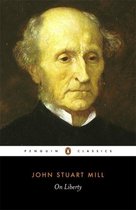
J.S. MILL - ON LIBERTY
INTRODUCTION
- Audience & context: Mill (1806-1873) is opposing the coercive moralism of the
Victorian Society
- Mainly concerned with public opinion: intolerance of attitudes and behavior
which are eccentric or different
- Increasingly democratic society, with the rise of a respectable working or
lower middle class → Mill detected a corresponding increase in social
conformity. Afraid that this tyranny of the majority would restrict and
eventually suppress originality
- Mill himself was very eccentric → perhaps why he is so willing to accept differences -
at age 14 he went against the establishment and handed out leaflets about
contraception
- Mill despised conformity
- E.g. Mill despised Chinese society for stifling intellectuals by not allowing for
diversity
MAJOR PRINCIPLES (Ch. 1)
- Society should not interfere with an individual’s life and conduct where these affect
only the individual and where there is no danger of harm to others (the Harm
Principle)
- This is because such (negative) liberty produces greater utility and hence a better
society (indirect Utilitarianism)
- Prevent the tyranny of the majority
- Liberty benefits “the permanent interests of man as a progressive being”
- Two major maxims:
- (a) Individuals are not accountable to society for his actions, insofar as these
concern the interests of no person but himself → Harm Principle
- (b) Individuals are accountable (social or legal punishment) for actions that
are prejudicial to the interests of others → S ocial Authority Principle
(1) Harm Principle:
- Mill’s primary objective in On Liberty = to define the boundaries of individual freedom,
which may then be protected from interference / coercion
- Does this by asserting “one very simple principle”: “The only purpose for which power
can be rightfully exercised over any member of a civilized community, against his will,
is to prevent harm to others”
- Protects negative liberty (see Isaiah Berlin). Free from interference “in the
form of legal penalties” or the “moral coercion of public opinion”
- Remember: Mill wrote in a time where persecution / execution based on political
beliefs, religion, sexuality etc. occurred → these would be protected under Harm
Principle
, - For Mill, “freedom” means pursuing our own good in our own way
- → “Harm to others” therefore means limiting the freedom of others to pursue
their own good in their own way
- Common criticism is that Mill does not clearly define what “harm” is
- J C Rees (1960) thinks Mill intended a clear distinction between ‘actions
affecting others’ and ‘actions affecting the interests of others’: interests should
be protected whether socially or by law. Being seriously affected by
something (e.g. offense) is not the same as having claim to have others
recognise it as an interest
(2) Social Authority Principle
- Social Authority Principle: individuals are accountable (social or legal punishment) for
actions that are prejudicial to the interests of others
- → society has the right to intervene in the interest of self-protection e.g. if an
act of someone constitutes ‘hurt’ / ‘injury’ / ‘damage’ / ‘mischief’
- Distinction between “self-regarding” and “social” actions (i.e. private v.s public
sphere)
- Individual is sovereign, over himself, his own body, and his mind → does not
concern society → protected under Harm Principle
- Mill recognises that nothing is purely self-regarding, but states that indirect
interest is not enough to constitute ‘social’ interest
- Mill’s distinction: only when there is “damage” should an individual act
be classed as social / other-regarding
- “Damage” distinction, then whether it violates the rights of o thers
- If private act is damaging but does not violate rights of others → can
be morally condemned; punished through opinion
- If private act is damaging and violates rights of others → legal
repercussions
(3) Definition of “harm”
- “Harm to others” = criteria for social / legal intervention
- Mill himself distinguishes between causing offence (which does not count as harm)
and inciting violence (which is harmful and should be regulated) → but distinction is
still problematic
- Can a person’s character be morally harmed? Can harm be done to
institutions, traditions or other forms of life? Can omission of an action which
would benefit others be considered a harm?
- Mill: acts which, w ithout justifiable cause, (a) does harm to others, or (b) is a
nuisance to other people, should be interfered with
- Punching someone when angry = harm without justifiable cause, and, more
importantly, violating someone’s rights
- E.g. turning someone down for a job → causes harm / nuisance to someone,
but there is a justifiable cause, therefore is within your rights. Doing well in a
competitive exam makes you benefit from the loss of someone else → harm,
but for greater utility you should still try to do well
- Mill’s list of types of actions that are harmful:
- Violation of others’ rights
- Infliction of loss / damage not justified by his own rights
INTRODUCTION
- Audience & context: Mill (1806-1873) is opposing the coercive moralism of the
Victorian Society
- Mainly concerned with public opinion: intolerance of attitudes and behavior
which are eccentric or different
- Increasingly democratic society, with the rise of a respectable working or
lower middle class → Mill detected a corresponding increase in social
conformity. Afraid that this tyranny of the majority would restrict and
eventually suppress originality
- Mill himself was very eccentric → perhaps why he is so willing to accept differences -
at age 14 he went against the establishment and handed out leaflets about
contraception
- Mill despised conformity
- E.g. Mill despised Chinese society for stifling intellectuals by not allowing for
diversity
MAJOR PRINCIPLES (Ch. 1)
- Society should not interfere with an individual’s life and conduct where these affect
only the individual and where there is no danger of harm to others (the Harm
Principle)
- This is because such (negative) liberty produces greater utility and hence a better
society (indirect Utilitarianism)
- Prevent the tyranny of the majority
- Liberty benefits “the permanent interests of man as a progressive being”
- Two major maxims:
- (a) Individuals are not accountable to society for his actions, insofar as these
concern the interests of no person but himself → Harm Principle
- (b) Individuals are accountable (social or legal punishment) for actions that
are prejudicial to the interests of others → S ocial Authority Principle
(1) Harm Principle:
- Mill’s primary objective in On Liberty = to define the boundaries of individual freedom,
which may then be protected from interference / coercion
- Does this by asserting “one very simple principle”: “The only purpose for which power
can be rightfully exercised over any member of a civilized community, against his will,
is to prevent harm to others”
- Protects negative liberty (see Isaiah Berlin). Free from interference “in the
form of legal penalties” or the “moral coercion of public opinion”
- Remember: Mill wrote in a time where persecution / execution based on political
beliefs, religion, sexuality etc. occurred → these would be protected under Harm
Principle
, - For Mill, “freedom” means pursuing our own good in our own way
- → “Harm to others” therefore means limiting the freedom of others to pursue
their own good in their own way
- Common criticism is that Mill does not clearly define what “harm” is
- J C Rees (1960) thinks Mill intended a clear distinction between ‘actions
affecting others’ and ‘actions affecting the interests of others’: interests should
be protected whether socially or by law. Being seriously affected by
something (e.g. offense) is not the same as having claim to have others
recognise it as an interest
(2) Social Authority Principle
- Social Authority Principle: individuals are accountable (social or legal punishment) for
actions that are prejudicial to the interests of others
- → society has the right to intervene in the interest of self-protection e.g. if an
act of someone constitutes ‘hurt’ / ‘injury’ / ‘damage’ / ‘mischief’
- Distinction between “self-regarding” and “social” actions (i.e. private v.s public
sphere)
- Individual is sovereign, over himself, his own body, and his mind → does not
concern society → protected under Harm Principle
- Mill recognises that nothing is purely self-regarding, but states that indirect
interest is not enough to constitute ‘social’ interest
- Mill’s distinction: only when there is “damage” should an individual act
be classed as social / other-regarding
- “Damage” distinction, then whether it violates the rights of o thers
- If private act is damaging but does not violate rights of others → can
be morally condemned; punished through opinion
- If private act is damaging and violates rights of others → legal
repercussions
(3) Definition of “harm”
- “Harm to others” = criteria for social / legal intervention
- Mill himself distinguishes between causing offence (which does not count as harm)
and inciting violence (which is harmful and should be regulated) → but distinction is
still problematic
- Can a person’s character be morally harmed? Can harm be done to
institutions, traditions or other forms of life? Can omission of an action which
would benefit others be considered a harm?
- Mill: acts which, w ithout justifiable cause, (a) does harm to others, or (b) is a
nuisance to other people, should be interfered with
- Punching someone when angry = harm without justifiable cause, and, more
importantly, violating someone’s rights
- E.g. turning someone down for a job → causes harm / nuisance to someone,
but there is a justifiable cause, therefore is within your rights. Doing well in a
competitive exam makes you benefit from the loss of someone else → harm,
but for greater utility you should still try to do well
- Mill’s list of types of actions that are harmful:
- Violation of others’ rights
- Infliction of loss / damage not justified by his own rights