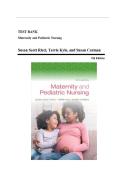
Complete Test Bank
Maternity and Pediatric Nursing, 4th Edition
By Susan Ricci, Theresa Kyle, Susan Carman
(All Chapters 1- 51, Latest Edition, 100% Verified Answers)
C
LE
ST
BE
,Table of Content
Chapter 1- Perspectives on Maternal, Newborn, and Women’s Health Care 4
Chapter 2- Family-Centered Community-Based Care 9
Chapter 3- Anatomy and Physiology of the Reproductive System 14
Chapter 4- Common Reproductive Issues 19
Chapter 5- Sexually Transmitted Infections 24
Chapter 6- Disorders of the Breasts 29
Chapter 7- Benign Disorders of the Female Reproductive Tract 34
Chapter 8- Cancers of the Female Reproductive Tract 39
Chapter 9- Violence and Abuse 44
Chapter 10- Fetal Development and Genetics 49
Chapter 11- Maternal Adaptation During Pregnancy 54
Chapter 12- Nursing Management During Pregnancy 60
C
LE
Chapter 13- Labor and Birth Process 66
Chapter 14- Nursing Management During Labor and Birth 72
ST
Chapter 15- Postpartum Adaptations 78
BE
Chapter 16- Nursing Management During the Postpartum Period 84
Chapter 17- Newborn Transitioning 90
Chapter 18- Nursing Management of the Newborn 96
Chapter 19- Nursing Management of Pregnancy at Risk- Pregnancy 102
Chapter 20- Nursing Management of the Pregnancy at Risk 108
Chapter 21- Nursing Management of Labor and Birth at Risk 114
Chapter 22- Nursing Management of the Postpartum Woman at Risk 120
Chapter 23- Nursing Care of the Newborn With Special Needs 126
Chapter 24- Nursing Management of the Newborn at Risk 132
Chapter 25- Growth and Development oftnthe Newborn and Infant 138
Chapter 26- Growth and Development of the Toddler 144
Chapter 27- Growth and Development of the Preschooler 150
Chapter 28- Growth and Development of the School-Age Child 157
,Chapter 29- Growth and Development of the Adolescent 164
Chapter 30- Atraumatic Care of Children and Families 171
Chapter 31- Health Supervision 176
Chapter 32- Health Assessment of Children 183
Chapter 33- Caring for Children in Diverse Settings 190
Chapter 34- Caring for the Special Needs Child 197
Chapter 35- Key Pediatric Nursing Interventions 203
Chapter 36- Pain Management in Children 210
Chapter 37- Nursing Care of the Child With an Infectious or Communicable Disorder 217
Chapter 38- Nursing Care of the Child With an Alteration in Intracranial Regulation / Neurologic Disorder
Chapter 39- Nursing Care of the Child With an Alteration in Sensory Perception / Disorder of the Eyes or
Chapter 40- Nursing Care of the Child With an Alteration in Gas Exchange / Respiratory Disorder 238
Chapter 41- Nursing Care of the Child With an Alteration in Perfusion / CardiovasculartnDisorder 244
C
Chapter 42- Nursing Care of the Child With an Alteration in Bowel Elimination / Gastrointestinal Disorder
LE
Chapter 43- Nursing Care of the Child With an Alteration in Urinary Elimination /
ST
Chapter 44- Nursing Care of the Child With an Alteration in Mobility / Neuromusculartnor
Musculoskeletal Disorder Extra Questions: Musculoskeletal Disorder 270
BE
Chapter 45- Nursing Care of the Child With an Alteration in Tissue Integrity / IntegumentarytnDisorder
Chapter 46- Nursing Care of the Child With an Alteration in Cellular Regulation / Hematologic or
Neoplastic Disorder Extra Questions: Neoplastic Disorder 290
Chapter 47- Nursing Care of the Child With an Alteration in Immunity or Immunologic Disorder 296
Chapter 48- Nursing Care of the Child With an Alteration in Metabolism / Endocrine Disorder 303
Chapter 49- Nursing Care of the Child With an Alteration in Genetics 310
Chapter 50- Nursing Care of the Child With an Alteration in Behavior, Cognition,
Chapter 51- Nursing Care During a Pediatric Emergency 324
, Answers Provided at The End of Each Chapter
Chapter 1- Perspectives on Maternal, Newborn, and Women’s Health Care
1. The United States ranks 50th in the world for maternal mortality and 41st among
industrialized nations for infant mortality rate. When developing programs to assist in
decreasing the se rates, which factor would most likely need to be addressed as having the
greatest impact?
A) Resolving all language and cultural differences
B) Assuring early and adequate prenatal care
C) Providing more extensive women’s shelters
D) Encouraging all women to eat a balanced diet
2. When integrating the principles of family-
centered care, the nurse would include which of the following?
A) Childbirth is viewed as a procedural event C
LE
B) Families are unable to make informed choices
ST
C) Childbirth results in changes in relationships
D) Families require little information to make appropriate decisions
BE
3. When preparing a teaching plan for a group of first-
time pregnant women, the nurse expects to review how maternity care has changed over thet
years. Which of the following would the nurse include when discussing events of the 20th
century?
A) Epidemics of puerperal fever
B) Performance of the first cesarean birth
C) Development of the x-ray to assess pelvic size
D) Creation of free-standing birth centers
4. After teaching a group of students about pregnancy-
related mortality, the instructor determines that additional teaching is needed when the stude
nts identify which condition as a leading cause?
A) Hemorrhage
Maternity and Pediatric Nursing, 4th Edition
By Susan Ricci, Theresa Kyle, Susan Carman
(All Chapters 1- 51, Latest Edition, 100% Verified Answers)
C
LE
ST
BE
,Table of Content
Chapter 1- Perspectives on Maternal, Newborn, and Women’s Health Care 4
Chapter 2- Family-Centered Community-Based Care 9
Chapter 3- Anatomy and Physiology of the Reproductive System 14
Chapter 4- Common Reproductive Issues 19
Chapter 5- Sexually Transmitted Infections 24
Chapter 6- Disorders of the Breasts 29
Chapter 7- Benign Disorders of the Female Reproductive Tract 34
Chapter 8- Cancers of the Female Reproductive Tract 39
Chapter 9- Violence and Abuse 44
Chapter 10- Fetal Development and Genetics 49
Chapter 11- Maternal Adaptation During Pregnancy 54
Chapter 12- Nursing Management During Pregnancy 60
C
LE
Chapter 13- Labor and Birth Process 66
Chapter 14- Nursing Management During Labor and Birth 72
ST
Chapter 15- Postpartum Adaptations 78
BE
Chapter 16- Nursing Management During the Postpartum Period 84
Chapter 17- Newborn Transitioning 90
Chapter 18- Nursing Management of the Newborn 96
Chapter 19- Nursing Management of Pregnancy at Risk- Pregnancy 102
Chapter 20- Nursing Management of the Pregnancy at Risk 108
Chapter 21- Nursing Management of Labor and Birth at Risk 114
Chapter 22- Nursing Management of the Postpartum Woman at Risk 120
Chapter 23- Nursing Care of the Newborn With Special Needs 126
Chapter 24- Nursing Management of the Newborn at Risk 132
Chapter 25- Growth and Development oftnthe Newborn and Infant 138
Chapter 26- Growth and Development of the Toddler 144
Chapter 27- Growth and Development of the Preschooler 150
Chapter 28- Growth and Development of the School-Age Child 157
,Chapter 29- Growth and Development of the Adolescent 164
Chapter 30- Atraumatic Care of Children and Families 171
Chapter 31- Health Supervision 176
Chapter 32- Health Assessment of Children 183
Chapter 33- Caring for Children in Diverse Settings 190
Chapter 34- Caring for the Special Needs Child 197
Chapter 35- Key Pediatric Nursing Interventions 203
Chapter 36- Pain Management in Children 210
Chapter 37- Nursing Care of the Child With an Infectious or Communicable Disorder 217
Chapter 38- Nursing Care of the Child With an Alteration in Intracranial Regulation / Neurologic Disorder
Chapter 39- Nursing Care of the Child With an Alteration in Sensory Perception / Disorder of the Eyes or
Chapter 40- Nursing Care of the Child With an Alteration in Gas Exchange / Respiratory Disorder 238
Chapter 41- Nursing Care of the Child With an Alteration in Perfusion / CardiovasculartnDisorder 244
C
Chapter 42- Nursing Care of the Child With an Alteration in Bowel Elimination / Gastrointestinal Disorder
LE
Chapter 43- Nursing Care of the Child With an Alteration in Urinary Elimination /
ST
Chapter 44- Nursing Care of the Child With an Alteration in Mobility / Neuromusculartnor
Musculoskeletal Disorder Extra Questions: Musculoskeletal Disorder 270
BE
Chapter 45- Nursing Care of the Child With an Alteration in Tissue Integrity / IntegumentarytnDisorder
Chapter 46- Nursing Care of the Child With an Alteration in Cellular Regulation / Hematologic or
Neoplastic Disorder Extra Questions: Neoplastic Disorder 290
Chapter 47- Nursing Care of the Child With an Alteration in Immunity or Immunologic Disorder 296
Chapter 48- Nursing Care of the Child With an Alteration in Metabolism / Endocrine Disorder 303
Chapter 49- Nursing Care of the Child With an Alteration in Genetics 310
Chapter 50- Nursing Care of the Child With an Alteration in Behavior, Cognition,
Chapter 51- Nursing Care During a Pediatric Emergency 324
, Answers Provided at The End of Each Chapter
Chapter 1- Perspectives on Maternal, Newborn, and Women’s Health Care
1. The United States ranks 50th in the world for maternal mortality and 41st among
industrialized nations for infant mortality rate. When developing programs to assist in
decreasing the se rates, which factor would most likely need to be addressed as having the
greatest impact?
A) Resolving all language and cultural differences
B) Assuring early and adequate prenatal care
C) Providing more extensive women’s shelters
D) Encouraging all women to eat a balanced diet
2. When integrating the principles of family-
centered care, the nurse would include which of the following?
A) Childbirth is viewed as a procedural event C
LE
B) Families are unable to make informed choices
ST
C) Childbirth results in changes in relationships
D) Families require little information to make appropriate decisions
BE
3. When preparing a teaching plan for a group of first-
time pregnant women, the nurse expects to review how maternity care has changed over thet
years. Which of the following would the nurse include when discussing events of the 20th
century?
A) Epidemics of puerperal fever
B) Performance of the first cesarean birth
C) Development of the x-ray to assess pelvic size
D) Creation of free-standing birth centers
4. After teaching a group of students about pregnancy-
related mortality, the instructor determines that additional teaching is needed when the stude
nts identify which condition as a leading cause?
A) Hemorrhage