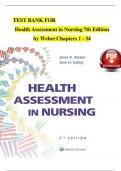
NR-701: Advanced Health Assessment Practice Exam –
Comprehensive Evaluation of Clinical Knowledge,
Diagnostic Reasoning, and Evidence-Based Assessment
Skills graded A+ 2025-2026
1. Which cell type is primarily responsible for producing myelin in the
central nervous system?
A. Schwann cells
B. Astrocytes
C. Oligodendrocytes
D. Microglia
Rationale: Oligodendrocytes form myelin in the CNS, while Schwann
cells produce myelin in the PNS.
2. A patient with hyperthyroidism may present with all of the
following except:
A. Weight loss
B. Bradycardia
C. Heat intolerance
D. Tremors
Rationale: Hyperthyroidism usually causes tachycardia, not bradycardia.
3. Which neurotransmitter is primarily excitatory in the CNS?
A. GABA
B. Glycine
C. Glutamate
D. Serotonin
Rationale: Glutamate is the main excitatory neurotransmitter; GABA
and glycine are inhibitory.
,4. Which hormone is secreted by the adrenal medulla?
A. Cortisol
B. Aldosterone
C. Epinephrine
D. Androgens
Rationale: The adrenal medulla secretes catecholamines (epinephrine
and norepinephrine), while cortisol and aldosterone are from the cortex.
5. The main mechanism of action of beta-blockers is:
A. Vasodilation via nitric oxide
B. Inhibition of beta-adrenergic receptors
C. Blocking calcium channels
D. Increasing sympathetic outflow
Rationale: Beta-blockers reduce heart rate and contractility by blocking
beta-adrenergic receptors.
6. A patient with metabolic acidosis is most likely to have which lab
finding?
A. Increased pH
B. Decreased HCO₃⁻
C. Increased PaCO₂
D. Increased HCO₃⁻
Rationale: Metabolic acidosis is characterized by low bicarbonate and
low pH.
7. The most common cause of Cushing’s syndrome is:
A. Adrenal carcinoma
B. Long-term glucocorticoid therapy
C. Pituitary adenoma secreting ACTH
D. Pheochromocytoma
Rationale: Exogenous corticosteroid use is the most common cause of
Cushing’s syndrome.
, 8. Which of the following is the first-line treatment for anaphylaxis?
A. Antihistamines
B. Corticosteroids
C. Epinephrine
D. Albuterol
Rationale: Epinephrine is the drug of choice for immediate treatment of
anaphylaxis.
9. A patient has elevated LDL cholesterol. Which lifestyle modification
is most effective at lowering LDL?
A. Increased aerobic exercise
B. Dietary saturated fat reduction
C. Increased protein intake
D. Sodium restriction
Rationale: Reducing saturated fat intake is most effective for lowering
LDL cholesterol.
10. In heart failure with reduced ejection fraction (HFrEF), which
medication improves mortality?
A. Digoxin
B. Furosemide
C. ACE inhibitors
D. Hydrochlorothiazide
Rationale: ACE inhibitors reduce mortality and morbidity in HFrEF.
11. Which vitamin deficiency causes beriberi?
A. Vitamin B6
B. Vitamin B1 (Thiamine)
C. Vitamin B12
D. Vitamin C
Rationale: Thiamine deficiency leads to beriberi, affecting
cardiovascular and nervous systems.
Comprehensive Evaluation of Clinical Knowledge,
Diagnostic Reasoning, and Evidence-Based Assessment
Skills graded A+ 2025-2026
1. Which cell type is primarily responsible for producing myelin in the
central nervous system?
A. Schwann cells
B. Astrocytes
C. Oligodendrocytes
D. Microglia
Rationale: Oligodendrocytes form myelin in the CNS, while Schwann
cells produce myelin in the PNS.
2. A patient with hyperthyroidism may present with all of the
following except:
A. Weight loss
B. Bradycardia
C. Heat intolerance
D. Tremors
Rationale: Hyperthyroidism usually causes tachycardia, not bradycardia.
3. Which neurotransmitter is primarily excitatory in the CNS?
A. GABA
B. Glycine
C. Glutamate
D. Serotonin
Rationale: Glutamate is the main excitatory neurotransmitter; GABA
and glycine are inhibitory.
,4. Which hormone is secreted by the adrenal medulla?
A. Cortisol
B. Aldosterone
C. Epinephrine
D. Androgens
Rationale: The adrenal medulla secretes catecholamines (epinephrine
and norepinephrine), while cortisol and aldosterone are from the cortex.
5. The main mechanism of action of beta-blockers is:
A. Vasodilation via nitric oxide
B. Inhibition of beta-adrenergic receptors
C. Blocking calcium channels
D. Increasing sympathetic outflow
Rationale: Beta-blockers reduce heart rate and contractility by blocking
beta-adrenergic receptors.
6. A patient with metabolic acidosis is most likely to have which lab
finding?
A. Increased pH
B. Decreased HCO₃⁻
C. Increased PaCO₂
D. Increased HCO₃⁻
Rationale: Metabolic acidosis is characterized by low bicarbonate and
low pH.
7. The most common cause of Cushing’s syndrome is:
A. Adrenal carcinoma
B. Long-term glucocorticoid therapy
C. Pituitary adenoma secreting ACTH
D. Pheochromocytoma
Rationale: Exogenous corticosteroid use is the most common cause of
Cushing’s syndrome.
, 8. Which of the following is the first-line treatment for anaphylaxis?
A. Antihistamines
B. Corticosteroids
C. Epinephrine
D. Albuterol
Rationale: Epinephrine is the drug of choice for immediate treatment of
anaphylaxis.
9. A patient has elevated LDL cholesterol. Which lifestyle modification
is most effective at lowering LDL?
A. Increased aerobic exercise
B. Dietary saturated fat reduction
C. Increased protein intake
D. Sodium restriction
Rationale: Reducing saturated fat intake is most effective for lowering
LDL cholesterol.
10. In heart failure with reduced ejection fraction (HFrEF), which
medication improves mortality?
A. Digoxin
B. Furosemide
C. ACE inhibitors
D. Hydrochlorothiazide
Rationale: ACE inhibitors reduce mortality and morbidity in HFrEF.
11. Which vitamin deficiency causes beriberi?
A. Vitamin B6
B. Vitamin B1 (Thiamine)
C. Vitamin B12
D. Vitamin C
Rationale: Thiamine deficiency leads to beriberi, affecting
cardiovascular and nervous systems.