NUR2063/PATHOPHYSI NUR2063 SE Essentials of Pathophysiology - Exam 2 review sheet 2021
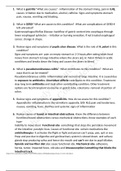
NUR2063/PATHOPHYSI NUR2063 SE Essentials of Pathophysiology - Exam 2 review sheet 2021 ⦁ What is gastritis? What are causes? - inflammation of the stomach lining, pain in LUQ, causes- irritation due to medication, alcohol, caffeine. Signs and symptoms stomach pain, nausea, vomiting and bloating. ⦁ What is GERD? What are causes to this condition? What are complications of GERD if left untreated? Gastroesophageal Reflux Disease- backflow of gastric content into esophagus through lower esophageal sphincter. – irritation or burning sensation, if not treated esophageal cancer, change in shape. ⦁ Review signs and symptoms of peptic ulcer disease. What is the role of H. pylori in this condition? Signs and symptoms are- pain on empty stomach or 2-3 hours after eating when food moves from stomach to large intestine where the ulcers are. H. Pylori thrives in acidic conditions and breaks down the lining and causes the ulcers to bleed. ⦁ What is pseudomembranous colitis? What contributes to this condition? What are ways that it can be treated? Pseudomembranous colitis- inflammation and necrosis of large intestine. It is caused due to exposure to antibiotics. Clostridium difficile contributes to this condition. Treatment- stop long term antibiotics and treat other contributing condition. Other treatment options are fecal transplant via enema or gastric tube, colectomy- removal of portion of colon. ⦁ Review signs and symptoms of appendicitis. How do we assess for this condition? Appendicitis- inflammation in the vermiform appendix. S/S- RLQ pain and tenderness, nausea, vomiting, fever, diarrhea and systemic signs of inflammation ⦁ Review causes of bowel or intestinal obstructions. Know the difference between functional bowel obstructions versus mechanical obstructions. Know examples of each type- Inability to move stool. Functional obs- somethings that stops the peristalsis movement of the intestine- paralytic ileus. Causes of functional obs- certain medications like anticholinergics- it activates the flight or fight and person can’t poop, pee, spit or see. Poop and pee due to digestive and genitourinary system is slowed down, and salivary glands stop producing saliva and hence dry mouth and can’t see due to pupil dilation. Opioids and low fiber diet also cause functional obs. Mechanical obs- adhesions, hernia, tumor, impacted feces, volvulus and intussusception (something that blocks the intestinal track. ⦁ Review signs and symptoms of liver disease. What is another term for end-stage liver disease? Jaundice- green/yellow skin due to bilirubin due to impaired bilirubin metabolism. Ascites- accumulation of fluid in peritoneal cavity due to portal hypertension and hypoalbuminemia. Check total protein and albumin and fluid examination. Hepatic Encephalopathy- neuropsychiatric syndrome from too much ammonia. S/s- dementia, asterixis, mild confusion and lethargy to stupor and coma. Cirrhosis- end stage liver disease- irreversible- acute, chronic and toxic hepatitis, metal storage disease and alcoholism. ⦁ Review signs and symptoms of gallstones. Review the three phases that contribute to gallstone formation- AKA- Cholelithiasis, majorly due to cholesterol pain in RUQ. 3 phases- supersaturation of bile with cholesterol causing precitipation of cholesterol, nucleation of bile crystals and hypomotility allowing stone growth. ⦁ Review signs and symptoms of pancreatitis. What are some causes to this condition? Digestive enzymes produced by the pancreas start to digest the pancreas from the inside. Amylase and lipase are elevated, pain and inflammation and tenderness. LUQ or back pain. Blood sugar levels are elevated, and the major cause is alcoholism. Hypoactive bowel sounds. ⦁ What are the functions of the kidneys? How do we assess for renal disorders? Functions- excretion- removal of waste products, elimination-discharge of waste productions, regulation of blood volume levels, ions conc, blood pH and nutrients. Assessment of renal disorders- dialysis, glomerular filtration rate. Some findings are- CVA tenderness and blood in urine. ⦁ What is polycystic kidney disease? What causes this condition? -genetically transmitted, many fluid filled cyst. Can lead to renal failure. Two types- autosomal recessive forms or autosomal dominant types. ⦁ Nephrons- filters in the kidney Hematuria- blood in urine- abnormal finding Proteinuria- protein in urine- abnormal finding Nephrolithiasis- kidney stones Pyelonephritis- kidney inflammation due to infection Cystitis- inflammation of the bladder. ⦁ Review signs and symptoms of postinfectious acute glomerulonephritis. What typically triggers this disorder? What age group is predominantly affected by this condition? Skin and throat infection, s/s- coffee colored urine, proteinuria, edema, decreased urine output, hypertension due to fluid retention. Caused/ triggered by beta- hemolytic streptococcus. Mostly occurs in children. ⦁ Review signs and symptoms of acute kidney injury (AKI). Review causes of AKI including prerenal, intrinsic/intrarenal, and postrenal. Know examples of each causes to each type of injury. s/s- Prerenal injury is anything that impacts blood flow to the kidney. Examples of causes of damage due to prerenal injury is hypotension, hypovolemia, heart failure, renal artery obstruction, fever, vomiting, burns and drugs. Intrinsic or Inter renal damage is within the kidney, example tumors, inflammation in the kidneys, chemotherapy or contrast media. Post renal kidney injury is any that impacts the urine flow outside the kidney, example stones, ureter and tumor. ⦁ Review the stages of AKI presentation. What happens if AKI does not resolve? Asymptomatic/prodromal- may not have signs symptoms. Oliguric- very little urine output, edema, weight gain, hyperkalemia, patient may need dialysis. Diuretic/ post oliguric- kidneys try to regain function, excess urination, chances of dehydration. Recovery phase- not all patients go into recovery phase, if no recovery phase, patients need dialysis for the rest of the life. ⦁ Review the causes of chronic kidney disease and the various complications of chronic kidney disease- nephrons in the kidney are damaged and cannot function. Risk factors- diabetes, hypertension, recurrent inflammation, age, ethnicity, others. Complications- hypertension and cardiovascular disease, uremic syndrome, metabolic acidosis, electrolyte imbalance, bone and mineral disorders, malnutrition. ⦁ Review the different types of incontinence including-- urge, stress, overflow incontinence, and reflex incontinence urge incontinence- sudden need to void, stress incontinence- small amount while increase abdominal pressure (laugh, sneeze). Reflex incontinence- disruption of nervous communications, overflow- full bladder. ⦁ What is cystitis? What is some important patient teaching to prevent cystitis? What can happen if cystitis does not resolve? Inflammation of the bladder lining. E.coli. Important teaching-wipe from front to back, urinate before and after sex, antibiotics, increase fluid intake, don’t resist urge to urinate. ⦁ Review clinical manifestations for conditions of the male genitourinary tract such as: BPH, hydrocele, testicular torsion- Benign Prostatic Hyperplasia – unknown cause, may relate to aging male hormone system, prostate tissue increase and compress urethra and bladder. CM- urinary retention, obstruction to flow, decreased stream, infection due to retention. Hydrocele- fluid collection surrounding the testicle or sperm cord. Testicular Torsion- twisting of the spermatic cord, reduced flow of blood. Prepubertal males mostly. ⦁ Review clinical manifestations for conditions of the female genitourinary tract such as: endometriosis, uterine prolapse, pelvic inflammatory disease- endometriosis- growth of endometrial tissue outside the lining of the uterus. Uterine prolapse- uterus sinks into the vagina. Congenital defects, pregnancy and childbirth. CM are vaginal discomfort, difficulty urinating, bleeding, ulcers, discomfort walking. Pelvic Inflammatory disease- causes- alteration of cervical mucus that prevents bacteria into the uterus. s/s- abdominal tenderness, pelvic pain, fever, elevated WBC count. ⦁ Review which organisms/viruses contribute to the following conditions: pelvic inflammatory disease, cervical cancer, UTIs, herpes, syphilis- Pelvic Inflammatory disease- caused by Neisseria gonorrhoeae, Chlamydia trachomatis,- cervical cancer- HPV (diagnosed by papsmear), UTIS- E. coli , herpes (type II)- herpes simplex virus, syphilis- Treponema pallidum ⦁ Review the stages of syphilis. What organ systems are most affected by the disorder in the later stages? Systemic infection of vascular system, incubation phase- 10 to 90 days, primary phase- painless chancres, sometimes lesions, secondary phase- low grade fever, sore throat, headache, mucosal and cutaneous rash, T. pallidum is spread through body and lymphatic system. Latent phase- no symptoms- can last long time, contagious. Late phase- destructive phase, arterial lesions and circulatory insufficiency, cardiovascular and CNS at risk of damage. Blindness and paresis. Syphilis mostly affects brain, liver and heart. Treated by penicillin. ⦁ Review disorders during pregnancy such as: pregnancy induced hypertension, hyperemesis gravidarum. Pregnancy induced hypertension- rapid rise of arterial blood pressure due to loss of protein in urine (proteinuria). Weight gain and edema, arterial spasm in kidney, brain and liver, decreased renal flow, kidney retain salt and water. Severe cases- coma or renal failure, liver malfunction, extreme hypertension. Hyperemesis gravidarum- excessive vomiting during pregnancy, leading to electrolyte imbalance. Abnormal response to large amount of human chorionic gonadotropin from placenta. ⦁ What is the concern with chlamydial infection during labor/delivery? Chlamydia- during birth, transmission may result in ophthalmia neonatorum- infection of eyes in newborn Review endocrine disorders of the pituitary gland including: gigantism, dwarfism, acromegaly, diabetes insipidus, SIADH- gigantism- childhood- excessive amount of growth hormone- lengthwise increase. Acromegaly- adulthood, excessive amount of growth hormone, widthwise increase. Dwarfism- lack of GH, short height. Diabetes insipidus- lack of ADH- very dilute urine in large amounts, no fluids= hypovolemia, electrolytes increase. Dehydration and extreme thirst. Dizziness, disorientation, rapid heart rate and headaches. SIADH- excessive ADH- water retention, oliguria, conc urine. Hyponatremia can lead to cerebral edema. ⦁ What is ADH? What electrolyte is most affected by disorders of ADH production? Antidiuretic hormone- sodium ⦁ Review the differences between hypothyroidism and hyperthyroidism. What labs can be drawn to determine if an individual is suffering from a thyroid disorder? Hypothyroidism- common cause- hashimoto or autoimmune thyroiditis. Bradycardia, slow metabolism-weight gain and feels cold, tired and sluggish, dry skin, poor hair and nail growth. Iodine deficiency (required for T3/T4 formation) Leads to lack of T3/T4, stimulates TSH secretion, Increased TSH causes thyroid cells to secrete large amounts of thyroglobulin, which leads to goiter. Hyperthyroidism- tachycardia, diarrhea, tremors, lose weight rapidly, bulging of eyes. ⦁ What is parathyroid hormone (PTH)? Which electrolyte is primarily affected by PTH disorders? PTH- increase Ca in blood and decrease Ca in bones. Calcitonin- decrease Ca in blood and increase bring it back to the bones. Calcitonin is produced by thyroid gland. Review signs and symptoms of Cushing’s syndrome versus Addison’s disease, what happens with cortisol (corticosteroid) levels in each disorder? Cushing’s Syndrome- excessive glucocorticoids. Caused due to pituitary tumor. Swelling due to fluid retention, hyperglycemia. Hypertension, edema, hypernatremia, moon face- fat on posterior neck- buffalo hump. Addison’s disease- adrenocortical insufficiency. Can be caused due to removal of adrenal glands. Fatigue, Bronzing of skin, hypoglycemia and hyperkalemia. Reduced cardiac output. Should not stop steroids suddenly. ⦁ Review the difference between Type 1 diabetes versus type II diabetes. Type 1 diabetes mellitus. Typically diagnosed in young children/adolescents. Autoimmune disorder – beta cells in pancreas destroyed. Unable to produce insulin. Insulin dependent. Type 2 diabetes mellitus- Cells become resistant to insulin, decrease insulin receptors on target cells. Overtime insulin production by pancreas decreases. Gestational diabetes-Hormones produced during pregnancy inhibit effects of insulin ⦁ What are signs and symptoms of hyperglycemia versus hypoglycemia. What are the three Ps? Hyperglycemia- increased glucose. Polyuria- excessive urination. Polydipsia- excessive thirst. Polyphagia- excessive hunger. Hypoglycemia- cold, pallor, fatigue, hungry, low blood sugar, sweaty, more fatal than hyperglycemia. ⦁ What is diabetic ketoacidosis? Why does it occur? – fatty acids are products of fat metabolism as cells use secondary source of energy due to glucose not getting to the cells. Ketones are produced, keto acidosis due to ketone metabolism. Blood pH drops. Fruity acetone smell, fast respirations due to body’s mechanism of compensation. Due to type I diabetes, 3 Ps.
Geschreven voor
- Instelling
- NUR2063
- Vak
- NUR2063
Documentinformatie
- Geüpload op
- 17 maart 2021
- Aantal pagina's
- 7
- Geschreven in
- 2020/2021
- Type
- Tentamen (uitwerkingen)
- Bevat
- Onbekend
Onderwerpen
- nur2063
- pain in luq
- alcohol
- nausea
- vomit
-
⦁ what is gastritis what are causes inflammation of the stomach lining
-
causes irritation due to medication
-
caffeine signs and symptoms stomach pain

Ook beschikbaar in voordeelbundel