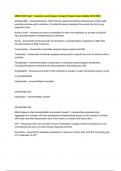
Nursing Concepts II Acid Base Balance Practice Assessment Questions Answered Correctly
Latest Update 2026/2027
A nurse is caring for a client who is experiencing severe nausea and vomiting following
chemotherapy. The nurse should monitor for which of the following acid-base imbalances? -
Answers Metabolic Alkalosis
A nurse is reinforcing discharge teaching on actions that improve gas exchange to a client
diagnosed with emphysema. Which of the following instructions should be included? - Answers
Breathe in through her nose and out through pursed lips
A nurse is assisting in the care of a client who has an acute onset pulmonary edema and is
experiencing dyspnea with low oxygen saturation rates. The nurse should recognize the client is
at risk for which of the following acid-base imbalances? - Answers Respiratory Acidosis
A nurse is caring for a client who has respiratory acidosis. Which of the following pH levels
should the nurse expect? - Answers pH less than 7.35 and a PaCO2 greater than 45 mm Hg
A nurse in the emergency department is assisting in the care of a client who is comatose. The
provider suspects ketoacidosis. Which of the following findings should the nurse expect? -
Answers Acetone odor to breath
A nurse is collecting data from a client who has shallow respirations and a respiratory rate of
9/min. Which of the following acid-base imbalances should the nurse expect? - Answers
Respiratory acidosis
Arterial blood gases:
pH: 7.30
HCO3-: 18 mEq/L
PaCO2: 28 mm/Hg - Answers Metabolic acidosis
A nurse is contributing to the plan of care for a client who has a gastrostomy tube and is
receiving continuous enteral feedings. Which of the following interventions should the nurse
include in the plan? - Answers Flush the tube with 30 mL of water every 4 hours
A nurse is reviewing the ABG values of a client who has chronic bronchitis and reports dyspnea
with minimal exertion. Which of the following acid-base imbalances should the nurse expect? -
Answers Respiratory acidosis
Metabolic Acidosis Manifestations - Answers Shallow Respirations
Cardiac Dysrhythmias
Hyperactive Reflexes
, Arterial Blood Gases:
pH: 7.6
PaCO2: 40 mm Hg
HCO3: 32 mEq/L - Answers Metabolic Alkalosis
Contributes to the development of metabolic acidosis - Answers Diarrhea
Laboratory test that determines risk factors for metabolic syndromes - Answers Fasting
glucose and triglycerides
ABG: Hyperventilating during a panic attack - Answers pH: 7.50 and HCO3: 31 mm Hg
Metabolic Alkalosis S/S - Answers Increased HCO3-, decreased H+
Tachycardia, vomiting, tetany, dizziness, palpitations, numbness/tingling in fingers/toes and
around mouth, slow/shallow respirations, muscle weakness, convulsions, ineffective breathing,
dysrhythmias
ABG:
pH: 7.2
PaCO2: 50 mm Hg
HCO3: 24 mEq/L - Answers Respiratory acidosis
ABG:
pH: 7.26
PaCO2: 30 mm/Hg
HCO3: 14 mEq/L - Answers Metabolic acidosis
ABG:
pH: 7.24
PaCO2: 53 mm/Hg
HCO3: 24 mEq/L - Answers Respiratory acidosis
Early sign of inadequate oxygenation - Answers Restlessness
High folic acid - Answers Asparagus
Metabolic Acidosis S/S - Answers Vitals: Bradycardia, weak peripheral pulses, hypotension,
Latest Update 2026/2027
A nurse is caring for a client who is experiencing severe nausea and vomiting following
chemotherapy. The nurse should monitor for which of the following acid-base imbalances? -
Answers Metabolic Alkalosis
A nurse is reinforcing discharge teaching on actions that improve gas exchange to a client
diagnosed with emphysema. Which of the following instructions should be included? - Answers
Breathe in through her nose and out through pursed lips
A nurse is assisting in the care of a client who has an acute onset pulmonary edema and is
experiencing dyspnea with low oxygen saturation rates. The nurse should recognize the client is
at risk for which of the following acid-base imbalances? - Answers Respiratory Acidosis
A nurse is caring for a client who has respiratory acidosis. Which of the following pH levels
should the nurse expect? - Answers pH less than 7.35 and a PaCO2 greater than 45 mm Hg
A nurse in the emergency department is assisting in the care of a client who is comatose. The
provider suspects ketoacidosis. Which of the following findings should the nurse expect? -
Answers Acetone odor to breath
A nurse is collecting data from a client who has shallow respirations and a respiratory rate of
9/min. Which of the following acid-base imbalances should the nurse expect? - Answers
Respiratory acidosis
Arterial blood gases:
pH: 7.30
HCO3-: 18 mEq/L
PaCO2: 28 mm/Hg - Answers Metabolic acidosis
A nurse is contributing to the plan of care for a client who has a gastrostomy tube and is
receiving continuous enteral feedings. Which of the following interventions should the nurse
include in the plan? - Answers Flush the tube with 30 mL of water every 4 hours
A nurse is reviewing the ABG values of a client who has chronic bronchitis and reports dyspnea
with minimal exertion. Which of the following acid-base imbalances should the nurse expect? -
Answers Respiratory acidosis
Metabolic Acidosis Manifestations - Answers Shallow Respirations
Cardiac Dysrhythmias
Hyperactive Reflexes
, Arterial Blood Gases:
pH: 7.6
PaCO2: 40 mm Hg
HCO3: 32 mEq/L - Answers Metabolic Alkalosis
Contributes to the development of metabolic acidosis - Answers Diarrhea
Laboratory test that determines risk factors for metabolic syndromes - Answers Fasting
glucose and triglycerides
ABG: Hyperventilating during a panic attack - Answers pH: 7.50 and HCO3: 31 mm Hg
Metabolic Alkalosis S/S - Answers Increased HCO3-, decreased H+
Tachycardia, vomiting, tetany, dizziness, palpitations, numbness/tingling in fingers/toes and
around mouth, slow/shallow respirations, muscle weakness, convulsions, ineffective breathing,
dysrhythmias
ABG:
pH: 7.2
PaCO2: 50 mm Hg
HCO3: 24 mEq/L - Answers Respiratory acidosis
ABG:
pH: 7.26
PaCO2: 30 mm/Hg
HCO3: 14 mEq/L - Answers Metabolic acidosis
ABG:
pH: 7.24
PaCO2: 53 mm/Hg
HCO3: 24 mEq/L - Answers Respiratory acidosis
Early sign of inadequate oxygenation - Answers Restlessness
High folic acid - Answers Asparagus
Metabolic Acidosis S/S - Answers Vitals: Bradycardia, weak peripheral pulses, hypotension,