Test Bank for Financial and Managerial Accounting 15th Edition
Cengage; January 1, 2019 by Carl Warren, Jefferson P. Jones
William B. Tayler, all Chapters Covered.
,Name: Class: Date:
Chapter 01 - Introduction to Accounting and Business
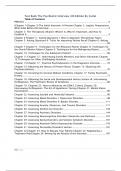
Table of Contents
1. Introduction to Accounting and Business.
2. Analyzing Transactions.
3. The Adjusting Process.
4. The Accounting Cycle.
5. Accounting for Retail Businesses.
6. Inventories.
7. Internal Control and Cash.
8. Receivables.
9. Long-Term Assets: Fixed and Intangible.
10. Liabilities: Current, Installment Notes, and Contingencies.
11. Liabilities: Bonds Payable.
12. Corporations: Organization, Stock Transactions, and Dividends.
13. Statement of Cash Flows.
14. Financial Statement Analysis.
15. Introduction to Managerial Accounting.
16. Job Order Costing.
17. Process Cost Systems.
18. Activity-Based Costing.
19. Support Department and Joint Cost Allocation.
20. Cost-Volume-Profit Analysis.
21. Variable Costing for Management Analysis.
22.Budgeting.
23. Evaluating Variances from Standard Costs.
,Name: Class: Date:
Chapter 01 - Introduction to Accounting and Business
24. Evaluating Decentralized Operations.
25. Differential Analysis and Product Pricing.
26. Capital Investment Analysis.
27. Lean Manufacturing and Activity Analysis.
28.The Balanced Scorecard and Corporate Social Responsibility.
, Name: Class: Date:
Chapter 01 - Introduction to Accounting and Business
1. A corporation is a business that is legally separate and distinct from its owners.
a. True
b. False
ANSWER: True
2. The role of accounting is to provide many different users with financial information to make economic decisions.
a. True
b. False
ANSWER: True
3. Accounting information users need reports about the economic activities and condition of businesses.
a. True
b. False
ANSWER: True
4. Managerial accounting information is used by external and internal users equally.
a. True
b. False
ANSWER: False
5. Senior executives cannot be criminally prosecuted for the wrong doings they commit on behalf of the companies where
they work.
a. True
b. False
ANSWER: False
6. Financial accounting provides information to all users, while the main focus for managerial accounting is to provide
information to the management.
a. True
b. False
ANSWER: True
7. Proper ethical conduct implies that you only consider what's in your best interest.
a. True
b. False
ANSWER: False
8. Some of the major fraudulent acts by senior executives started as what they considered to be small ethical lapses which
grew out of control.
a. True
b. False
ANSWER: True
9. A business is an organization in which basic resources or inputs, like materials and labor, are assembled and processed
to provide outputs in the form of goods or services to customers.
a. True
b. False
Cengage; January 1, 2019 by Carl Warren, Jefferson P. Jones
William B. Tayler, all Chapters Covered.
,Name: Class: Date:
Chapter 01 - Introduction to Accounting and Business
Table of Contents
1. Introduction to Accounting and Business.
2. Analyzing Transactions.
3. The Adjusting Process.
4. The Accounting Cycle.
5. Accounting for Retail Businesses.
6. Inventories.
7. Internal Control and Cash.
8. Receivables.
9. Long-Term Assets: Fixed and Intangible.
10. Liabilities: Current, Installment Notes, and Contingencies.
11. Liabilities: Bonds Payable.
12. Corporations: Organization, Stock Transactions, and Dividends.
13. Statement of Cash Flows.
14. Financial Statement Analysis.
15. Introduction to Managerial Accounting.
16. Job Order Costing.
17. Process Cost Systems.
18. Activity-Based Costing.
19. Support Department and Joint Cost Allocation.
20. Cost-Volume-Profit Analysis.
21. Variable Costing for Management Analysis.
22.Budgeting.
23. Evaluating Variances from Standard Costs.
,Name: Class: Date:
Chapter 01 - Introduction to Accounting and Business
24. Evaluating Decentralized Operations.
25. Differential Analysis and Product Pricing.
26. Capital Investment Analysis.
27. Lean Manufacturing and Activity Analysis.
28.The Balanced Scorecard and Corporate Social Responsibility.
, Name: Class: Date:
Chapter 01 - Introduction to Accounting and Business
1. A corporation is a business that is legally separate and distinct from its owners.
a. True
b. False
ANSWER: True
2. The role of accounting is to provide many different users with financial information to make economic decisions.
a. True
b. False
ANSWER: True
3. Accounting information users need reports about the economic activities and condition of businesses.
a. True
b. False
ANSWER: True
4. Managerial accounting information is used by external and internal users equally.
a. True
b. False
ANSWER: False
5. Senior executives cannot be criminally prosecuted for the wrong doings they commit on behalf of the companies where
they work.
a. True
b. False
ANSWER: False
6. Financial accounting provides information to all users, while the main focus for managerial accounting is to provide
information to the management.
a. True
b. False
ANSWER: True
7. Proper ethical conduct implies that you only consider what's in your best interest.
a. True
b. False
ANSWER: False
8. Some of the major fraudulent acts by senior executives started as what they considered to be small ethical lapses which
grew out of control.
a. True
b. False
ANSWER: True
9. A business is an organization in which basic resources or inputs, like materials and labor, are assembled and processed
to provide outputs in the form of goods or services to customers.
a. True
b. False