DIGITAL MARKETING AND TECHNOLOGY EXAM MATERIAL
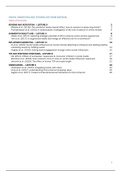
Table of Contents
REVIEWS AND REPUTATION – LECTURE 5 2
Motyka et al. (2018): The emotional review-reward effect: how do reviews increase impulsivity? 3
Purnawirawan et al. (2015): A meta-analytic investigation of the role of valence in online reviews 6
AUGMENTED REALITY (AR) – LECTURE 4 8
Hilken et al. (2017): exploring strategic potential of AR to enhance online service experiences 8
Yim et al. (2017): Is augmented reality technology an effective tool for e-commerce? 11
INFLUENCER MARKETING – LECTURE 11 13
Ki et al. (2020): Social media influencers as human brands attaching to followers and yielding positive
marketing results by fulfilling needs 14
Hughes et al. (2019): Driving brand engagement through online social influencers 15
TOV AND RESPONSE STRATEGIES– LECTURE 8 17
Xia (2013): Effects of companies’ responses to consumer criticism in social media 17
Barcelos et al. (2018): How a brand’s tone of voice on social media influences responses 18
Javornik et al. (2020): The effect of human TOV and reply length 21
OMNICHANNEL – LECTURE 3 23
Herhausen et al. (2015): Integrating bricks with clicks 23
Hure et al. (2017): understanding Omni-channel shopping value 25
Saghiri et al. (2017): Toward a three-dimensional framework for Omni-channel 26
1
,REVIEWS AND REPUTATION – LECTURE 5
Reviews vs ratings
Ratings: codified assessments on a standardised scale. Gives a good understanding on how a
product is performing, but does not give information on why.
Reviews: sentiments expressed in a text and provide more tacit, context-specific explanations of the
reviewer’s feelings, experiences and emotions about the product or service.
• They can have varying degrees of emotion
• Such sentiments provide rich information to their readers and are likely to provide them with
a tacit feel, beyond numeric ratings à more specific
Reviews can be considered eWOM (subtype of eWOM)
eWOM communication: any positive or negative statement made by potential, actual or former
customers about a product or company, which is made available to a multitude of people and
institutions via the internet
eWOM/review categories:
• Specialised eWOM: independent third party platforms, related to product/service (TripAdvisor)
• Affiliated eWOM: review section on Amazon
• Social eWOM: on social media
• Miscellaneous eWOM: other (forum, discussion platform)
eWOM/review motivations:
• Focus-related utility: help other customers/the brand
• Consumption utility: just by the simple act of consuming other reviews, you feel necessary to
also share your review à consumption is the trigger
• Approval utility: receiving approval from other people, peer evaluation, self-enhancement à
compliment seeking
• Moderator related utility: external party as mediator that takes care of complaints of
customers à collects all reviews and contacts the business on behalf of customers à
independent third party is the motivator
• Homeostasis utility: creating psychological balance (e.g. very stoked about a purchase à
write review about it to calm down)
Reviews and ratings are a form of UGC
User Generated Content (UGC): original contributions that are created by users (consumers), are
expressed in many different media (physical objects, sound recordings, computer code, text, graphic
designs) and are widely shared with other users and/or firms
• Informing: fits with reviews/eWOM – promotions for a product, sharing information for other
customers
• Co-communicating: promotion but sharing something with the company (e.g. send in your
slogan)
• Co-creating: sharing brand new ideas (e.g. new product ideas)
• Pioneering: product innovation for other customers (e.g. DIY videos, Ikea hacks)
We focus on informing!
2
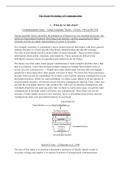
, The linear six phase model of buying and social
activities: writing reviews
• Six phases that people go through while making
a buying decision
• Old model ended with post-purchase behaviour
• In the new model, phase 6 is split in two phases
(behaviour and engagement), wherein writing
reviews is really important (engagement phase)
• Rating and reviews has become a very important
factor for decision making journey, because we
read evaluations before we make a decision and
share our experiences a lot
Hierarchical perspective: COBRA (Consumer Brand Activity) with different levels:
• Consumer: lowest level of activity (consumption of reviews and ratings)
• Contributing: higher level of activity – give rating or reply to review à more about reacting on
something that someone else already posted
• Creating: you being the indicator of brand related content, writing the review (highest level)
Motyka et al. (2018): The emotional review-reward effect: how do reviews increase impulsivity?
Most of the research done in the domain of reviews focus on the outcome of reviews (use and
effectiveness for the consumer). This research is different because it focuses on the reviewer itself
(the effect on the writer of the review, not the reader)
Key variables in this research:
• Reverse alliesthesia: suggests that encounters with rewarding stimuli (pleasure derived from
a stimulus) creates reward drives state (reward center of the brain), which heightens the
person’s desire for instant gratification (impulsivity buying)
• Impulse buying
• Sharing reviews or not
• Praise
Traditional vs reverse alliesthesia
• Traditional: I’m thirsty (drive state) à I
buy a drink (reward)
• Reverse: I taste a sample (reward, trigger,
wets the appetite) à impulsive buying
(original drive state)
Paper suggests that writing the review is the
trigger that results in impulsive buying!
Outcomes (5 different studies):
They used different concepts for impulsive buying, which supports the external validity
3
Table of Contents
REVIEWS AND REPUTATION – LECTURE 5 2
Motyka et al. (2018): The emotional review-reward effect: how do reviews increase impulsivity? 3
Purnawirawan et al. (2015): A meta-analytic investigation of the role of valence in online reviews 6
AUGMENTED REALITY (AR) – LECTURE 4 8
Hilken et al. (2017): exploring strategic potential of AR to enhance online service experiences 8
Yim et al. (2017): Is augmented reality technology an effective tool for e-commerce? 11
INFLUENCER MARKETING – LECTURE 11 13
Ki et al. (2020): Social media influencers as human brands attaching to followers and yielding positive
marketing results by fulfilling needs 14
Hughes et al. (2019): Driving brand engagement through online social influencers 15
TOV AND RESPONSE STRATEGIES– LECTURE 8 17
Xia (2013): Effects of companies’ responses to consumer criticism in social media 17
Barcelos et al. (2018): How a brand’s tone of voice on social media influences responses 18
Javornik et al. (2020): The effect of human TOV and reply length 21
OMNICHANNEL – LECTURE 3 23
Herhausen et al. (2015): Integrating bricks with clicks 23
Hure et al. (2017): understanding Omni-channel shopping value 25
Saghiri et al. (2017): Toward a three-dimensional framework for Omni-channel 26
1
,REVIEWS AND REPUTATION – LECTURE 5
Reviews vs ratings
Ratings: codified assessments on a standardised scale. Gives a good understanding on how a
product is performing, but does not give information on why.
Reviews: sentiments expressed in a text and provide more tacit, context-specific explanations of the
reviewer’s feelings, experiences and emotions about the product or service.
• They can have varying degrees of emotion
• Such sentiments provide rich information to their readers and are likely to provide them with
a tacit feel, beyond numeric ratings à more specific
Reviews can be considered eWOM (subtype of eWOM)
eWOM communication: any positive or negative statement made by potential, actual or former
customers about a product or company, which is made available to a multitude of people and
institutions via the internet
eWOM/review categories:
• Specialised eWOM: independent third party platforms, related to product/service (TripAdvisor)
• Affiliated eWOM: review section on Amazon
• Social eWOM: on social media
• Miscellaneous eWOM: other (forum, discussion platform)
eWOM/review motivations:
• Focus-related utility: help other customers/the brand
• Consumption utility: just by the simple act of consuming other reviews, you feel necessary to
also share your review à consumption is the trigger
• Approval utility: receiving approval from other people, peer evaluation, self-enhancement à
compliment seeking
• Moderator related utility: external party as mediator that takes care of complaints of
customers à collects all reviews and contacts the business on behalf of customers à
independent third party is the motivator
• Homeostasis utility: creating psychological balance (e.g. very stoked about a purchase à
write review about it to calm down)
Reviews and ratings are a form of UGC
User Generated Content (UGC): original contributions that are created by users (consumers), are
expressed in many different media (physical objects, sound recordings, computer code, text, graphic
designs) and are widely shared with other users and/or firms
• Informing: fits with reviews/eWOM – promotions for a product, sharing information for other
customers
• Co-communicating: promotion but sharing something with the company (e.g. send in your
slogan)
• Co-creating: sharing brand new ideas (e.g. new product ideas)
• Pioneering: product innovation for other customers (e.g. DIY videos, Ikea hacks)
We focus on informing!
2
, The linear six phase model of buying and social
activities: writing reviews
• Six phases that people go through while making
a buying decision
• Old model ended with post-purchase behaviour
• In the new model, phase 6 is split in two phases
(behaviour and engagement), wherein writing
reviews is really important (engagement phase)
• Rating and reviews has become a very important
factor for decision making journey, because we
read evaluations before we make a decision and
share our experiences a lot
Hierarchical perspective: COBRA (Consumer Brand Activity) with different levels:
• Consumer: lowest level of activity (consumption of reviews and ratings)
• Contributing: higher level of activity – give rating or reply to review à more about reacting on
something that someone else already posted
• Creating: you being the indicator of brand related content, writing the review (highest level)
Motyka et al. (2018): The emotional review-reward effect: how do reviews increase impulsivity?
Most of the research done in the domain of reviews focus on the outcome of reviews (use and
effectiveness for the consumer). This research is different because it focuses on the reviewer itself
(the effect on the writer of the review, not the reader)
Key variables in this research:
• Reverse alliesthesia: suggests that encounters with rewarding stimuli (pleasure derived from
a stimulus) creates reward drives state (reward center of the brain), which heightens the
person’s desire for instant gratification (impulsivity buying)
• Impulse buying
• Sharing reviews or not
• Praise
Traditional vs reverse alliesthesia
• Traditional: I’m thirsty (drive state) à I
buy a drink (reward)
• Reverse: I taste a sample (reward, trigger,
wets the appetite) à impulsive buying
(original drive state)
Paper suggests that writing the review is the
trigger that results in impulsive buying!
Outcomes (5 different studies):
They used different concepts for impulsive buying, which supports the external validity
3