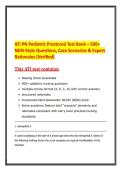
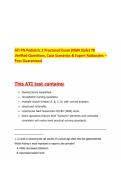
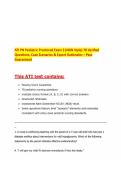
ATI RN Pediatric Proctored Test Bank – 500+
NGN-Style Questions, Case Scenarios & Expert
Rationales (Verified)
This ATI test contains:
➢ Passing Score Guarantee
➢ 500+ pediatric nursing questions
➢ multiple-choice format (A, B, C, D) with correct answers
➢ structured rationales.
➢ incorporate Next Generation NCLEX (NGN)-style.
➢ Some questions feature brief “scenario” elements and
rationales consistent with entry-level practical nursing
standards.
────────────────────────────────────────────────────
1. NGN-Style Case Scenario
────────────────────────────────────────────────────
A nurse is caring for a preschool-age child who awakens during the night crying and
appearing frightened. The parent reports that the child sometimes returns to sleep
immediately and has no memory of the episode, whereas other nights the child cries,
remembers vivid imagery, and is afraid to go back to sleep.
,Which of the following findings would most strongly indicate that the child is
experiencing NIGHTMARES rather than night terrors?
A. The child quickly returns to sleep and shows no recall of the incident in the morning.
B. The child is agitated and thrashes during the event, with profuse sweating.
C. The child does not respond to the parent's comfort during the event.
D. The child awakens fully and can recall the frightening content of the dream.
Answer: D
Expert Explanation: Children who experience nightmares typically awaken fully,
remember the frightening dream, and can often be comforted by a caregiver. In
contrast, a child who has night terrors is difficult to console, may scream or appear
panicked, quickly returns to sleep afterward, and usually has no memory of the event.
────────────────────────────────────────────────────
2. NGN-Style Case Scenario
────────────────────────────────────────────────────
A nurse is caring for a toddler who has acute otitis media and a fever of 40.0°C
(104.0°F). After administering acetaminophen, the nurse plans interventions to reduce
the toddler’s temperature.
Which of the following is the most appropriate next action?
A. Dress the toddler in minimal clothing.
B. Provide a hyperthermia blanket.
C. Place the toddler in a basin of cold water.
D. Offer a high-protein snack.
Answer: A
,Expert Explanation: Dressing the toddler in minimal clothing helps promote heat loss
through evaporation and convection. Hyperthermia blankets, cold-water baths, or other
extreme measures can cause shivering, which increases metabolic output and can raise
body temperature further.
────────────────────────────────────────────────────
3. NGN-Style Case Scenario
────────────────────────────────────────────────────
A school-age child with asthma is admitted for increased respiratory distress. The nurse
reviews the child’s data:
• Current O2 therapy: 2 L/min by nasal cannula
• Oxygen saturation: 89%
• Arterial blood gases (ABGs): pH 7.50, PaCO2 28 mm Hg, HCO3– 23 mEq/L
• WBC Count: 18,000/mm³
• Respiratory Assessment: Tachypnea, subcostal retractions, increased wheezing
Which of the following findings is the HIGHEST priority to report to the provider?
A. Elevated white blood cell count
B. pH of 7.50 indicating possible respiratory alkalosis
C. Oxygen saturation of 89% despite supplemental oxygen
D. Presence of increased wheezing on auscultation
Answer: C
Expert Explanation: An oxygen saturation of 89% despite supplemental oxygen is a
critical finding because it indicates the child is not adequately oxygenating and might be
progressing into more severe respiratory compromise. While the other findings also
warrant reporting, low oxygen saturation takes priority.
, ────────────────────────────────────────────────────
4. A nurse is caring for a preschooler with congestive heart failure who is displaying
wide QRS complexes and peaked T waves on the cardiac monitor. The provider
prescribes additional medications.
Which of the following prescriptions should the nurse clarify before administering?
A. Furosemide IV bolus
B. Enalapril PO
C. Potassium chloride PO
D. Digoxin PO
Answer: C
Expert Explanation: Wide QRS complexes and peaked T waves can be indicative of
hyperkalemia. Administering additional potassium (such as potassium chloride) could
worsen hyperkalemia and place the child at risk for life-threatening cardiac arrhythmias.
────────────────────────────────────────────────────
5. NGN-Style Case Scenario
────────────────────────────────────────────────────
A nurse is assessing a toddler who has recurrent respiratory infections, poor weight
gain, wheezing, and fatty, foul-smelling stools. The nurse suspects cystic fibrosis.
Which of the following actions should the nurse anticipate including in the plan of care?
A. Obtain a capillary blood lead level.
B. Prepare the child for a sweat chloride test.
C. Schedule a barium enema.
D. Limit fluid intake to reduce pulmonary congestion.
NGN-Style Questions, Case Scenarios & Expert
Rationales (Verified)
This ATI test contains:
➢ Passing Score Guarantee
➢ 500+ pediatric nursing questions
➢ multiple-choice format (A, B, C, D) with correct answers
➢ structured rationales.
➢ incorporate Next Generation NCLEX (NGN)-style.
➢ Some questions feature brief “scenario” elements and
rationales consistent with entry-level practical nursing
standards.
────────────────────────────────────────────────────
1. NGN-Style Case Scenario
────────────────────────────────────────────────────
A nurse is caring for a preschool-age child who awakens during the night crying and
appearing frightened. The parent reports that the child sometimes returns to sleep
immediately and has no memory of the episode, whereas other nights the child cries,
remembers vivid imagery, and is afraid to go back to sleep.
,Which of the following findings would most strongly indicate that the child is
experiencing NIGHTMARES rather than night terrors?
A. The child quickly returns to sleep and shows no recall of the incident in the morning.
B. The child is agitated and thrashes during the event, with profuse sweating.
C. The child does not respond to the parent's comfort during the event.
D. The child awakens fully and can recall the frightening content of the dream.
Answer: D
Expert Explanation: Children who experience nightmares typically awaken fully,
remember the frightening dream, and can often be comforted by a caregiver. In
contrast, a child who has night terrors is difficult to console, may scream or appear
panicked, quickly returns to sleep afterward, and usually has no memory of the event.
────────────────────────────────────────────────────
2. NGN-Style Case Scenario
────────────────────────────────────────────────────
A nurse is caring for a toddler who has acute otitis media and a fever of 40.0°C
(104.0°F). After administering acetaminophen, the nurse plans interventions to reduce
the toddler’s temperature.
Which of the following is the most appropriate next action?
A. Dress the toddler in minimal clothing.
B. Provide a hyperthermia blanket.
C. Place the toddler in a basin of cold water.
D. Offer a high-protein snack.
Answer: A
,Expert Explanation: Dressing the toddler in minimal clothing helps promote heat loss
through evaporation and convection. Hyperthermia blankets, cold-water baths, or other
extreme measures can cause shivering, which increases metabolic output and can raise
body temperature further.
────────────────────────────────────────────────────
3. NGN-Style Case Scenario
────────────────────────────────────────────────────
A school-age child with asthma is admitted for increased respiratory distress. The nurse
reviews the child’s data:
• Current O2 therapy: 2 L/min by nasal cannula
• Oxygen saturation: 89%
• Arterial blood gases (ABGs): pH 7.50, PaCO2 28 mm Hg, HCO3– 23 mEq/L
• WBC Count: 18,000/mm³
• Respiratory Assessment: Tachypnea, subcostal retractions, increased wheezing
Which of the following findings is the HIGHEST priority to report to the provider?
A. Elevated white blood cell count
B. pH of 7.50 indicating possible respiratory alkalosis
C. Oxygen saturation of 89% despite supplemental oxygen
D. Presence of increased wheezing on auscultation
Answer: C
Expert Explanation: An oxygen saturation of 89% despite supplemental oxygen is a
critical finding because it indicates the child is not adequately oxygenating and might be
progressing into more severe respiratory compromise. While the other findings also
warrant reporting, low oxygen saturation takes priority.
, ────────────────────────────────────────────────────
4. A nurse is caring for a preschooler with congestive heart failure who is displaying
wide QRS complexes and peaked T waves on the cardiac monitor. The provider
prescribes additional medications.
Which of the following prescriptions should the nurse clarify before administering?
A. Furosemide IV bolus
B. Enalapril PO
C. Potassium chloride PO
D. Digoxin PO
Answer: C
Expert Explanation: Wide QRS complexes and peaked T waves can be indicative of
hyperkalemia. Administering additional potassium (such as potassium chloride) could
worsen hyperkalemia and place the child at risk for life-threatening cardiac arrhythmias.
────────────────────────────────────────────────────
5. NGN-Style Case Scenario
────────────────────────────────────────────────────
A nurse is assessing a toddler who has recurrent respiratory infections, poor weight
gain, wheezing, and fatty, foul-smelling stools. The nurse suspects cystic fibrosis.
Which of the following actions should the nurse anticipate including in the plan of care?
A. Obtain a capillary blood lead level.
B. Prepare the child for a sweat chloride test.
C. Schedule a barium enema.
D. Limit fluid intake to reduce pulmonary congestion.