📚 PROGRAMACIÓN -
ENTRADA/SALIDA Y MANEJO DE
FICHEROS
⚠️ Conceptos Trampa
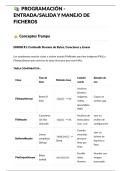
ERROR #1: Confundir Streams de Bytes, Caracteres y Líneas
Los estudiantes mezclan clases y acaban usando FileReader para leer imágenes (FAIL) o
FileInputStream para archivos de texto (funciona pero está MAL).
TABLA COMPARATIVA :
Tipo de Cuándo Ejemplo de
Clase Método clave
dato usarla uso
Archivos
binarios:
Bytes (8 imágenes, Copiar un
FileInputStream read() → int
bits) vídeos, archivo .jpg
ejecutables,
PDFs
Caracteres Archivos de Leer un
FileReader (16 bits read() → int texto plano archivo de
Unicode) (.txt, .csv) configuración
Cuando
Leer un
Líneas necesitas
readLine() → fichero de
BufferedReader completas procesar
String log línea a
(String) línea por
línea
línea
Escribir Guardar una
Bytes
FileOutputStream write(int) datos imagen
(salida)
binarios procesada
, Tipo de Cuándo Ejemplo de
Clase Método clave
dato usarla uso
Caracteres Escribir Crear un
FileWriter write(String)
(salida) texto archivo .txt
Escribir
Generar un
Líneas (con write() + muchas
BufferedWriter informe con
búfer) newLine() líneas
10.000 líneas
(eficiente)
Escribir
Escribir logs
Líneas println() , texto con
PrintWriter con
formateadas printf() formato
timestamps
cómodo
EL TRUCO MENTAL:
1. ¿Es binario o texto? → Binario = InputStream/OutputStream, Texto =
Reader/Writer
2. ¿Necesito leer línea completa? → Sí = BufferedReader
3. ¿Necesito eficiencia con muchas operaciones? → Sí = Buffered (cualquiera)
EJEMPLO DEL ERROR TÍPICO:
// ❌ MAL - Usando FileInputStream para texto
FileInputStream in = new FileInputStream("carta.txt");
int c;
while ((c = in.read()) != -1) {
System.out.print((char) c); // Funciona pero es INCORRECTO
}
// ✅ BIEN - Usando FileReader para texto
FileReader in = new FileReader("carta.txt");
int c;
while ((c = in.read()) != -1) {
System.out.print((char) c);
}
// ✅ MEJOR - Usando BufferedReader para texto (línea a línea)
BufferedReader in = new BufferedReader(new FileReader("carta.txt"));
String linea;
, while ((linea = in.readLine()) != null) {
System.out.println(linea);
}
ERROR #2: La Jerarquía de Excepciones (y el orden del catch)
Java obliga a que captures las excepciones de MÁS ESPECÍFICA a MÁS GENÉRICA. Si lo
haces al revés, ni siquiera compila.
JERARQUÍA COMPLETA:
Throwable (clase raíz)
├── Error (errores graves del sistema, NO captures estos)
│ ├── OutOfMemoryError
│ └── StackOverflowError
│
└── Exception (excepciones que SÍ debes capturar)
├── IOException (padre de las excepciones de E/S)
│ ├── FileNotFoundException
│ ├── EOFException
│ └── SocketException
│
├── RuntimeException (no verificadas)
│ ├── NullPointerException
│ ├── ArithmeticException
│ └── NumberFormatException
│
└── ClassNotFoundException
TABLA DE EXCEPCIONES EN E/S:
Excepción Cuándo se lanza Cómo prevenirla
Error genérico de Usar try-catch siempre
IOException
entrada/salida con operaciones de E/S
FileNotFoundException El archivo que intentas Comprobar con
abrir NO existe File.exists() antes de
, Excepción Cuándo se lanza Cómo prevenirla
abrir
Intentas leer más allá Usar un bucle que detecte
EOFException
del final del archivo el final ( read() == -1 )
Al deserializar, la clase Asegurarse de que la clase
ClassNotFoundException
del objeto no existe esté en el classpath
EJEMPLO DEL ERROR DE ORDEN:
// ❌ ERROR DE COMPILACIÓN - Orden incorrecto
try {
FileReader fr = new FileReader("noexiste.txt");
} catch (IOException e) { // ← Demasiado genérica primero
System.out.println("Error E/S");
} catch (FileNotFoundException e) { // ← ERROR: Unreachable code
System.out.println("Archivo no encontrado");
}
// ✅ CORRECTO - De específica a genérica
try {
FileReader fr = new FileReader("noexiste.txt");
} catch (FileNotFoundException e) { // ← Primero la específica
System.out.println("El archivo no existe");
} catch (IOException e) { // ← Luego la genérica
System.out.println("Error de E/S");
}
ERROR #3: DataStreams vs ObjectStreams
Ambos sirven para guardar datos, pero son COMPLETAMENTE DIFERENTES.
TABLA COMPARATIVA: FLUJOS DE DATOS VS OBJETOS
ENTRADA/SALIDA Y MANEJO DE
FICHEROS
⚠️ Conceptos Trampa
ERROR #1: Confundir Streams de Bytes, Caracteres y Líneas
Los estudiantes mezclan clases y acaban usando FileReader para leer imágenes (FAIL) o
FileInputStream para archivos de texto (funciona pero está MAL).
TABLA COMPARATIVA :
Tipo de Cuándo Ejemplo de
Clase Método clave
dato usarla uso
Archivos
binarios:
Bytes (8 imágenes, Copiar un
FileInputStream read() → int
bits) vídeos, archivo .jpg
ejecutables,
PDFs
Caracteres Archivos de Leer un
FileReader (16 bits read() → int texto plano archivo de
Unicode) (.txt, .csv) configuración
Cuando
Leer un
Líneas necesitas
readLine() → fichero de
BufferedReader completas procesar
String log línea a
(String) línea por
línea
línea
Escribir Guardar una
Bytes
FileOutputStream write(int) datos imagen
(salida)
binarios procesada
, Tipo de Cuándo Ejemplo de
Clase Método clave
dato usarla uso
Caracteres Escribir Crear un
FileWriter write(String)
(salida) texto archivo .txt
Escribir
Generar un
Líneas (con write() + muchas
BufferedWriter informe con
búfer) newLine() líneas
10.000 líneas
(eficiente)
Escribir
Escribir logs
Líneas println() , texto con
PrintWriter con
formateadas printf() formato
timestamps
cómodo
EL TRUCO MENTAL:
1. ¿Es binario o texto? → Binario = InputStream/OutputStream, Texto =
Reader/Writer
2. ¿Necesito leer línea completa? → Sí = BufferedReader
3. ¿Necesito eficiencia con muchas operaciones? → Sí = Buffered (cualquiera)
EJEMPLO DEL ERROR TÍPICO:
// ❌ MAL - Usando FileInputStream para texto
FileInputStream in = new FileInputStream("carta.txt");
int c;
while ((c = in.read()) != -1) {
System.out.print((char) c); // Funciona pero es INCORRECTO
}
// ✅ BIEN - Usando FileReader para texto
FileReader in = new FileReader("carta.txt");
int c;
while ((c = in.read()) != -1) {
System.out.print((char) c);
}
// ✅ MEJOR - Usando BufferedReader para texto (línea a línea)
BufferedReader in = new BufferedReader(new FileReader("carta.txt"));
String linea;
, while ((linea = in.readLine()) != null) {
System.out.println(linea);
}
ERROR #2: La Jerarquía de Excepciones (y el orden del catch)
Java obliga a que captures las excepciones de MÁS ESPECÍFICA a MÁS GENÉRICA. Si lo
haces al revés, ni siquiera compila.
JERARQUÍA COMPLETA:
Throwable (clase raíz)
├── Error (errores graves del sistema, NO captures estos)
│ ├── OutOfMemoryError
│ └── StackOverflowError
│
└── Exception (excepciones que SÍ debes capturar)
├── IOException (padre de las excepciones de E/S)
│ ├── FileNotFoundException
│ ├── EOFException
│ └── SocketException
│
├── RuntimeException (no verificadas)
│ ├── NullPointerException
│ ├── ArithmeticException
│ └── NumberFormatException
│
└── ClassNotFoundException
TABLA DE EXCEPCIONES EN E/S:
Excepción Cuándo se lanza Cómo prevenirla
Error genérico de Usar try-catch siempre
IOException
entrada/salida con operaciones de E/S
FileNotFoundException El archivo que intentas Comprobar con
abrir NO existe File.exists() antes de
, Excepción Cuándo se lanza Cómo prevenirla
abrir
Intentas leer más allá Usar un bucle que detecte
EOFException
del final del archivo el final ( read() == -1 )
Al deserializar, la clase Asegurarse de que la clase
ClassNotFoundException
del objeto no existe esté en el classpath
EJEMPLO DEL ERROR DE ORDEN:
// ❌ ERROR DE COMPILACIÓN - Orden incorrecto
try {
FileReader fr = new FileReader("noexiste.txt");
} catch (IOException e) { // ← Demasiado genérica primero
System.out.println("Error E/S");
} catch (FileNotFoundException e) { // ← ERROR: Unreachable code
System.out.println("Archivo no encontrado");
}
// ✅ CORRECTO - De específica a genérica
try {
FileReader fr = new FileReader("noexiste.txt");
} catch (FileNotFoundException e) { // ← Primero la específica
System.out.println("El archivo no existe");
} catch (IOException e) { // ← Luego la genérica
System.out.println("Error de E/S");
}
ERROR #3: DataStreams vs ObjectStreams
Ambos sirven para guardar datos, pero son COMPLETAMENTE DIFERENTES.
TABLA COMPARATIVA: FLUJOS DE DATOS VS OBJETOS