AIM 101 – Chapter 1 to Chapter 3
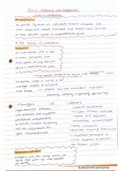
Key Words
CHAPTER 1: INTRODUCING INFORMATION LITERACY
Competencies: The skills and capabilities to do something successfully and properly.
Computer Literacy: The knowledge and skills to use computers and other
technologies successfully and efficiently.
Frameworks: Basic structures that underlie and motivate ideas and systems.
Information Literacy: The ability to know when information is needed, where to find
it and how to evaluate it. Ability to retrieve, analyse and use information.
Life-Long Learning: The on-going and self-directed search for knowledge. To be a
life-long learner you need to be information literate.
Media Literacy: The ability to use many different forms/types of media. Ability to
access, analyse, contribute to, assess, create, and take part in messages in many
formats.
CHAPTER 2: INFORMATION SOURCES AND RESOURCES
Bibliographical Database: Contains summary representations of documents including
title, abstract and keywords of a document. It will state who the author of a document
is and when and where the document was published. They do not contain full text of
documents.
Dictionary: A reference book in which spoken or written words are defined
Digital Library: Libraries where the collection of documents is not printed but is in
electronic format so that it can be accessed by a computer. (Also known as virtual
libraries, electronic libraries, and e-libraries).
Directory: List of names of people living in a particular area, organisations operating
in a particular field or individuals in a particular profession.
Document: A written account that provides information.
Encyclopaedia: Collections of knowledge in written format (but not always paper
based). There are general encyclopaedias that deal with many different topics and
there are subject-specific one too.
Key Words
CHAPTER 1: INTRODUCING INFORMATION LITERACY
Competencies: The skills and capabilities to do something successfully and properly.
Computer Literacy: The knowledge and skills to use computers and other
technologies successfully and efficiently.
Frameworks: Basic structures that underlie and motivate ideas and systems.
Information Literacy: The ability to know when information is needed, where to find
it and how to evaluate it. Ability to retrieve, analyse and use information.
Life-Long Learning: The on-going and self-directed search for knowledge. To be a
life-long learner you need to be information literate.
Media Literacy: The ability to use many different forms/types of media. Ability to
access, analyse, contribute to, assess, create, and take part in messages in many
formats.
CHAPTER 2: INFORMATION SOURCES AND RESOURCES
Bibliographical Database: Contains summary representations of documents including
title, abstract and keywords of a document. It will state who the author of a document
is and when and where the document was published. They do not contain full text of
documents.
Dictionary: A reference book in which spoken or written words are defined
Digital Library: Libraries where the collection of documents is not printed but is in
electronic format so that it can be accessed by a computer. (Also known as virtual
libraries, electronic libraries, and e-libraries).
Directory: List of names of people living in a particular area, organisations operating
in a particular field or individuals in a particular profession.
Document: A written account that provides information.
Encyclopaedia: Collections of knowledge in written format (but not always paper
based). There are general encyclopaedias that deal with many different topics and
there are subject-specific one too.