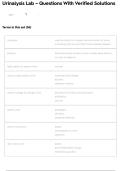
Urinalysis Lab – Questions With Verified Solutions
Save
Terms in this set (56)
urinalysis used by doctors to assess various factors of urine,
including color and pH that could indicate disease
kidneys filter blood and produce urine, usually keep factors
of urine in balance
light yellow to amber urine normal
clear to light yellow urine increased fluid intake
alcohol
diabetes mellitus
yellow orange to orange urine bilirubin from obstructive jaundice
antibiotics
carrots
green urine asparagus
diuretics
bacterial infection
red to red brown beets
hemoglobin in urine
laxatives
dark wine urine beets
anti-inflammatory drugs
hemolytic jaundice
, brown urine severe dehydration
barbiturates
hemolytic anemia or liver disease
extremely strenuous exercise or muscle injury
brown-black urine excessive sorbitol consumption
antidepressants
melanin pigment from melanoma (rare)
low pH (<6) high protein diet, cranberry juice
uncontrolled diabetes mellitus
high pH (>8) diet rich in vegetables; dairy products
severe anemia
low specific gravity (<1.010) increased fluid intake
severe renal damage
high specific gravity (>1.026) decreased fluid intake; loss of fluids
uncontrolled diabetes mellitus, severe anemia
glucose present large meal
uncontrolled diabetes mellitus
protein present high protein diet
severe anemia
concentration of urobilin urinary pigment that determines the color of urine
depending on certain foods, drugs, disease and
amount of water intake
pH of urine measure of free hydrogen ions (H+) concentration,
which indicates acidity or alkalinity
normal: 6.0-8.0
specific gravity of urine density of a solution relative to water (1.000)
normal: 1.010 - 1.026
Save
Terms in this set (56)
urinalysis used by doctors to assess various factors of urine,
including color and pH that could indicate disease
kidneys filter blood and produce urine, usually keep factors
of urine in balance
light yellow to amber urine normal
clear to light yellow urine increased fluid intake
alcohol
diabetes mellitus
yellow orange to orange urine bilirubin from obstructive jaundice
antibiotics
carrots
green urine asparagus
diuretics
bacterial infection
red to red brown beets
hemoglobin in urine
laxatives
dark wine urine beets
anti-inflammatory drugs
hemolytic jaundice
, brown urine severe dehydration
barbiturates
hemolytic anemia or liver disease
extremely strenuous exercise or muscle injury
brown-black urine excessive sorbitol consumption
antidepressants
melanin pigment from melanoma (rare)
low pH (<6) high protein diet, cranberry juice
uncontrolled diabetes mellitus
high pH (>8) diet rich in vegetables; dairy products
severe anemia
low specific gravity (<1.010) increased fluid intake
severe renal damage
high specific gravity (>1.026) decreased fluid intake; loss of fluids
uncontrolled diabetes mellitus, severe anemia
glucose present large meal
uncontrolled diabetes mellitus
protein present high protein diet
severe anemia
concentration of urobilin urinary pigment that determines the color of urine
depending on certain foods, drugs, disease and
amount of water intake
pH of urine measure of free hydrogen ions (H+) concentration,
which indicates acidity or alkalinity
normal: 6.0-8.0
specific gravity of urine density of a solution relative to water (1.000)
normal: 1.010 - 1.026