THE MOUTH .
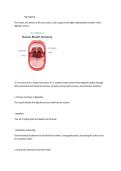
The mouth, also known as the oral cavity, is the inaugural and highly sophisticated chamber of the
digestive system.
It is far more than a simple entry point; it is a complex organ system where digestion begins through
both mechanical and chemical processes, all while serving critical sensory and protective functions.
1. Primary Functions in Digestion
The mouth initiates the digestive process with two key actions:
· Ingestion:
The act of taking food and liquids into the body.
· Mastication (Chewing):
The mechanical breakdown of solid food into smaller, manageable pieces, increasing the surface area
for enzymatic action.
2. Structural Components and Their Roles
, The mouth is composed of several specialized structures that work in concert.
A. Teeth (Mechanical Digestion)
Teeth are the primary tools for mastication.
Humans have heterodont dentition (different types of teeth):
· Incisors:
Chisel-shaped for cutting and biting.
· Canines:
Pointed for tearing and shredding.
· Premolars & Molars:
Have broad, flattened cusps for crushing, grinding, and pulverizing food into a soft, flexible mass called a
bolus.
The process of chewing is controlled by powerful muscles of mastication(masseter, temporalis,
pterygoids).
B. Tongue (Mechanical Processing and Bolus Formation)
A muscular hydrostat(muscles that work against each other), the tongue is crucial for:
i· Manipulation:
Moves food around the mouth for efficient chewing.
ii· Bolus Formation:
The mouth, also known as the oral cavity, is the inaugural and highly sophisticated chamber of the
digestive system.
It is far more than a simple entry point; it is a complex organ system where digestion begins through
both mechanical and chemical processes, all while serving critical sensory and protective functions.
1. Primary Functions in Digestion
The mouth initiates the digestive process with two key actions:
· Ingestion:
The act of taking food and liquids into the body.
· Mastication (Chewing):
The mechanical breakdown of solid food into smaller, manageable pieces, increasing the surface area
for enzymatic action.
2. Structural Components and Their Roles
, The mouth is composed of several specialized structures that work in concert.
A. Teeth (Mechanical Digestion)
Teeth are the primary tools for mastication.
Humans have heterodont dentition (different types of teeth):
· Incisors:
Chisel-shaped for cutting and biting.
· Canines:
Pointed for tearing and shredding.
· Premolars & Molars:
Have broad, flattened cusps for crushing, grinding, and pulverizing food into a soft, flexible mass called a
bolus.
The process of chewing is controlled by powerful muscles of mastication(masseter, temporalis,
pterygoids).
B. Tongue (Mechanical Processing and Bolus Formation)
A muscular hydrostat(muscles that work against each other), the tongue is crucial for:
i· Manipulation:
Moves food around the mouth for efficient chewing.
ii· Bolus Formation: