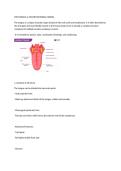
THE TONGUE: A MULTIFUNCTIONAL MARVEL.
The tongue is a unique muscular organ located in the oral cavity and oropharynx. It is often described as
the strongest and most flexible muscle in the human body, but it is actually a complex structure
composed of multiple muscles working in concert.
It is essential for speech, taste, mastication (chewing), and swallowing.
1. Anatomy & Structure
The tongue can be divided into two main parts:
· Oral (anterior) Part:
Makes up about two-thirds of the tongue, visible and movable.
· Pharyngeal (posterior) Part:
The back one-third, which forms the anterior wall of the oropharynx.
Anatomical Features:
· Tip (Apex):
The highly mobile front end.
· Dorsum:
, The top surface, which is rough due to specialized structures.
· Ventral Surface:
The smooth, undersurface, with the prominent lingual frenulum (a fold of mucous membrane) that
anchors the tongue to the floor of the mouth.
· Sulcus Terminalis:
A V-shaped groove that separates the oral from the pharyngeal part.
The apex of this groove points backward to the foramen cecum, a remnant of the embryonic
thyroglossal duct.
· Lingual Tonsils:
Located on the dorsum of the pharyngeal part, they are part of Waldeyer's ring of lymphoid tissue,
providing immune surveillance.
Musculature:
The Key to Flexibility
The tongue's movement is controlled by two groups of muscles:
· Extrinsic Muscles (4 pairs):
Originate from bones outside the tongue and insert into it.
They primarily change the tongue's position (protrusion, retraction, side-to-side movement).
· Genioglossus:
The "safety muscle." Protrudes the tongue. If it is paralyzed, the tongue can fall backward and obstruct
the airway.
The tongue is a unique muscular organ located in the oral cavity and oropharynx. It is often described as
the strongest and most flexible muscle in the human body, but it is actually a complex structure
composed of multiple muscles working in concert.
It is essential for speech, taste, mastication (chewing), and swallowing.
1. Anatomy & Structure
The tongue can be divided into two main parts:
· Oral (anterior) Part:
Makes up about two-thirds of the tongue, visible and movable.
· Pharyngeal (posterior) Part:
The back one-third, which forms the anterior wall of the oropharynx.
Anatomical Features:
· Tip (Apex):
The highly mobile front end.
· Dorsum:
, The top surface, which is rough due to specialized structures.
· Ventral Surface:
The smooth, undersurface, with the prominent lingual frenulum (a fold of mucous membrane) that
anchors the tongue to the floor of the mouth.
· Sulcus Terminalis:
A V-shaped groove that separates the oral from the pharyngeal part.
The apex of this groove points backward to the foramen cecum, a remnant of the embryonic
thyroglossal duct.
· Lingual Tonsils:
Located on the dorsum of the pharyngeal part, they are part of Waldeyer's ring of lymphoid tissue,
providing immune surveillance.
Musculature:
The Key to Flexibility
The tongue's movement is controlled by two groups of muscles:
· Extrinsic Muscles (4 pairs):
Originate from bones outside the tongue and insert into it.
They primarily change the tongue's position (protrusion, retraction, side-to-side movement).
· Genioglossus:
The "safety muscle." Protrudes the tongue. If it is paralyzed, the tongue can fall backward and obstruct
the airway.