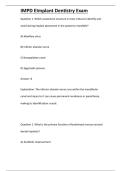
Veterinary Dentistry AVDC (American Veterinary
Dental College) exam Practice Questions WITH
CORRECT ANSWERS (VERIFIED ANSWERS) PLUS
RATIONALES 2026 Q&A |INSTANT DOWNLOAD
PDF
1. Which of the following are indications for dental
radiographs in veterinary patients?
A. Evaluation of tooth resorption
B. Detection of periodontal disease
C. Assessment of fractured teeth
D. Evaluation of soft tissue swelling
*Answer: A, B, C – Dental radiographs are essential for
detecting resorptive lesions, periodontal bone loss, and root
fractures that are not visible clinically.
2. What are common causes of feline tooth resorption?
A. Chronic inflammation
B. Viral infections
C. Trauma
D. Hyperthyroidism
*Answer: A, B – Feline tooth resorption is often associated with
,chronic inflammation and possibly viral factors, while trauma
and hyperthyroidism are less directly implicated.
3. Which local anesthetic is most commonly used in veterinary
dental procedures?
A. Lidocaine
B. Bupivacaine
C. Mepivacaine
D. Procaine
*Answer: A, B – Lidocaine provides rapid onset, while
bupivacaine offers longer duration for postoperative analgesia.
4. What are the typical stages of periodontal disease?
A. Gingivitis
B. Early periodontitis
C. Moderate periodontitis
D. Advanced periodontitis
*Answer: A, B, C, D – Periodontal disease progresses from
reversible gingivitis to advanced, often irreversible periodontitis.
5. Which systemic diseases are commonly associated with
periodontal disease in dogs?
A. Diabetes mellitus
B. Chronic kidney disease
,C. Heart disease
D. Liver failure
*Answer: A, B – Diabetes and chronic kidney disease can
exacerbate periodontal inflammation; heart and liver disease
are less directly linked.
6. What are common signs of feline chronic gingivostomatitis
(FCGS)?
A. Halitosis
B. Ptyalism (excessive drooling)
C. Tooth mobility
D. Oral ulcers
*Answer: A, B, D – FCGS typically causes oral inflammation with
bad breath, drooling, and ulcers; tooth mobility is less common
unless there is secondary periodontitis.
7. Which antibiotics are most commonly used in veterinary
dental infections?
A. Amoxicillin
B. Clindamycin
C. Doxycycline
D. Metronidazole
*Answer: A, B – Amoxicillin and clindamycin are first-line
antibiotics for odontogenic infections; doxycycline and
metronidazole are used selectively.
, 8. What is the best method to prevent periodontal disease in
dogs?
A. Professional dental cleaning
B. Daily tooth brushing
C. Feeding soft food exclusively
D. Dental chews
*Answer: A, B, D – Professional cleanings, daily brushing, and
approved dental chews reduce plaque and calculus; soft food
alone does not prevent periodontal disease.
9. Which are common complications of tooth extraction in
cats?
A. Mandibular fracture
B. Orofacial fistula
C. Hemorrhage
D. Tooth root retention
*Answer: A, B, C, D – All listed complications can occur,
especially in older cats or with multiple extractions.
10. Which teeth are most commonly affected by canine dental
fractures?
A. Maxillary fourth premolar
B. Mandibular canine
Dental College) exam Practice Questions WITH
CORRECT ANSWERS (VERIFIED ANSWERS) PLUS
RATIONALES 2026 Q&A |INSTANT DOWNLOAD
1. Which of the following are indications for dental
radiographs in veterinary patients?
A. Evaluation of tooth resorption
B. Detection of periodontal disease
C. Assessment of fractured teeth
D. Evaluation of soft tissue swelling
*Answer: A, B, C – Dental radiographs are essential for
detecting resorptive lesions, periodontal bone loss, and root
fractures that are not visible clinically.
2. What are common causes of feline tooth resorption?
A. Chronic inflammation
B. Viral infections
C. Trauma
D. Hyperthyroidism
*Answer: A, B – Feline tooth resorption is often associated with
,chronic inflammation and possibly viral factors, while trauma
and hyperthyroidism are less directly implicated.
3. Which local anesthetic is most commonly used in veterinary
dental procedures?
A. Lidocaine
B. Bupivacaine
C. Mepivacaine
D. Procaine
*Answer: A, B – Lidocaine provides rapid onset, while
bupivacaine offers longer duration for postoperative analgesia.
4. What are the typical stages of periodontal disease?
A. Gingivitis
B. Early periodontitis
C. Moderate periodontitis
D. Advanced periodontitis
*Answer: A, B, C, D – Periodontal disease progresses from
reversible gingivitis to advanced, often irreversible periodontitis.
5. Which systemic diseases are commonly associated with
periodontal disease in dogs?
A. Diabetes mellitus
B. Chronic kidney disease
,C. Heart disease
D. Liver failure
*Answer: A, B – Diabetes and chronic kidney disease can
exacerbate periodontal inflammation; heart and liver disease
are less directly linked.
6. What are common signs of feline chronic gingivostomatitis
(FCGS)?
A. Halitosis
B. Ptyalism (excessive drooling)
C. Tooth mobility
D. Oral ulcers
*Answer: A, B, D – FCGS typically causes oral inflammation with
bad breath, drooling, and ulcers; tooth mobility is less common
unless there is secondary periodontitis.
7. Which antibiotics are most commonly used in veterinary
dental infections?
A. Amoxicillin
B. Clindamycin
C. Doxycycline
D. Metronidazole
*Answer: A, B – Amoxicillin and clindamycin are first-line
antibiotics for odontogenic infections; doxycycline and
metronidazole are used selectively.
, 8. What is the best method to prevent periodontal disease in
dogs?
A. Professional dental cleaning
B. Daily tooth brushing
C. Feeding soft food exclusively
D. Dental chews
*Answer: A, B, D – Professional cleanings, daily brushing, and
approved dental chews reduce plaque and calculus; soft food
alone does not prevent periodontal disease.
9. Which are common complications of tooth extraction in
cats?
A. Mandibular fracture
B. Orofacial fistula
C. Hemorrhage
D. Tooth root retention
*Answer: A, B, C, D – All listed complications can occur,
especially in older cats or with multiple extractions.
10. Which teeth are most commonly affected by canine dental
fractures?
A. Maxillary fourth premolar
B. Mandibular canine